Aukera, the Brussels-founded renewable energy and battery storage developer, has closed a €460 million structured credit facility, one of the largest single financing packages for a European battery storage platform. Washington D.C.-based institutional investor EIG led the deal, which was originally structured as a €200 million commitment with an accordion feature allowing drawdowns of up to €250 million. That accordion has now been converted into a committed €260 million Series 2 tranche, bringing total capital to €460 million.
The restructuring matters. An accordion feature gives the lead investor discretion to increase or withhold additional capital depending on performance. Converting it into a committed tranche means EIG reviewed Aukera's progress and chose to lock in the full amount. That is a vote of confidence, but it also removes EIG's flexibility to walk away from further commitments if the pipeline stalls.
Who is behind Aukera
Aukera was founded in Brussels and develops battery energy storage systems, solar PV and hybrid solar-plus-storage projects that it intends to own and operate. Its original backers are Belgian energy investor AtlasInvest, Dutch family office Reggeborgh and Belgian sovereign wealth fund SFPIM. These are patient, long-term capital providers, but they lack the scale to finance a multi-gigawatt rollout across five countries simultaneously. EIG, a major institutional investor with a substantial energy and infrastructure portfolio, brings that scale.
The company currently operates in the UK, Romania, Belgium, Germany and Italy, a geographic spread that reflects where grid flexibility is most needed and where capacity remuneration mechanisms or merchant revenue opportunities make storage investable.
The project pipeline
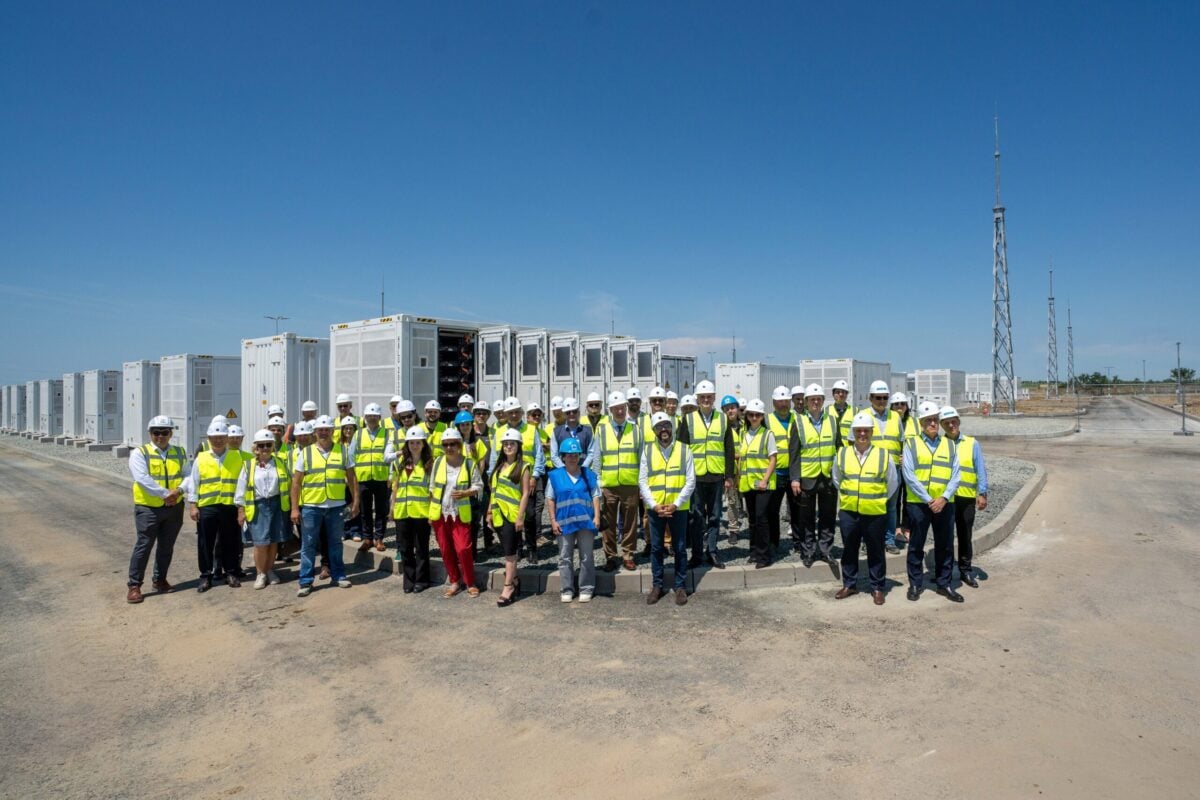
Aukera says it has close to a gigawatt of projects in construction or operation. Its flagship is the 250MW/500MWh Gura Ialomitei standalone battery energy storage system in Romania. The first 150MW/300MWh phase reached commercial operation in June 2026. A month later, Aukera secured financing from the International Finance Corporation, the World Bank's private sector arm, for the second phase.
In Belgium, the company reached financial close on the 170MW/340MWh Project Volt BESS in La Louvière at the beginning of this summer. The project is a joint venture with Weerts Group and carries a 15-year contract with Belgium's Capacity Remuneration Mechanism, the country's capacity market. That long-term contract reduces merchant risk and makes project finance considerably easier to arrange.
In the UK, Aukera received planning approval in September 2025 for a 250MW/1,000MWh BESS project in York. The City of York council approved the scheme after concluding that its overall environmental benefits outweighed harm to local conservation areas. The four-hour duration of that project is notable: most UK battery projects are shorter duration, and longer-duration assets command higher revenues during extended price spikes.
Structured credit versus project finance
The choice of a structured credit facility rather than conventional project finance is a deliberate strategic decision. Project finance ties debt to the cash flows of a single asset, requiring separate financing for each development. Structured credit gives Aukera a pool of capital it can deploy across its entire portfolio. For a company operating in five jurisdictions with different regulatory regimes, grid codes and revenue structures, that flexibility has real value.
The trade-off is that Aukera takes on more corporate-level risk. If individual projects underperform, the debt sits on the company's balance sheet rather than being ring-fenced at the project level. That works well when the portfolio is diversified across markets and technologies. It becomes a liability if regulatory changes or grid connection delays hit several markets at once.
The EU storage gap
Aukera's co-founders, Catalin Breaban and Pascal Emsens, argue that Europe needs to at least quadruple its battery storage capacity to meet the European Union's 200GW storage target by 2030. "That requires not just capital, but teams and platforms that can deliver complex infrastructure repeatedly, on time, on budget and across multiple markets," they said. "This facility with EIG gives Aukera the financial depth to do exactly that."
The EU's 200GW target, set under the REPowerEU plan, reflects the reality that intermittent renewable generation cannot be integrated at scale without storage. Meeting it will require building out battery capacity at a pace Europe has not yet demonstrated. The target is ambitious, and whether the regulatory frameworks, grid connection processes and supply chains across member states can support that build rate remains an open question.
What the deal signals
A single €460 million credit facility from one institutional investor is unusual in European battery storage. Most platforms have relied on a mix of project finance, corporate equity and venture capital. Aukera now has the capital to move on acquisitions and construction starts without arranging project-level financing each time, a speed advantage in a market where grid connection windows and planning consents are time-limited.
The risk is concentration. EIG's dominance as lead investor means Aukera's strategic direction will be shaped by EIG's return expectations and timeline preferences. Whether that alignment holds as the portfolio matures and as battery storage revenue models evolve across different European markets will determine whether this facility becomes a template for the sector or a case study in concentrated risk.
People mentioned
-
Catalin Breaban
-
Pascal Emsens
Organisations
Aukera · EIG · International Finance Corporation · AtlasInvest · Reggeborgh · SFPIM