The European Union's bet on renewable hydrogen is entering a difficult middle phase. Five years after the bloc unveiled a strategy that once promised a 'Swiss army knife' for decarbonisation, the industry is confronting a stubborn cost gap, a fragmenting regulatory landscape and a Chinese manufacturing surge that threatens to lock Europe out of the equipment supply chain. The European Commission is now weighing whether to revise its 2020 hydrogen strategy, but industry voices argue the original vision was sound, the problem is execution.
From universal solution to targeted tool
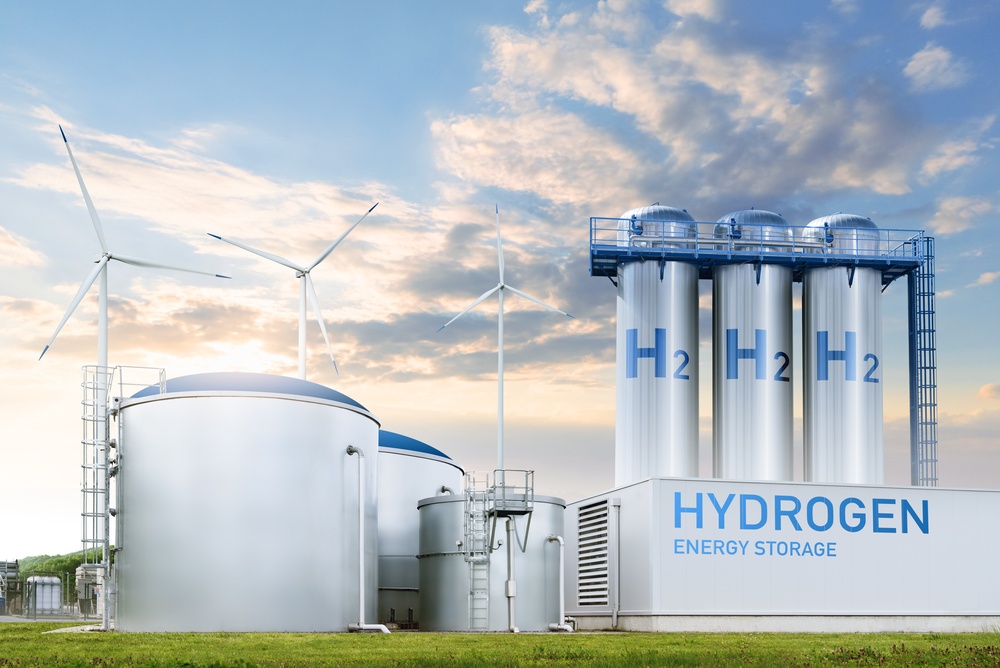
Early enthusiasm treated hydrogen as a drop-in replacement for fossil fuels across the economy. That view has shifted. Direct electrification, powered by a grid that is decarbonising faster than any other sector, remains the cheapest and most efficient route for most end uses. Electricity still accounts for only 23% of final energy consumption in Europe; the rest relies on molecules, solid, liquid or gaseous fuels. Renewable hydrogen, produced by splitting water with wind or solar power, is now seen as the necessary complement for sectors that cannot run directly on electrons: fertilisers and chemicals that need hydrogen as a feedstock, steelmaking that requires a reducing agent, and aviation and shipping that will depend on hydrogen-derived e-fuels.
François Paquet, spokesperson for the Renewable Hydrogen Coalition, describes the shift as a maturation rather than a retreat. "This is not a market failure but a reconciliation between ambitions, expectations, and physical realities. One should not confuse market consolidation with market decline," he said. The coalition, whose members include project developers, equipment makers and energy companies, has been pressing the Commission to keep the strategy's focus on hard-to-electrify sectors and system integration while fixing the delivery mechanisms that have stalled.
The steel test case
Steelmaking illustrates the decarbonisation potential. The sector accounts for roughly 4% of Europe's anthropogenic CO2 emissions. Conventional production releases about 1.85 tonnes of CO2 per tonne of steel. Switching to direct reduced iron (DRI) fed by renewable hydrogen can cut that to roughly 0.1 tonne, a 95% reduction. The technology exists; the challenge is deploying it at scale. Electric arc furnaces recycling scrap will also play a role, but primary steel from iron ore will need hydrogen-based DRI if the EU is to meet its 2050 climate targets.
Why renewable hydrogen, not low-carbon alternatives
The distinction between renewable hydrogen and so-called low-carbon hydrogen matters. Low-carbon hydrogen is typically made from natural gas with carbon capture and storage (CCS). Capture rates have hovered at 40, 60%, and upstream methane leakage from gas extraction and transport adds further emissions. Unabated natural gas hydrogen emits 12, 14 tonnes of CO2 per tonne of hydrogen; coal-based routes exceed 19 tonnes. Even with CCS, the reduction caps at about five tonnes. Renewable hydrogen produced with wind power can achieve a lifecycle footprint below one tonne of CO2 per tonne of hydrogen. From a climate perspective, the gap is decisive.
Cost gap remains the primary barrier
Renewable hydrogen currently costs between €5.3 and €13 per kilogram depending on location and project design. Grey hydrogen from natural gas costs €2.5, 4.5 per kilogram. Higher gas prices since the energy crisis have narrowed the gap in countries such as Spain with abundant renewables, but not enough for most offtakers to absorb the premium, especially when competing globally. Public support has focused heavily on capital expenditure and R&D, yet projects struggle with high operational costs and the persistent cost gap versus incumbent fossil fuels. The EU Hydrogen Bank, which ran its third auction earlier this year, was designed to cover up to 100% of that gap, but it has been underfunded and EU and national funds cannot be combined, limiting its impact.
Regulatory uncertainty erodes investor confidence
Europe has built the world's most comprehensive regulatory framework for renewable hydrogen, including production criteria and binding offtake targets. Yet several pillars have come under pressure: the Carbon Border Adjustment Mechanism, the EU Emissions Trading System, hydrogen production rules, and the ReFuelEU Aviation regulation that mandates rising shares of sustainable aviation fuels. Each proposal to soften, delay or remove a target sends a signal to investors that the policy framework may not hold. For first-of-a-kind projects already facing higher capital costs after two fossil fuel crises pushed up interest rates, that uncertainty is often fatal.
Infrastructure lag and the Chinese manufacturing challenge
Roughly 40% of EU electricity distribution grids are more than 40 years old. Modernising and expanding them is essential because low-cost renewable electricity is the single biggest driver of hydrogen competitiveness. Hydrogen pipeline deployment has also lagged. Meanwhile, China has captured 60% of global electrolyser manufacturing capacity; Europe holds 20%. European manufacturers still lead on performance, new electrolyser generations deliver 40, 60% cost reductions and lower energy consumption, but without faster deployment, that innovation edge may not translate into market share. The sector is entering a consolidation phase after years of rapid capacity expansion.
Demand creation: the missing link
The EU adopted ambitious 2030 targets for renewable hydrogen uptake in industry, aviation and maritime transport in 2023, giving member states until May 2025 to transpose them. Progress has been uneven. The 1% renewable fuels of non-biological origin (RFNBO) target in transport shows the best compliance, with about nine member states having transposed it. The rest are delayed. Without firm demand signals, project developers cannot secure offtake agreements, and without offtake agreements, financing does not flow. The loop remains unclosed.
People mentioned
-
François Paquet
Organisations
European Commission · Renewable Hydrogen Coalition · EU Hydrogen Bank