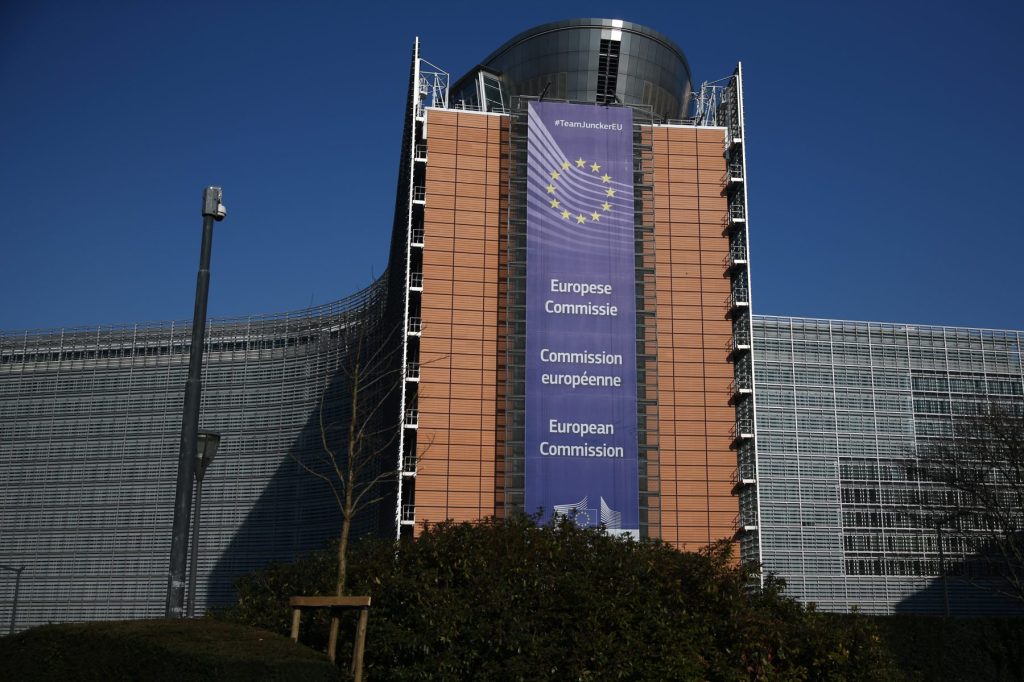
More than a dozen US music industry organisations have asked the White House to intervene in a European policy debate that could reshape how royalties flow across the Atlantic. The Recording Academy, SoundExchange, the American Association of Independent Music, ASCAP, BMI and eight other groups wrote to US Trade Representative Jamieson Greer on 8 July, warning that a European Commission proposal would "codify discrimination against American creators into EU law" and jeopardise nearly $300 million in annual payments.
The dispute over radio royalties explained
At issue is the treatment of public performance royalties for sound recordings, the payments due when recorded music is played on terrestrial radio or in commercial venues such as bars and shops. In the United States, songwriters and publishers receive such royalties, but performers and record labels do not, except for digital streams. Most European countries, by contrast, have long paid both sides. Until 2020, EU member states applied a principle of "material reciprocity": they paid royalties to foreign rightsholders only if those rightsholders' home countries offered equivalent protection. Because US law lacks a terrestrial broadcast right for recordings, American artists and labels were excluded.
How the 2020 court ruling changed the landscape
That changed with a Court of Justice of the European Union judgment in 2020. The court ruled that EU law required member states to grant public performance rights to all rightsholders regardless of nationality, effectively ending material reciprocity. The decision opened the door for US collecting societies to claim royalties from European radio play and public performances for the first time. According to the US coalition, those payments now total nearly $300 million a year.
The Commission's rationale for reversing course
In May 2026, the European Commission announced it was considering legislation to reinstate material reciprocity. The stated aim is to "make the European music market more competitive and prevent royalties from being diverted away from European music producers and performers." The Commission argues that the 2020 ruling created a one-way flow: European users pay for US repertoire, but US users pay nothing for European repertoire on terrestrial radio. That asymmetry, the Commission says, distorts the market and undermines European creators.
US industry mobilises trade pressure
The US groups reject that framing. In their letter to Greer, they describe the Commission's move as a "dramatic policy reversal" and urge the USTR to deploy "sustained bilateral engagement, coordinated multilateral pressure, and, if necessary, targeted enforcement measures." The language signals an expectation that Washington will treat the issue as a trade barrier. The USTR has not yet responded publicly, but the request places the matter on the agenda of the transatlantic trade relationship at a time when other disputes, over digital services taxes, aircraft subsidies and steel tariffs, remain unresolved.
European independents back the Commission
European rightsholder groups have long lobbied for a return to reciprocity. IMPALA, which represents independent labels across the continent, welcomed the Commission's announcement in a formal comment submitted on 25 June. The group calculated that without EU intervention, the transfer of revenues from Europe to the United States alone would exceed €125 million per annum, or €1.25 billion over a decade. IMPALA argues that the 2020 judgment forces European users to subsidise a US market that refuses to reciprocate, effectively exporting value from European creators to American corporations.
Warner Music breaks with US peers
Not all major labels agree with the US coalition. Warner Music Group, one of the three global majors, submitted its own comment to the Commission on 25 June opposing the return to material reciprocity. "The application of material reciprocity would have a significant detrimental impact on the European music industry," the company wrote. Warner warned that removing protection for non-qualifying catalogues would incentivise music users to play unprotected repertoire to avoid payment, ultimately reducing the total pool of royalties available to all creators, including Europeans. The position reflects Warner's extensive European operations and its interest in a unified global licensing framework.
What happens next in the legislative process
The Commission's consultation period closes in the autumn, after which it will decide whether to table a formal legislative proposal. Any draft would require approval from both the European Parliament and the Council of Ministers, a process that typically takes 18 to 24 months. In the meantime, the 2020 court ruling remains in force, and US collecting societies continue to collect. The USTR's response, whether it initiates a Section 301 investigation, raises the issue in the Trade and Technology Council, or pursues quieter diplomacy, will signal how seriously Washington treats the potential loss of $300 million in annual revenue for its creative sector.
People mentioned
Organisations
Recording Academy · SoundExchange · American Association of Independent Music · ASCAP · BMI · European Commission