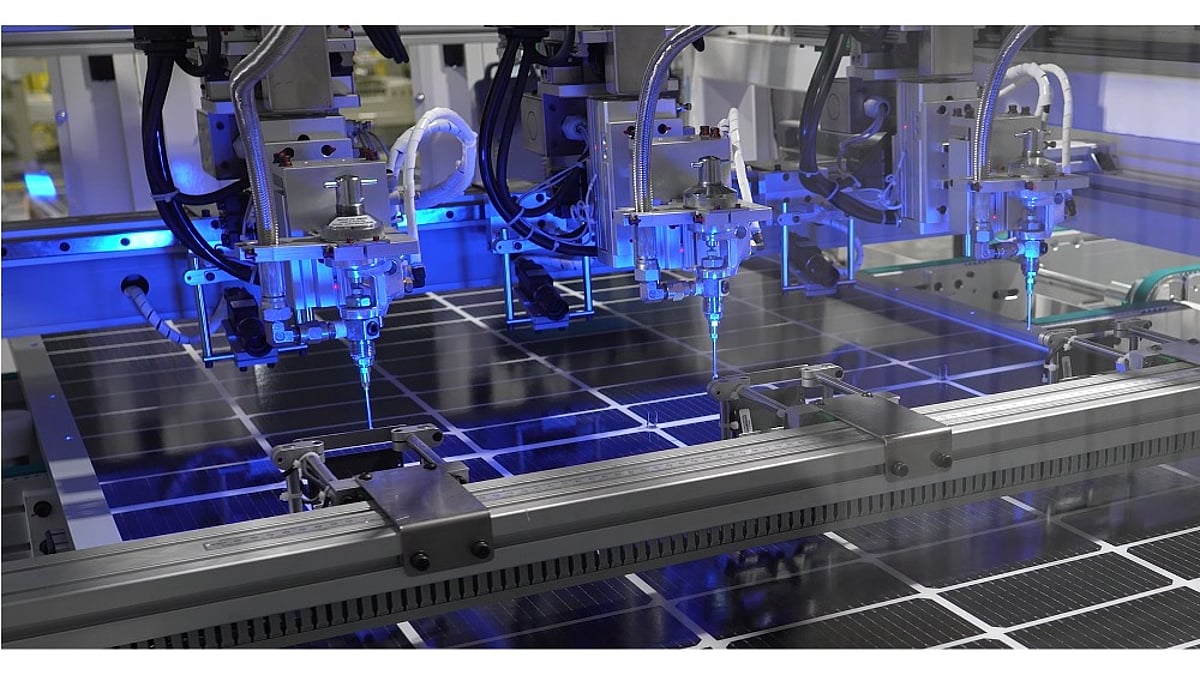
Spain's Ministry for the Ecological Transition and the Demographic Challenge (MITECO) has put a new competitive funding programme for clean-energy manufacturing out to public consultation, with submissions open until 25 September 2026. The scheme targets domestic production of equipment, components and process inputs for solar PV, batteries, electricity grids, wind power, renewable hydrogen and heat pumps, extending a line of support that has already distributed €458 million to 73 industrial projects.
A wider list of eligible technologies
The consultation document, published on 7 September, frames the new programme as a complement to deployment subsidies by addressing the supply side. Beyond the headline six technologies, the ministry lists raw materials needed for a net-zero economy, suggesting interest in processing capacity for inputs such as silicon, lithium or rare earths that feed into the clean-tech value chain.
Funding will be administered by the Institute for the Diversification and Saving of Energy (IDAE), the body under MITECO that has run previous renewable-energy grant schemes. Awards will go through a competitive process rather than a first-come, first-served basis, and the money will come from the European Regional Development Fund (ERDF) for the 2021-2027 programming period.
What RENOVAL has already paid for
The new programme builds on two completed rounds of the RENOVAL scheme. Under RENOVAL 1, MITECO awarded €296 million to 33 projects, including seven solar PV facilities and four battery production sites. Among the beneficiaries was SUNWAFE, which received support for silicon ingot and wafer manufacturing, an upstream step that Spanish industry had largely outsourced to Asia.
RENOVAL 2 added a further €162 million for 40 projects, bringing the running total to €458 million spread across 73 industrial investments. The ministry has not published a full beneficiary list for the second round, but the headline figure points to smaller average ticket sizes than in the first round, consistent with a shift towards components and assembly rather than headline gigafactories.
Where Spain already has capacity
MITECO argues that two decades of wind deployment have left Spain with a near-complete domestic supply chain for turbines. The ministry says Spanish factories can produce nearly 100% of the components needed for wind turbines and more than 60% of those used across the solar PV value chain, though the latter figure masks continued dependence on imported polysilicon and inverters.
Spain also runs a trade surplus in clean technologies, according to the ministry, exporting turbines, trackers and balance-of-plant components to Latin America and the rest of Europe. The new programme is intended to defend that position against Chinese price pressure in solar and batteries, and against the reshoring subsidies on offer in France, Germany and the United States.
Fitting into the EU industrial push
MITECO frames the consultation as an implementation tool for two Brussels-led initiatives: the European Commission's Clean Industrial Deal, which aims to anchor clean-tech manufacturing in Europe, and the Strategic Technologies for Europe Platform (STEP), the 2024 regulation designed to steer funding towards critical technologies. Using ERDF money for manufacturing, rather than the more familiar deployment grants, aligns with the Commission's push to repurpose cohesion funds for industrial policy.
That alignment matters for the sums available. Spain is one of the largest recipients of ERDF allocations in the 2021-2027 period, and member states have been under pressure from Brussels to channel a larger share of those funds into strategic technologies rather than conventional regional development projects. The consultation therefore signals how Madrid intends to square cohesion policy with industrial policy over the remaining years of the current budget.
A crowded Spanish subsidy pipeline
The clean-tech manufacturing consultation lands on top of an unusually busy pipeline of Spanish energy subsidies. In August 2026, MITECO awarded €433.44 million to 524 innovative renewable energy and storage projects under Round 2 of the RENOINN programme, a separate scheme aimed at smaller-scale deployment. The two programmes do not overlap directly: RENOINN supports generation and storage projects, while the new consultation targets factories and components.
Running both in parallel raises an administrative question. IDAE will need to process competitive applications for manufacturing while continuing to disburse deployment grants, and the renewable energy directorate inside MITECO must coordinate with the industry's territorial offices in the autonomous communities, which handle the bulk of ERDF project selection.
Organisations
Ministry for the Ecological Transition and the Demographic Challenge · Institute for the Diversification and Saving of Energy · European Commission