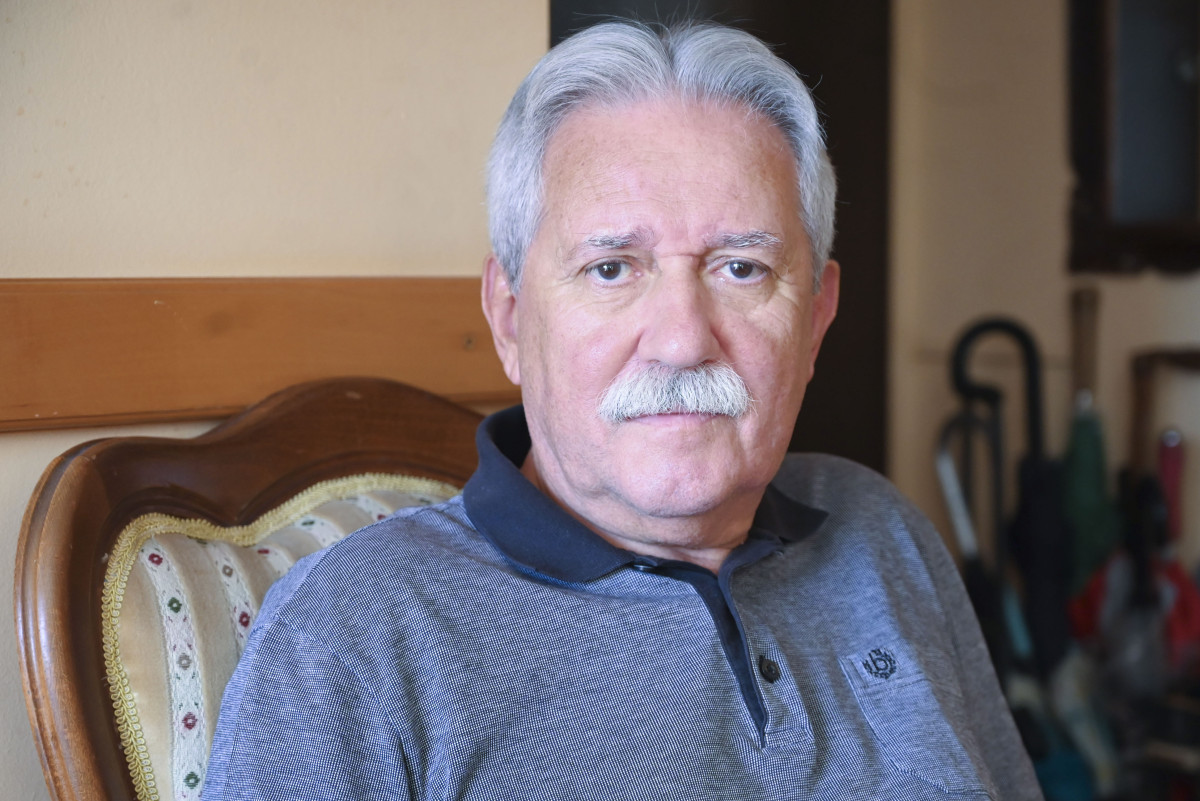
Slobodan Samardžić, the academic who founded European Studies at Belgrade's Faculty of Political Sciences and once served as Serbia's minister for Kosovo and Metohija, has delivered a blunt assessment of the European Union's enlargement policy: it is a narrative sustained for political control, not a credible pathway to membership. In a wide-ranging interview with the weekly NIN, he argues that the EU has turned the accession process into a "moving target", each time a candidate meets a condition, the goalposts shift.
The enlargement illusion
Samardžić puts the real probability of Serbia joining the EU at five per cent, while 95 per cent of the public believes the prospect is far stronger. The gap, he says, is deliberate. The European Commission maintains an "optimistic narrative" to keep candidate countries under control, opening clusters and chapters just enough to preserve the appearance of progress. Montenegro, he notes, is "practically convinced that they are already there" and will face acute disappointment. Even Iceland, a wealthy and stable country the EU actively wanted, walked away, a signal, in his view, that the enlargement story has lost credibility even for desirable applicants.
The mechanism is straightforward: the Commission signals readiness to open a negotiating cluster, only for individual member states to threaten suspension. That threat is not contrary to the rules, but it freezes the process while the narrative continues. Samardžić distinguishes between the maintenance of enlargement policy and its actual implementation, a distinction that candidate countries are discouraged from making.
Serbia's specific dilemma: Kosovo as the hidden condition
For Serbia, the moving target has a fixed coordinate: recognition of Kosovo. Twenty-one EU members have recognised Kosovo's 2008 declaration of independence, a step Samardžić argues violates the Stabilisation and Association Agreement's requirement that all member states consent before a candidate assumes obligations toward a third party. "If 21 EU member states recognise the unilateral independence of 'Kosovo', thereby violating the basic agreement on preparations for membership, then you cannot apply the other provisions of that agreement without opening the question of the legal bad faith of the actors who initialled that agreement," he says.
The result is a dual track. Formally, Serbia negotiates chapters on judiciary, fundamental rights, and economics. Informally, the decisive condition is political: a "legally binding agreement on the comprehensive normalisation of relations", six words that, in Samardžić's reading, conceal a single word: recognition. The 2013 Brussels Agreement and the 2023 Ohrid Agreement, he argues, accepted everything Brussels and Washington asked. Of 100 steps toward recognition, 99 have been taken; the last formal step remains, but the substance has already been conceded.
The EU's decline from its zenith
Samardžić dates the EU's peak to the 1995-2000 period. The 2004 enlargement, ten new members, some admitted without fully meeting the Copenhagen criteria, diluted a system that had functioned well with six, then nine, then twelve, then fifteen states. Since then, "everything is worse and more difficult." The Lisbon Treaty, in force since 2009, has become outdated. The EU can no longer innovate its constitutional order, producing a legal system with two layers: the formal legal order of the European Court of Justice, and a para-legal layer of political improvisation.
Bureaucratic inertia and the dirigisme of strong member states, especially Germany, have replaced the imagination that once drove integration. The Court of Justice carried out a "kind of revolution" creating a strong legal order, but for the past decade and a half the EU has called that order into question through "internal and external political adventures."
Rearmament and the Russia rupture
A new orientation is visible in Europe's industrial base. Bosch, Mercedes, Siemens, Krupp, major German industrial systems, are turning toward military production, financed by large loans and borrowing. Samardžić regards the rupture with Russia as "entirely irrational." Before 2012, relations covered trade, investment, tourism and culture. The shift, he argues, was driven by American intervention for its own reasons; Russia's reaction in Ukraine was defensive. Europe's pivot to rearmament, funded by debt, marks a profound strategic reorientation that the EU's legal and political structures are ill-equipped to manage.
Serbia's strategic options
Samardžić rejects the binary of "European path" versus "Russian alignment." It is not common sense, he says, for a state to place all its actions on a single card, especially when that card is deteriorating. The EU remains a useful partner in foreign trade, environmental policy, education, science and technology. But the relationship must become interest-based, not aspirational. Serbia can cooperate with the Union across specific policy areas without being "turned 100 per cent to only one side."
The Kosovo trajectory: from 2008 to now
The concessionary dynamic began after 2008. Serbia had maintained functional institutions in Kosovo, with Serb-majority municipalities operating within Serbia's local government system. The 2010-2011 talks led by Robert Cooper and Borko Stefanović, pushed by EULEX, opened a breach. The August 2011 meeting between Tadić and Merkel was the inflection point: Merkel's seven-point paper included the formula for a legally binding comprehensive normalisation. Tadić rejected it then, but the 2013 and 2023 agreements adopted its logic. Samardžić notes that both Zoran Đinđić's and Vojislav Koštunica's governments could have surrendered Kosovo but chose not to, demonstrating that Serbia could hold the line while advancing in democracy and the economy.
People mentioned
-
Slobodan Samardžić
-
Boris Tadić
-
Robert Cooper
-
Borko Stefanović
Organisations
European Union · European Commission · European Court of Justice · NATO · EULEX · Faculty of Political Sciences, University of Belgrade