Hungary has expelled 10 Russian diplomats identified as intelligence operatives, the most decisive break with Moscow since the end of communism and a direct repudiation of the 16-year foreign policy of Viktor Orban. The move, announced by Foreign Minister Anita Orban on 9 September, cited activities "that are unacceptable for diplomats under the Vienna Convention", diplomatic language for espionage, and declared Russia a threat to Hungary's national security.
A clean break with the Orban years
For a decade and a half, Budapest was the Kremlin's most reliable partner inside the European Union and NATO. Viktor Orban blocked or delayed sanctions, echoed Russian narratives about the war in Ukraine, and allowed Russian intelligence services to operate with unusual freedom. In February it emerged that his long-serving foreign minister, Peter Szijjarto, had passed confidential EU meeting details to Sergey Lavrov. The International Investment Bank, widely known as a "spy bank" for its FSB-linked leadership, was permitted to move its headquarters to Budapest in 2019 and stayed until US sanctions forced it out in 2023.
Investigative journalist Szabolcs Panyi repeatedly warned that Hungary had become a logistical hub for Russian secret services, endangering the entire region. Far-right paramilitary groups trained with Russian agents until 2016. Cyber-operatives stole vast amounts of data from the Hungarian Foreign Ministry from 2012 onward without public condemnation. Orban justified the proximity with claims of energy dependence, though the assertion that Russian gas was cheaper has long been disproved, and the Russian-built expansion of the Paks nuclear plant will burden Hungarian finances for decades.
The diplomatic language and its meaning
Anita Orban's statement was careful: the expulsions "protect Hungary's security and sovereignty" but "do not imply breaking off diplomatic relations with Russia. Hungary intends to continue the necessary dialogue, based on mutual respect and adherence to the rules." She knows the energy file better than almost anyone in the new cabinet. Her 2007 doctoral thesis and 2008 book, "Power, Energy, and the New Russian Imperialism," analysed exactly the leverage Moscow is now threatening to use.
The number matters. Andras Telkes, former deputy head of Hungary's foreign intelligence service (IH), told Nepszava that expelling two or three people would have been a signal; expelling ten "already means war" in intelligence terms. He added that the move reveals Russian penetration runs "very deep" and creates a serious security problem for Hungary because the expelled officers will be replaced by others harder to identify.
Allied relief and domestic mandate
Secret service expert Peter Tarjani described the decision as Hungary returning "to the mainstream of its allies' security policy." Andras Racz, a leading Russia analyst, noted Hungary was the only EU and NATO member not to have carried out such expulsions in recent years and said the step "should really have been taken four and a half years ago." He characterised it as Hungary "settling its old debt with its allies."
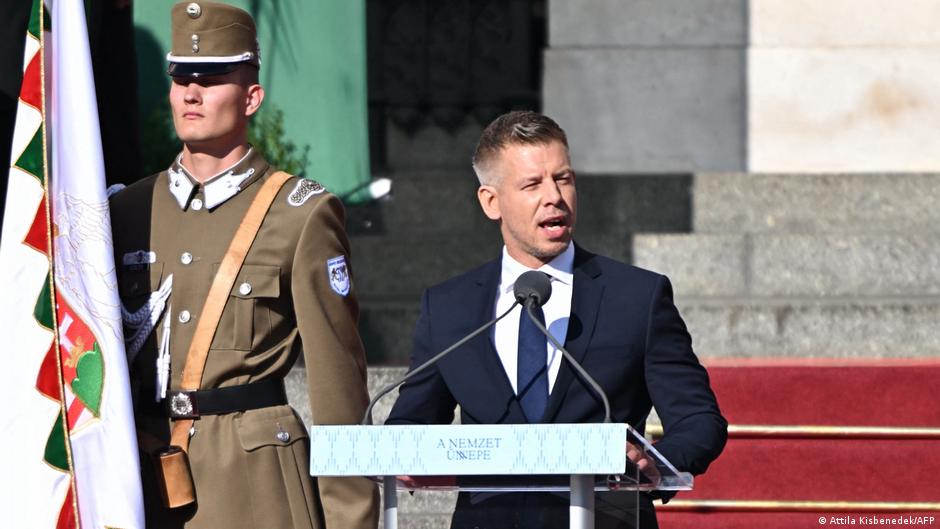
The shift has democratic legitimacy. Magyar's Tisza party won the spring election on an explicitly pro-European platform. EU flags were ubiquitous at rallies, and crowds chanted "Russians, go home." The new government's conviction is that Hungary's place is exclusively in the EU, with only pragmatic, low-level relations with Moscow.
Moscow's response: gas as a weapon
The Russian Foreign Ministry denounced a "Russophobe lobby in Budapest" and promised a "hard and painful" response. Andrey Kolesnik, a member of the State Duma's Defence Committee, said the government would consider halting gas supplies to Hungary. That threat is real: Hungary still receives Russian gas via the TurkStream pipeline, and while storage levels are adequate for now, a winter cutoff would test the government's energy contingency plans.
Energy leverage and the Paks factor
Hungary's vulnerability is not theoretical. The Paks II nuclear expansion, financed by a Russian state loan of roughly €10 billion, ties Budapest to Rosatom for construction, fuel supply and waste management for the next half-century. Anita Orban's academic work argued that Russia uses energy infrastructure as a tool of political control. Her government now has to prove it can withstand that pressure without reverting to the accommodationist instincts of the past.
Rebuilding trust with NATO
Telkes argued the expulsions will help rebuild trust with the intelligence services of NATO allies, who for years treated Hungarian channels as compromised. The alliance's counter-intelligence coordination can now treat Budapest as a secure partner rather than a vulnerability. That trust, once lost, is not regained by a single decision, but the scale of this one suggests the new government understands the price of re-entry.
What happens next
The immediate test is whether Russia follows through on the gas threat. Hungary's storage is filled to roughly 80 percent capacity ahead of winter, and alternative supplies via the EU's joint purchasing platform are available, albeit at higher cost. The next diplomatic milestone is the EU foreign affairs council in October, where Budapest's new line will be tested in the room it once disrupted. If the expulsions are followed by concrete counter-intelligence cooperation and a refusal to yield on gas, the break is real. If Budapest quietly allows replacements to accredit, the war Telkes described will have been only a skirmish.
People mentioned
-
Andras Racz
Organisations
Hungarian Government · Russian Foreign Ministry · NATO · European Union · International Investment Bank