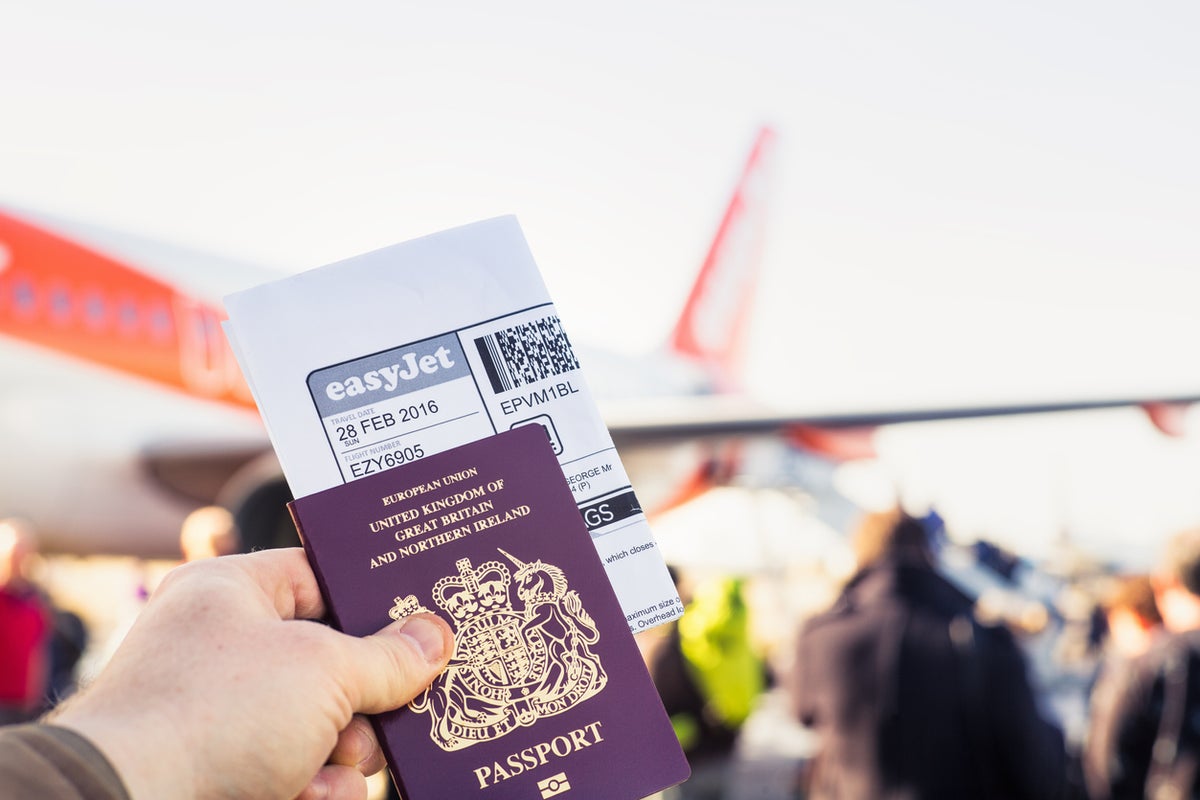
British passport holders continue to face uncertainty when travelling to continental Europe, with airlines occasionally denying boarding to passengers who meet European Union entry requirements. The confusion stems from post-Brexit rules that treat UK citizens as third-country nationals, subject to passport validity conditions that differ from those applied during membership.
The core issue involves two separate tests that border guards must apply. First, the passport must have been issued within the previous 10 years on the date of entry. Second, it must contain at least three months of validity remaining on the date of departure from the Schengen Area. Both conditions must be satisfied, but they operate independently of one another.
Airlines including British Airways and easyJet have incorrectly refused boarding to passengers whose documentation complied with EU regulations. In one documented case, Norway deported a British holidaymaker who had arrived for a ski trip with a valid passport, despite the traveller meeting all entry requirements under Schengen rules.
The 10-year issue date requirement
Until September 2018, the UK government operated a generous renewal policy that allowed unused validity from expiring passports to carry forward into new documents. This meant passports could be issued with validity periods extending up to 10 years and nine months. A passport issued on 31 October 2015 might display an expiry date of 31 July 2026, creating apparent validity beyond the 10-year issue threshold.
For EU travel purposes, the issue date matters more than the expiry date printed in the document. Using the example above, regardless of the July 2026 expiry, the passport ceased to be valid for Schengen entry after 31 October 2025, exactly 10 years from its issue date. The European Commission has confirmed this interpretation in guidance provided to border authorities across member states.
The European Commission's Migration and Home Affairs Department stated clearly: "Entry should be allowed to those travelling with passports issued within the previous 10 years at the moment of entry into the Schengen area. The condition that the passport must have been issued within the previous 10 years does not extend for the duration of the intended stay. It is enough if this condition is fulfilled at the moment of entry."
Three months validity on return
The second requirement operates separately from the issue date test. Travellers must ensure their passport retains at least three months of validity beyond their planned departure date from the Schengen Area. This rule applies regardless of when the passport was originally issued, provided it meets the 10-year issue date condition.
Children's passports present particular considerations in this calculation. Documents issued to under-16s are valid for five years rather than the standard adult duration, meaning they automatically satisfy the 10-year issue requirement. However, the shorter validity period makes children more vulnerable to falling short of the three-month remaining validity condition, particularly for families planning extended European holidays.
The 90-day Schengen limit
Beyond passport validity, British visitors face restrictions on how long they may remain in Schengen countries. The rule permits a maximum stay of 90 days within any rolling 180-day period. This calculation requires tracking all days spent inside the Schengen Area over the preceding six months, not simply counting forward from entry.
The mechanics work as follows: imagine a calendar stretching back 180 days from today. Any day marked as spent inside the Schengen Area counts toward the 90-day total. Once that threshold is reached, the traveller must leave and remain outside for sufficient time to accumulate 90 days outside before returning. During a calendar year, this typically allows roughly three months of presence within every six-month window.
Some countries offer long-stay visas that permit British citizens to remain for extended periods. Time spent in a country under such a visa does not count toward the 90-day Schengen total, effectively resetting the calendar for travel to other EU nations. This arrangement benefits those seeking longer stays in specific destinations while maintaining flexibility for shorter visits elsewhere.
Exceptions and special cases
Ireland operates outside these restrictions entirely. British visitors face no limits on passport validity for travel to the republic, and a passport is not legally mandatory for British travellers, though some airlines insist on seeing one. This reflects the Common Travel Area arrangement that predates both EU membership and Brexit.
Cyprus presents a different situation. As an EU member that has not joined the Schengen Area, it maintains the same passport validity rules: documents must be issued within 10 years and carry three months validity on departure. However, time spent in Cyprus does not contribute to the 90-day Schengen calculation, allowing visitors to combine Cypriot stays with Schengen travel without exceeding limits.
Passport pages also generate unnecessary anxiety. Eurostar warns British passengers to ensure blank pages exist for entry stamps, yet the EU's Practical Handbook for Border Guards explicitly states that lacking empty pages is not sufficient ground to refuse entry. Border officials may use a separate sheet for stamps when passports lack space, particularly for regular cross-border commuters.
Official guidance versus airline practice
The European Union's rules are clearly documented in the Practical Handbook for Border Guards, specifically on pages 28 and 29. The handbook provides worked examples demonstrating acceptable passport configurations, including cases where issue dates approach the 10-year boundary while validity extends beyond the intended stay period.
One example from the handbook describes a visitor arriving on 21 November 2022 for a 20-day stay with a passport issued on 23 November 2012 and valid until 23 March 2023. The guidance makes clear this traveller should be admitted, as the issue date falls within 10 years at entry and validity extends three months beyond departure.
Despite this clarity, some organisations continue publishing incorrect information that creates unnecessary confusion. The European Commission has emphasised that EU countries must accept the additional validity beyond the 10-year issue date, provided the three-month return validity condition is met. Travellers encountering contradictory advice should direct airlines to the official border guard handbook.
Organisations
European Commission · British Airways · easyJet