On 6 September, voters in Saxony-Anhalt could deliver something Germany has not seen since the post-war period: a state parliament where a far-right party holds an outright majority. The Alternative for Germany (AfD) is polling above 40 per cent in the eastern state. If two or three smaller parties fail to clear the five-per-cent threshold required to enter parliament, its seat share could cross 50 per cent, giving it full legislative control.
Two further state votes follow on 20 September in Mecklenburg-Western Pomerania and Berlin. The AfD is less likely to govern in either, but its strength will force difficult coalition configurations to keep it out. In Berlin, the CDU replaced its lead candidate after polls showed the party trailing both the AfD and the Left Party. In Mecklenburg-Western Pomerania, the CDU risks one of its worst-ever results, potentially falling below 10 per cent.
A coalition that cannot convince anyone it works
Chancellor Friedrich Merz's approval numbers tell the story of a government that has lost the confidence of its own supporters. An August 2026 poll by Forsa found 85 per cent of respondents disapproved of his performance, the worst figure in the pollster's decades of operation. Fifty-six per cent of CDU voters agreed. The coalition of CDU and Social Democrats (SPD) has spent months quarrelling across energy, health, social security and tax policy, and the perception of paralysis has done more damage than any single disagreement.
Ursula Heinen-Esser, who heads the German Renewable Energy Federation (BEE) and is a former CDU member of parliament, said the constant disputes "slowly undermine public trust in its ability to act. And this perceived ineffectiveness is what is strengthening parties like the AfD." She argued the government should focus on implementing what it has already agreed in its coalition treaty, particularly reducing Germany's electricity tax to the European minimum. "Reducing power prices is a key lever that the government should be pulling," she said. The political will appears absent, she added, partly because of a tight budget.
The fairness gap on energy transition costs
Most Germans still back decarbonisation in principle. The problem is what they think it costs them personally. A non-representative survey of 20,000 people in eastern Germany by public broadcaster MDR, conducted in late 2025, found nearly 90 per cent did not regard energy transition costs as fairly distributed. Eighty-five per cent said the perceived unfairness was eroding social cohesion.
A separate poll commissioned by the E.ON Foundation and published in early September 2026 found 68 per cent of eastern German respondents worried that climate policies would place a financial strain on them, compared with 61 per cent in the west. The E.ON Foundation concluded that "Eastern Germany is thus becoming the economic litmus test for the social sustainability of the energy transition as a whole."
Saxony-Anhalt and Mecklenburg-Western Pomerania have the oldest populations of any German state. Older respondents in the MDR survey were particularly likely to call the distribution of costs and benefits unfair, a problem for the CDU and SPD, whose core voters skew older.
The 500-billion-euro debt package that pleased nobody
Merz made economic recovery the centrepiece of his 2025 campaign. His government then passed a record 500-billion-euro debt package intended to fund infrastructure and climate neutrality. The package irritated conservative voters who regard borrowing as a betrayal of fiscal discipline, and critics say there is no mechanism to ensure the money is spent effectively.
Instead of delivering on its promises, the government has introduced a series of austerity measures, including in energy and climate policy. A planned "climate bonus" payment to citizens, funded by revenue from Germany's national carbon pricing system and designed to offset the regressive impact of higher energy costs, has been blocked by the budget squeeze.
The AfD's calculated stance on climate
The AfD does not merely exploit discontent. It actively backs protests against renewable projects and rejects the scientific consensus on global warming. Its federal co-leader, Tino Chrupalla, called climate action a "side issue" that other parties use to "deflect attention from the real problems." The remark came during a summer of record heat and severe drought that killed thousands, damaged ecosystems and cost Germany billions in lost productivity.
Yet the party has also recognised that concern about global warming is widespread. Political analyst Johannes Hillje said the AfD now concedes adaptation may be necessary "while simultaneously claiming that preventive efforts are futile." The tension in that position is that extreme weather events challenge the party's core narrative that nothing needs to change.
A government that will not sell its own policy
Hillje identified a deeper communication problem. The coalition, he said, treats decarbonisation as something markets and new technologies will handle on their own. "The consensus in the government seems to be that climate action should not be framed as something people individually have to take part in," he said. The consequence is that voters experience climate policy only as a cost, never as an investment in cheaper energy, new employment or greater resilience.
The heating sector illustrates the damage. The government has repeatedly softened and delayed the transition away from fossil-fuel heating, trying to appease voters who resented the previous administration's more forceful approach. The effect has been the opposite of reassurance: uncertainty about pace and cost has spread among households and industry, undermining acceptance rather than building it.
Merz acknowledges the crisis, not the policy response
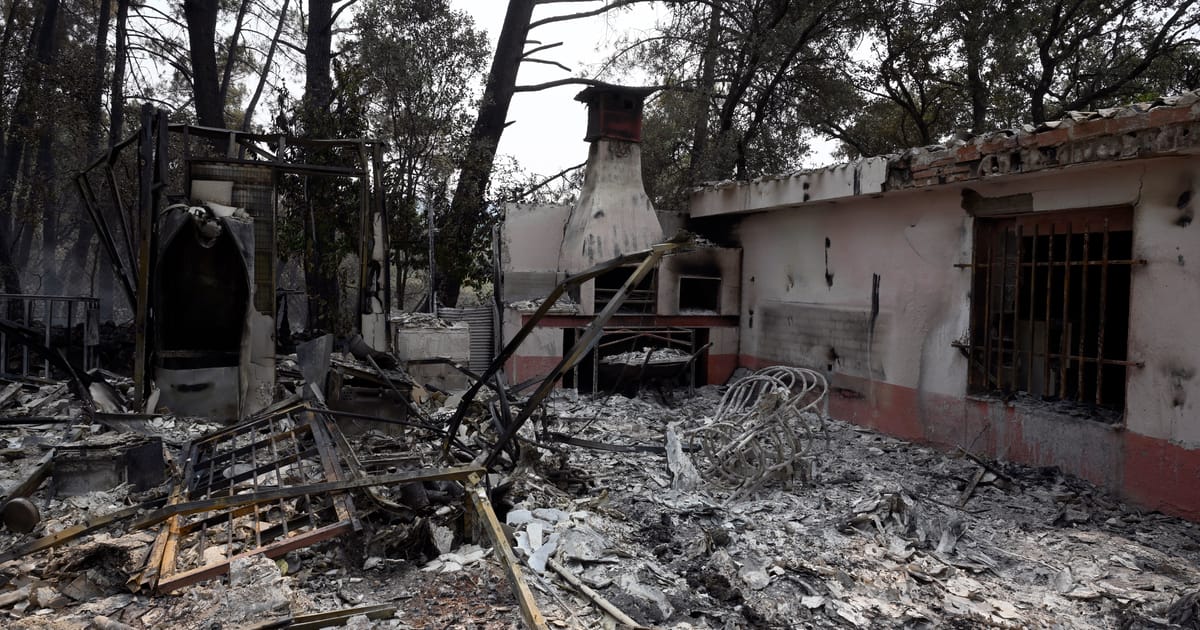
When a large forest fire forced evacuations in the Hürtgenwald region in late August, Merz visited and said plainly: "This is climate change." He added that being prepared for it "is a responsibility of the federal government, the federal states, and the local authorities." Government parties then agreed to "examine" federal funding for climate adaptation.
Hillje does not expect more than token gestures. "The government now might make a little more money available for adaptation projects, but I do not expect a true change of course on climate policy," he said. Conveying that low-carbon technologies and climate-resilient infrastructure are investments that create jobs and improve quality of life would, he argued, offer a more credible narrative for the economy and for responding to climate challenges. There is no sign the coalition intends to adopt one.
People mentioned
-
Ursula Heinen-Esser
-
Johannes Hillje
Organisations
Alternative for Germany (AfD) · Christian Democratic Union (CDU) · Social Democratic Party (SPD) · German Renewable Energy Federation (BEE) · E.ON Foundation · Forsa