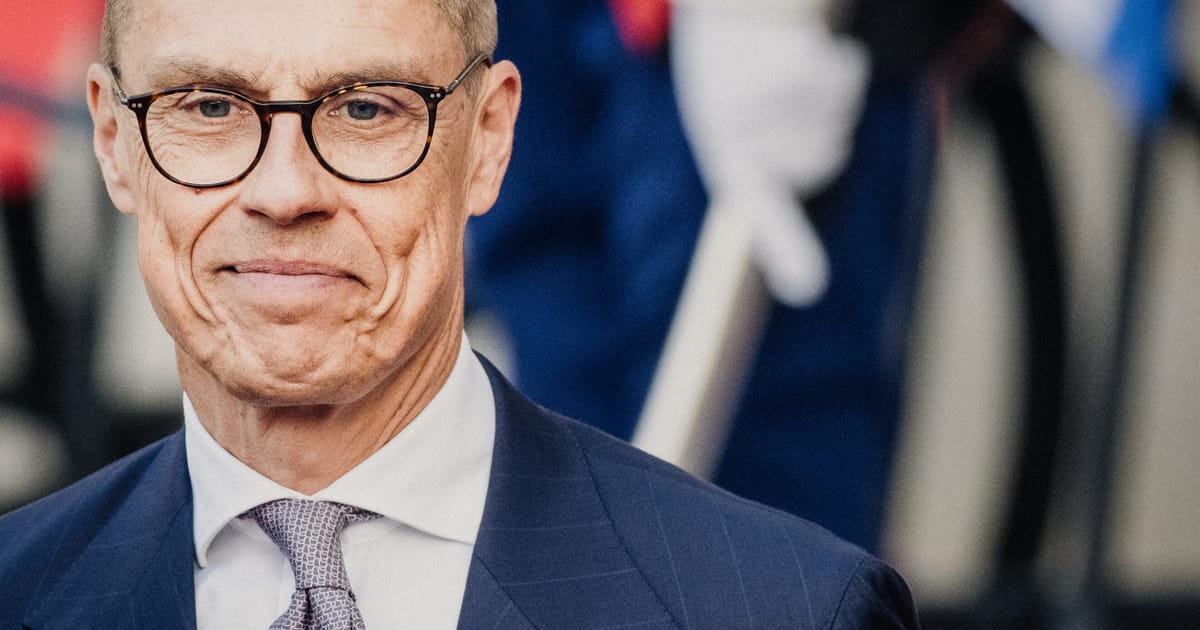
China has privately told Finland it would not permit Russia to use nuclear weapons in its war against Ukraine, according to Finnish President Alexander Stubb, who disclosed the assurance in an interview published on 31 August. The claim, if taken at face value, suggests Beijing has drawn a firmer line in private with Moscow than its public statements often convey, and that at least one European leader considers that line credible enough to function as deterrence.
What Wang Yi reportedly said in Helsinki
Stubb said he raised the nuclear question directly with Chinese Foreign Minister Wang Yi during a meeting in Helsinki on 5 July. According to Stubb, Wang's response was unambiguous: China would not allow Russia to resort to nuclear weapons. Stubb described the exchange as providing "pretty good deterrence" against any Russian escalation.
The disclosure is unusual. Diplomatic conversations at this level are rarely recounted in public with this degree of specificity, and Stubb's decision to share the exchange signals either that he wants to shape the European debate about nuclear risk, or that he believes the message itself gains force from being aired. It is also possible that Beijing is content for the assurance to be known more widely, reinforcing its self-image as a responsible great power while maintaining its strategic partnership with Moscow.
China has publicly opposed nuclear weapons use in the context of the Ukraine war. In January 2023, the Chinese foreign ministry published a position paper on the conflict that called for the avoidance of nuclear escalation. But public statements and private commitments are different things. Stubb's account suggests the private message to at least one European government is blunter and more direct than the diplomatic language Beijing typically deploys in international forums.
Why Stubb's credibility matters here
Stubb is not a peripheral figure in European security debates. Finland shares a 1,340-kilometre border with Russia. It abandoned decades of military non-alignment to join NATO after Moscow's full-scale invasion of Ukraine in February 2022, a decision driven by the direct threat Finns perceived from Russian aggression. The country's intelligence services, border authorities and defence establishment monitor Russian activity as closely as any in Europe.
When Stubb says he finds Beijing's assurance credible enough to function as deterrence, the judgment carries weight precisely because Finland has more reason than most European states to take Russian threats seriously. A Finnish president who dismissed nuclear risk out of hand would invite criticism at home. Stubb's assessment is instead calibrated: he takes the threat seriously enough to raise it with China's foreign minister, but treats Beijing's response as a genuine constraint on Moscow's options.
That said, Stubb's confidence rests on a single private conversation. Whether Wang Yi's statement reflects settled Chinese policy, a diplomatic formulation, or a negotiating posture remains uncertain. China has its own reasons to discourage nuclear use, including the risk of Western escalation and the destabilisation of its broader economic interests, but those reasons do not guarantee Beijing could or would prevent Moscow from acting if Russia's leadership decided otherwise.
Russia's psychological advantage
Stubb used the interview to push back against what he sees as a deliberate Russian strategy: keeping European policymakers and publics anxious about escalation. "Russia wants us Europeans to sit here and discuss: Will Russia escalate? Will Russia use nuclear weapons? Will Russia attack NATO and Europe?" he said. The formulation is pointed. Stubb is arguing that Moscow benefits from the fear itself, regardless of whether it intends to follow through.
He described Russian probing of NATO's borders as "more like teasing" than preparation for war, noting that Russia's forces remain heavily committed in Ukraine and that NATO's collective deterrence makes a direct attack highly unlikely. The language is characteristically blunt for Stubb, who has consistently played down the prospect of imminent Russian military action against NATO members, even as Finland has invested heavily in defence and preparedness.
His prescription for European governments was restrained: "Stay calm, stay cool, stay collected, stay vigilant. Don't dramatize, prepare for the worst in order to avoid it." The advice amounts to a call for strategic discipline, treating Russian threats as something to be managed rather than panicked over, while maintaining the military readiness that makes aggression unattractive in the first place.
A notable call for eventual dialogue with Moscow
Perhaps the most striking element of Stubb's remarks was his argument that Europe should eventually reopen direct political dialogue with Russia. "I'm sure we are approaching the day when it would be useful for Europeans to be in more direct contact with Russia," he said, "especially because we need to avoid misunderstanding." He stressed that Europe is "not there yet" and that the immediate priority remains supporting Ukraine, but the direction of his thinking was clear: isolation cannot be permanent.
This is a significant position from the president of a country that joined NATO specifically because of Russian aggression. Finland's experience of Soviet and Russian pressure shaped its foreign policy for decades, and its decision to seek NATO membership was a direct consequence of Moscow's invasion. For a Finnish president to argue publicly for eventual re-engagement suggests a calculation that long-term European security requires channels of communication, even with an adversary, to prevent miscalculation.
"You can't sort of press mute," Stubb said. "You have to open the discussion." The metaphor is deliberate. He is not calling for normalisation or for concessions, but for the restoration of diplomatic channels that can clarify intent and reduce the risk of accidental escalation. Whether other European leaders share this view, and whether Kyiv would consider such a move premature, is another matter entirely.
Finland's own experience of Russian pressure
Stubb's measured tone on nuclear risk is consistent with his response to earlier incidents. In May, a drone entered Finnish airspace near Helsinki, prompting the deployment of fighter jets. Stubb insisted at the time that Finland was "not facing any direct military threat." The incident illustrated the kind of low-level harassment that NATO's newest members regularly experience, and Stubb's refusal to dramatise it reflected his broader strategic approach: acknowledge the provocation, respond proportionately, and deny the adversary the psychological effect it seeks.
Finland's rapid NATO accession, completed in April 2023 alongside Sweden, fundamentally altered the security geometry of northern Europe. The Baltic Sea is now almost entirely surrounded by NATO members, and Finland's well-equipped defence forces add considerable capability to the alliance's northern flank. That shift has not stopped Russian air and naval activity near Finnish territory, but it has changed the strategic calculus on both sides.
How much leverage does Beijing really have?
Stubb's confidence in China's private assurance raises an unavoidable question: how much influence does Beijing actually wield over Moscow's nuclear decision-making? China is Russia's most important economic and diplomatic partner, providing markets for Russian energy and diplomatic cover at the United Nations. The two governments declared a "no limits" partnership shortly before the full-scale invasion of Ukraine in February 2022. Yet the relationship is asymmetric. Russia needs China far more than China needs Russia, and Beijing has consistently opposed nuclear escalation, in part because it would complicate China's own strategic calculations regarding Taiwan and the broader Indo-Pacific.
Whether that opposition translates into effective veto power over Russian nuclear use is less clear. Moscow has its own red lines and its own calculus, and the decision to employ nuclear weapons would ultimately rest with the Russian leadership, not Beijing. China could impose severe economic and diplomatic costs on Russia for crossing that threshold, and those costs may well be deterrent enough. But Stubb's assurance rests on a Chinese statement of intent, not on a demonstrated willingness to enforce it. The distinction matters.
For European governments weighing nuclear risk, the question is whether to treat Beijing's private messaging as a reliable constraint or as one factor among many. Stubb has evidently decided it is the former. Other capitals may reach different conclusions, depending on their own intelligence assessments and their reading of Chinese strategic interests.
People mentioned
Organisations
North Atlantic Treaty Organization · Ministry of Foreign Affairs of the People's Republic of China