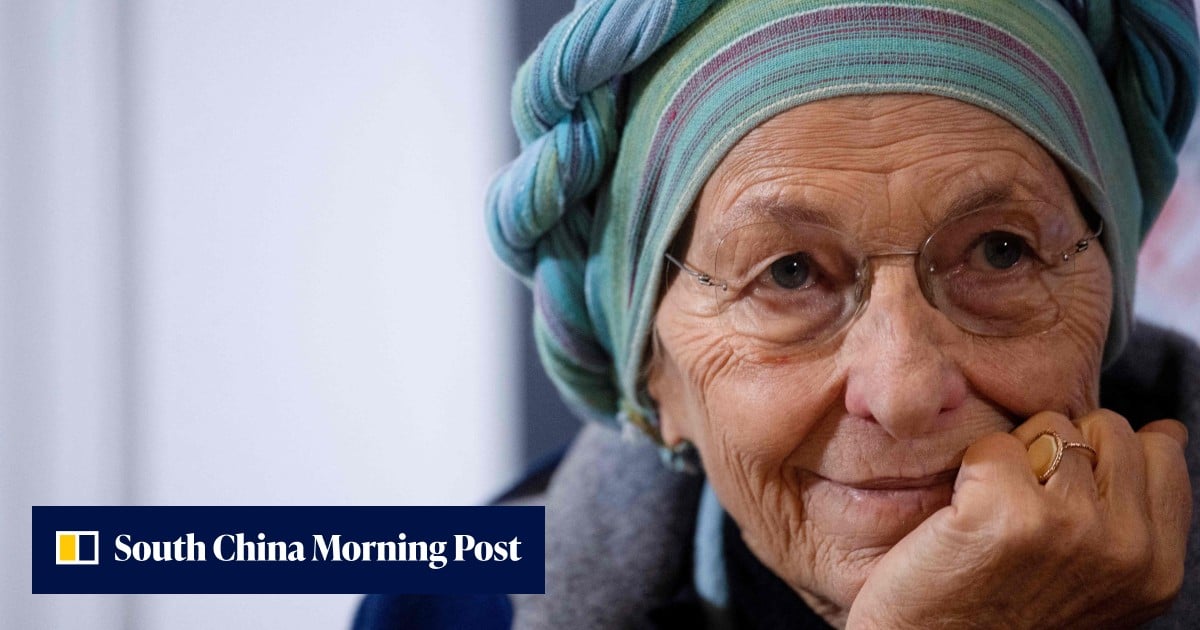
Emma Bonino, the Italian politician whose personal act of defiance made abortion legal in her country, has died at the age of 78. Her career in public life lasted five decades and crossed from the margins of Italian radicalism into the mainstream of European institution-building, but she never stopped courting controversy on purpose.
A crime that became a campaign
In 1974, Bonino travelled to a clandestine clinic in Florence to terminate an unplanned pregnancy. Abortion was illegal in Italy. The experience changed her. "Coming back by train at night, I decided that never, never, never again should anyone have to suffer this humiliation," she later recalled. Most women in her position would have kept quiet. Bonino did the opposite. A year later she handed herself in to police, transforming a private offence into a public act of civil disobedience.
The arrest generated headlines across Italy. It also gave the campaign for reproductive rights a face and a story that could not be dismissed as abstract ideology. The pressure contributed to parliament passing Law 194 in 1978, which legalised abortion during the first 90 days of pregnancy. The law remains in force, though its provisions have been contested almost continuously ever since.
The Radical Party's outsized reach
Bonino entered parliament with the Radical Party, a small organisation that punched well above its weight on civil liberties. The Radicals specialised in causes the larger parties preferred to avoid: divorce, euthanasia, drug decriminalisation, conscientious objection. Their tactics included hunger strikes, referendums and deliberate arrests. Bonino fitted the temperament exactly.
Direct and physically slight, she was frequently underestimated by opponents who mistook her stature for political fragility. She was anything but fragile. The Radical Party never commanded more than a sliver of the vote, yet its members forced through some of the most consequential social reforms in Italian history, largely by making the cost of inaction higher than the cost of concession.
From Rome to Brussels and back
Bonino won repeated election to both the Italian parliament and the European Parliament. In Brussels, she served as a European Commissioner from 1995 to 1999, holding the health and consumer protection portfolio. She used the role to push food safety reforms and transparency in pharmaceutical regulation, areas where the Commission had previously been cautious.
Her time in Brussels was not without friction. She clashed with industry lobbyists over labelling rules and with member state governments reluctant to accept harmonised consumer standards. But she left the directorate-general with a reputation for competence that survived the usual turnover of Commission personnel.
Back in Rome, she served briefly as foreign minister in 2013 under Prime Minister Enrico Letta, and later as minister for European affairs. The foreign ministry appointment raised eyebrows: a radical activist running Italian diplomacy. In practice, she concentrated on human rights and migration policy, issues previous holders of the post had treated as secondary to trade and alliance management.
Causes that outlasted party structures
Bonino's political identity was never tied to a single party. Over the years she moved through several formations, including More Europe and the Italian Radicals, and occasionally stood as an independent. What stayed constant was the agenda: gender equality, civil liberties, the defence of democratic institutions against erosion from within.
"I have been fighting for rights all my life, warning people to defend them, because they don't last forever," she told state broadcaster Rai in 2024. The remark was characteristic. Bonino treated rights as provisional achievements that could be reversed, not permanent features of democratic life. That instinct served her well as Italy's political centre shifted towards the right in the years after Silvio Berlusconi and, more recently, Giorgia Meloni.
What her absence leaves
Bonino's death removes one of the few remaining links between Italy's generation of 1970s reformers and the country's current political class. Law 194 is still law, but access to abortion has narrowed in practice: according to the Italian health ministry, a significant proportion of gynaecologists now register as conscientious objectors, and several regions offer only a single public provider. The gap between legal right and practical availability is precisely the kind of erosion she spent her career warning about.
People mentioned
Organisations
Radical Party · European Commission · European Parliament