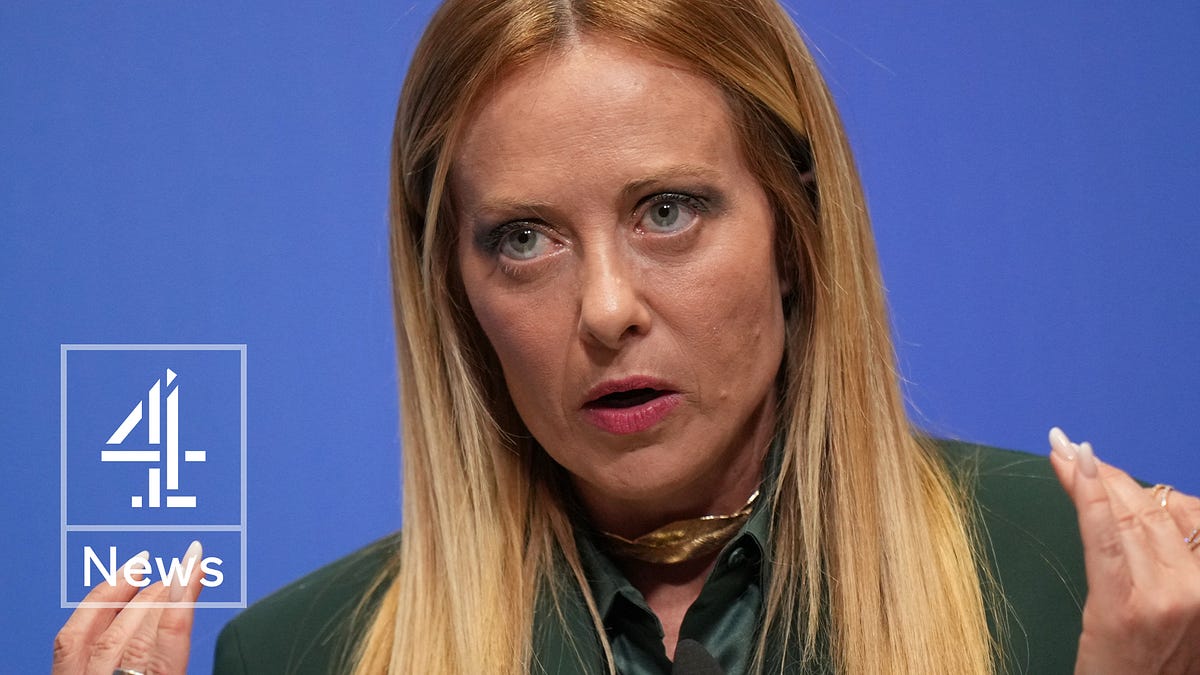
A pot of yoghurt, the old Brussels joke went, would outlast any Italian government. Since 1945 the country has cycled through nearly seventy administrations, most collapsing before their first anniversary. On 5 September 2026 Giorgia Meloni quietly broke that pattern, becoming the first prime minister since Benito Mussolini to remain continuously in office for four years without a reshuffle or a fresh election.
From fringe to fixture
Fratelli d'Italia entered the 2022 campaign as a marginal force with roots in the post-fascist Movimento Sociale Italiano. Meloni's rebranding blended traditionalist rhetoric on family and identity with a promise of decisive action that resonated after years of technocratic drift. More than 100,000 migrants attempted the central Mediterranean crossing in the year she took power. She threatened a naval blockade and the rejection of rescue boats in breach of international law. Once in Palazzo Chigi, neither materialised. The scheme to process asylum claims in Albania has been largely paralysed by legal challenges.
On social issues the pattern repeated. Meloni campaigned against abortion rights and same-sex partnerships but has reversed neither the 1978 abortion law nor civil unions. Critics describe a governing style of performative toughness masking institutional caution. "Immobilism has been her warranty: she has floated above the real problems affecting Italy without seriously addressing them," Brando Benifei of the opposition Democratic Party said.
The Brussels paradox
The clearest evidence of that caution lies in Rome's relationship with the European Commission. When Meloni arrived, Italy was entitled to the largest slice of the EU's post-pandemic recovery instrument: more than €190 billion in loans and grants. Unlocking it required satisfying 575 detailed milestones. As of this month the government has met 72 percent of them. A nominally eurosceptic prime minister has proved scrupulous in complying with Brussels conditionality, most recently tapping a €14 billion low-cost loan earmarked for defence upgrades.
The economy has delivered the modest stability businesses prize. Growth has been positive but anaemic, youth unemployment has fallen to a record low according to government figures, and a series of tax cuts have been legislated. National debt, however, remains above 130 percent of GDP, a constraint that limits any ambitious domestic agenda. The European Commission's recovery tracker confirms the milestone completion rate.
Two domestic defeats
The government's own 28-page achievement brochure omits two setbacks that suggest Meloni's parliamentary control is fraying. In March a referendum on a package of judicial procedural changes was framed by the opposition as a verdict on the premiership itself. Voters rejected it 53.2 percent to 46.8 percent. Four months later the centrepiece of her institutional strategy, a 'Stabilicum' electoral law granting the largest party a 70-seat winner's bonus, fell in the Chamber of Deputies by a single vote. Several Brothers of Italy deputies broke ranks.
The narrow loss exposed factional tensions that had been papered over by the party's polling lead. Meloni remains ahead in every survey, but the margin over the Democratic Party has been shrinking. At the same time a new competitor has emerged on the right. Roberto Vannacci, a general cashiered for a self-published book containing overtly homophobic, racist and misogynistic passages, has launched a party that is skimming support from Fratelli d'Italia's traditional base.
Washington, Paris and the NATO summit
Meloni's international positioning has shifted markedly. Once viewed as a conduit to Donald Trump, she broke publicly with the former US president over his attacks on Pope Francis and her initial refusal to allow Italian bases to be used for strikes on Iran. Trump later conceded she was "a nice person, actually", but the two avoided each other at the July NATO summit. The friction may have eased her relations with Emmanuel Macron, with whom she had clashed over abortion rights. NATO's summit communiqué made no mention of bilateral tensions.
A model for the right?
British Conservative leader Kemi Badenoch, after meeting Meloni last month, said she wanted to understand "how she did it, because after Labour, Britain is going to need exactly that kind of resolve." Alberto Rizzi of the European Council on Foreign Relations offered a colder reading. "If a magic formula can be found here for other European parties, it is that if you keep a fairly balanced budget and avoid trying to overhaul the status quo, with a bit of luck you might last a long time in power. Yet, this is hardly enough to improve a country's trajectory."
The celebration and the calendar
A "corridor of lights" greeted thousands of supporters in Bari on Friday night to mark the record. The pageantry cannot conceal the strategic dilemma. Meloni is no longer the insurgent; she is the establishment. Her longevity rests on a compact with Brussels, a fragile parliamentary majority, and a public that has so far rewarded stability over delivery. The next test is not a vote of confidence but the decision of when to call an election. Polls suggest the window for a comfortable victory may be closing.
People mentioned
Organisations
Fratelli d'Italia · European Commission · European Council on Foreign Relations · NATO · Italian Government