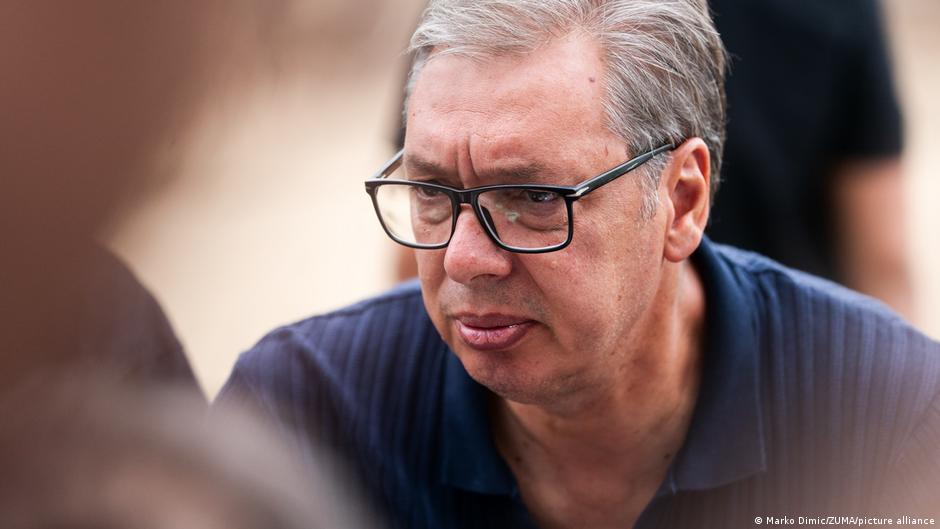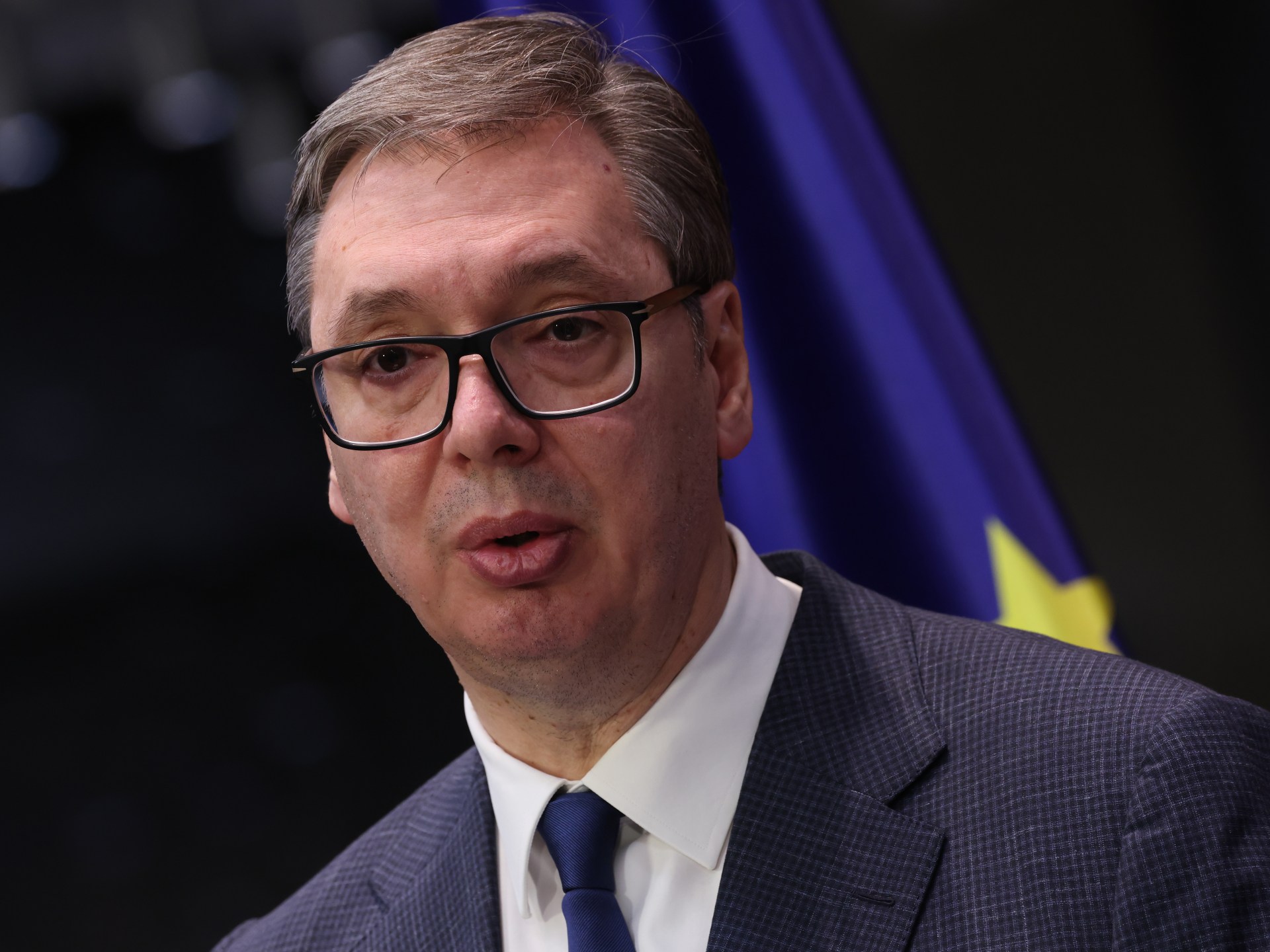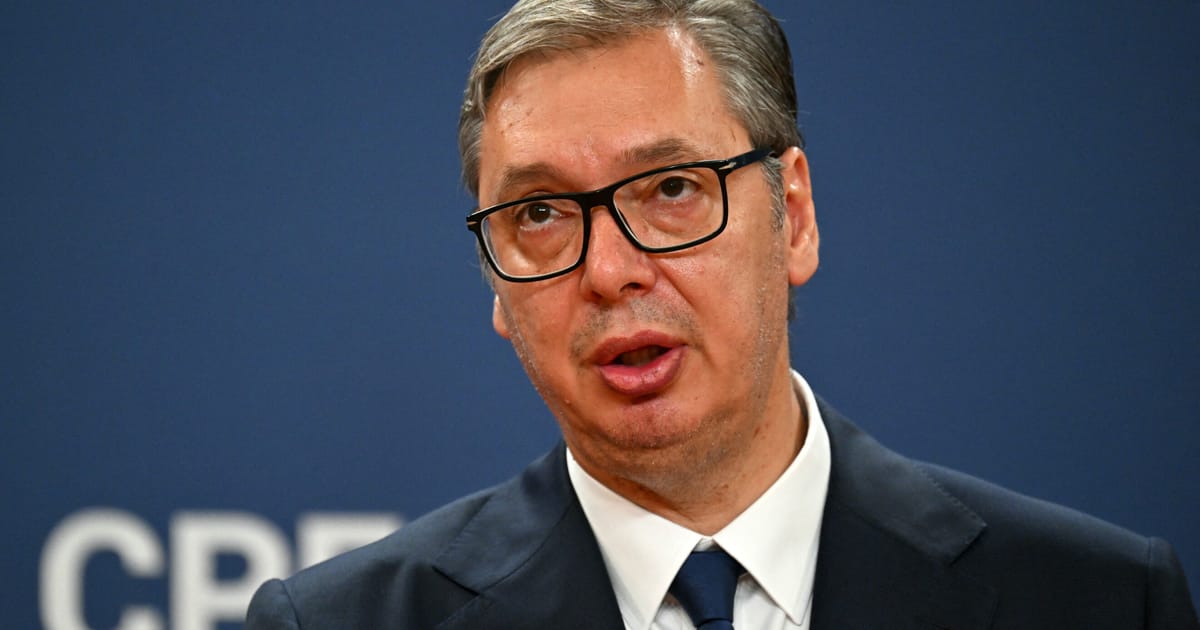
Serbian president Aleksandar Vučić has dissolved the national assembly and called snap parliamentary elections for 25 October, a decision that converts months of protest pressure into a contest he intends to fight on his own terms.
"I am convinced that the citizens of Serbia will choose the right path into the future," Vučić said on Wednesday, adding that "preserving our democratic system" and avoiding divisions were his priorities. The phrasing is characteristic: Vučić routinely presents his own continued grip on power as the natural expression of popular will.
Prime minister Đuro Macut formally requested the dissolution on Monday. "If we want to mitigate tensions in society there is no better way than to ask people," Macut said. It is a convenient formulation. The protests demanding early elections have been running for nearly two years. Granting that demand now, with the protest movement still organising but without a unified political vehicle, gives Vučić's Serbian Progressive Party (SNS) the advantage of an established campaign infrastructure and near-total control of national media.
The Novi Sad disaster that changed Serbian politics
In November 2024, a concrete canopy at a recently renovated railway station in Novi Sad collapsed, killing 16 people. The station had undergone a Chinese-funded refurbishment as part of a broader rail modernisation programme closely associated with Vučić's government. The collapse was not an isolated infrastructure failure. It became a symbol of what protesters describe as systemic corruption: public contracts awarded to politically connected firms, safety inspections that failed to inspect, and a governing class that treated public infrastructure as a branding exercise rather than a public service.
Student-led demonstrations spread from Novi Sad across the country. They have persisted through police interventions, government attempts to discredit organisers, and the quieter periods when media attention moved elsewhere. The protesters' core demands were accountability for the disaster and early parliamentary elections. They have now got the second demand, though the timing and conditions are set by the presidency, not the streets.
Foreign interference as domestic explanation
Vučić acknowledged what he called "turbulence" in Serbian society but attributed the protests to "significant interference by foreign powers" rather than to genuine domestic anger about corruption and governance failures. The claim is a familiar one in Belgrade. Government-aligned media have repeatedly cast protest leaders as agents of Western intelligence services or foreign-funded agitators, without producing evidence.
The accusation serves a dual purpose. It delegitimises domestic opposition by suggesting the protests are not authentically Serbian, and it reinforces Vučić's longstanding political positioning as a leader who protects Serbian sovereignty against external pressure. That positioning has proved electorally effective in the past.
From president to prime minister
The most striking detail in Wednesday's announcement is not the election itself but what Vučić plans to do afterwards. His SNS has nominated him for prime minister if the party secures a parliamentary majority. Vučić's second and final presidential term expires in 2027. Dissolving parliament now and running for the premiership would allow him to remain in executive office beyond that constitutional limit, moving from the relatively constrained role of president into the more powerful position of head of government.
In June, Vučić publicly stated he would resign the presidency "within weeks." He has not done so. The promise of resignation now looks less like a genuine commitment and more like a trial balloon, abandoned once it became clear that stepping aside voluntarily was never the plan.
The EU accession question
Serbia has been a candidate for European Union membership since 2012. Progress has been negligible for years. The European Commission has repeatedly flagged concerns about the rule of law, media freedom and the independence of institutions in Belgrade. Serbia's refusal to impose sanctions on Russia following the full-scale invasion of Ukraine has added a geopolitical dimension to the delay.
Vučić has cultivated a careful balancing act: pursuing EU membership as an economic necessity while maintaining ties with Moscow and Beijing as a political signal. The snap elections will test whether that balancing act still delivers votes at home. They will also give Brussels an uncomfortable decision. If the OSCE and Council of Europe observers judge the election free and fair, the EU will face pressure to restart accession talks with a government led by a man who has just swapped offices to circumvent term limits. If the election is judged flawed, the already stalled process freezes further.
What the opposition faces
The protest movement has been effective at mobilising street demonstrations but has not yet built a unified electoral coalition capable of contesting a national vote. Vučić's decision to call elections on 25 October, rather than waiting for the scheduled end of the parliamentary term, compresses the timeline for opposition organising. Campaign finance rules, media access and the use of administrative resources have all favoured the SNS in previous elections, according to reports from the OSCE's election observation missions.
The opposition's dilemma is structural. Boycotting the election would hand the SNS an uncontested mandate. Participating without a coherent platform risks legitimising a process that has favoured the incumbent in every recent contest.
People mentioned
-
Đuro Macut
Organisations
Serbian Progressive Party · Republic of Serbia · European Union