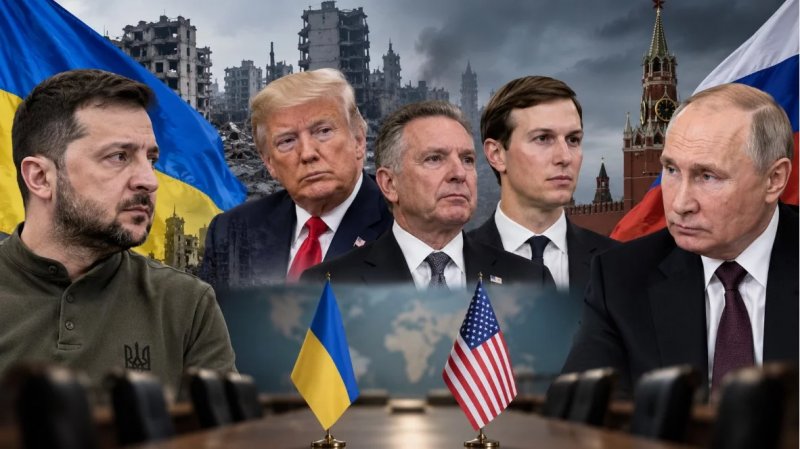
Two American envoys with close ties to Donald Trump are shuttling between Moscow and Kyiv, but the diplomatic activity masks a structural problem: the parties remain far apart on the questions that matter, and Ukraine does not trust the mediators.
The envoys and their credibility gap
Steve Witkoff, serving as a US special envoy, has held multiple rounds of talks with Russian officials, including face-to-face meetings with Vladimir Putin. His public remarks about those encounters have been notably warm. That warmth has not gone down well in Kyiv, where officials and the broader public see a mediator who appears more attuned to Moscow's arguments than to Ukraine's concerns. Witkoff's engagement with the Ukrainian side has been far more limited, reinforcing the impression of an imbalance.
Jared Kushner brings a different set of complications. His involvement is understood in Kyiv primarily through his family connection to Trump and his career in real estate and investment. Unconventional diplomatic channels can serve a purpose, and Kushner's access to the White House is real. But access does not equal credibility. Ukrainian officials regard him as a political operator rather than a neutral broker with deep knowledge of the conflict's history or the region's security architecture.
Territory and the constitution
The hardest obstacle is land. Russia expects Ukraine to accept the loss of territory it currently controls or claims. Ukraine's constitutional order does not permit that. Sovereignty over the country's internationally recognised borders is not a policy preference that can be traded away at the negotiating table; it is a legal requirement embedded in the constitution itself.
Vague territorial formulations, the kind often floated as compromise, raise immediate practical questions that no one has answered. What passport would residents of disputed areas hold? Which courts would adjudicate their disputes? Under whose laws would businesses operate? Which elections could they vote in, and for which parliament? Once these questions are taken seriously, the idea of papering over territorial disagreements with deliberately ambiguous language collapses. Ambiguity does not resolve a sovereignty dispute. It postpones it.
Azerbaijan's president, Ilham Aliyev, has publicly reinforced this point, arguing that Ukraine should not accept the loss of its sovereign territory. His stance carries weight in Kyiv because Azerbaijan itself has lived through the consequences of territorial disputes and the difference between de facto control and de jure sovereignty.
Why investment cannot replace deterrence
One recurring idea in the diplomatic discussion is that Western economic involvement in Ukraine, whether reconstruction funds, American investment, or joint infrastructure projects, could itself provide a measure of protection. The logic is that if enough American or European capital is deployed inside Ukraine, Russia would be deterred from attacking again because Western governments would have skin in the game.
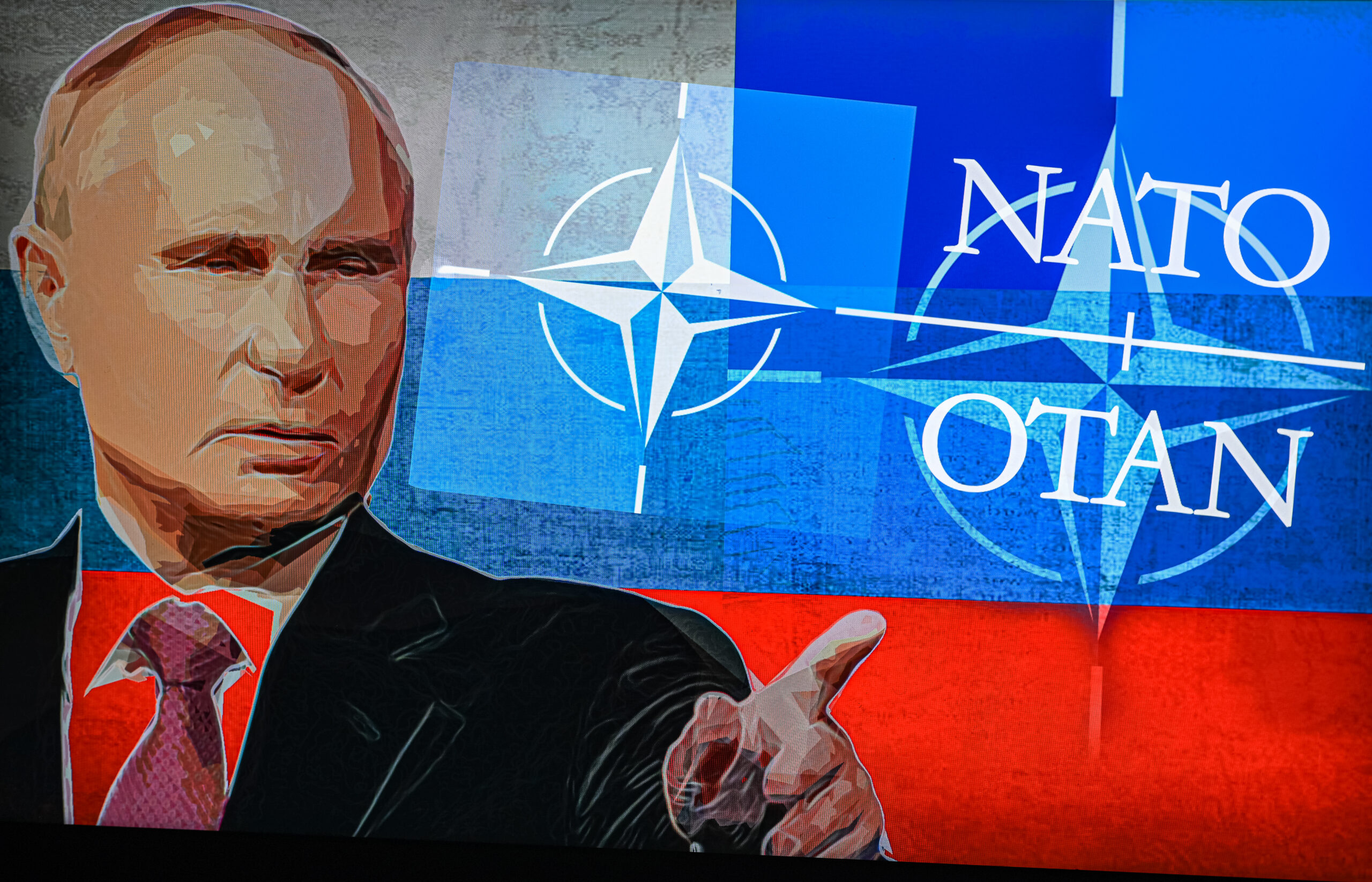
Kyiv rejects this reasoning. Capital is mobile. Investors can write down losses and leave. A nuclear power plant under foreign management is not the same as a defence pact. The only security guarantees Ukraine considers credible are those comparable to NATO's Article 5, which treats an armed attack on one member as an attack on all. Anything less leaves Ukraine in a position where it stops fighting today without a reliable mechanism to prevent another Russian offensive tomorrow.
The durability problem
Even if Washington offered strong security commitments, Kyiv has to ask how long those commitments would last. American foreign policy can pivot sharply. An administration that promises deterrence today may be replaced by one that views Ukraine as a distant problem. Sanctions, the other lever frequently discussed, face the same difficulty. They depend on political decisions in Washington and European capitals. They can be tightened, loosened, or abandoned as governments change.
Ukraine therefore cannot anchor its long-term survival to promises whose implementation depends on future political circumstances beyond its control. This is not an abstract concern. The Budapest Memorandum of 1994, in which Ukraine gave up its nuclear arsenal in exchange for security assurances from the United States, the United Kingdom and Russia, proved worthless when Russia annexed Crimea in 2014. That experience colours every subsequent discussion about Western guarantees.
What limited progress could look like
None of this means diplomacy is useless. Ukraine cannot afford to walk away from US-backed talks, because doing so would hand its critics, particularly in American domestic politics, the argument that Kyiv does not want peace. So the talks will continue. But participation is not the same as acceptance.
There is room for practical agreements that do not require resolving the territorial or security questions. The return of Ukrainian prisoners from Russian captivity is one such area. Every individual brought home matters, both for the people involved and for the domestic political signal it sends that engagement can produce tangible results. Humanitarian exchanges could create a limited foundation for further contact.
The danger is that Moscow sees negotiations as a way to buy time, waiting for shifts in Washington's political climate while preventing tougher sanctions or military pressure. Meetings, handshakes and positive statements are not themselves progress. Diplomacy becomes meaningful only when it changes behaviour or narrows the distance between the parties' positions.
The structural impasse
The underlying positions have not moved. Russia demands that Ukraine accept conditions Kyiv regards as incompatible with its sovereignty and constitution. Ukraine refuses to make territorial concessions that would reward aggression and, in its view, invite further demands. From Kyiv's perspective, every concession to Moscow risks becoming the baseline for the next round of pressure.
A sustainable compromise requires both sides to recognise each other as political subjects with legitimate interests. If one party questions the other's right to exist as an independent state, there is no foundation on which to build. Ukraine has earned its seat at the table through resistance, not because Washington granted it as a favour.
People mentioned
-
Ilham Aliyev
Organisations
North Atlantic Treaty Organization · United States government