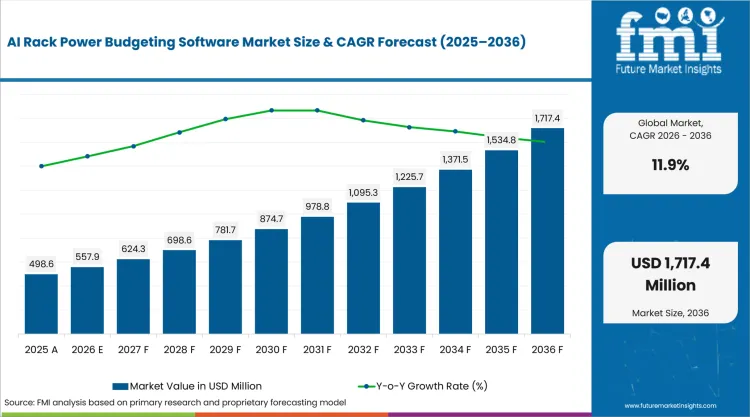
The International Energy Agency expects data centres worldwide to consume roughly 945 terawatt-hours of electricity by 2030, a figure driven almost entirely by the expansion of AI computing. That demand does not arrive at national grids as an abstract number. It shows up at substations, switchgear, busways and the power distribution units bolted to individual server racks. A slice of that infrastructure challenge has become a software market worth an estimated $557.9 million this year, with projections placing it at $1,717.4 million by 2036.
The category is AI rack power budgeting software. It exists because the old method of allocating power, a static nameplate calculation updated occasionally, breaks down when racks draw 250 kilowatts or more to run accelerator clusters that shift load in real time.
Why static planning no longer works
Conventional data-centre power planning treated each rack as a fixed load. Operators reserved capacity, checked it against available supply, and moved on. AI workloads do not sit still. Training runs and inference batches change consumption minute by minute. Cooling requirements shift with them. Redundancy configurations change when equipment is taken offline for maintenance. A reserved capacity figure that diverges from what the electrical path can actually deliver becomes a deployment risk, not a planning convenience.
Sudip Saha, principal consultant at Future Market Insights, puts the requirement plainly: "A useful rack power budget has to stay synchronized with the physical electrical path instead of remaining a static planning estimate. Teams should test proposed AI rack loads against available capacity, redundancy, cooling and operating limits before procurement, then reconcile the model with live telemetry after commissioning."
The numbers behind the niche
Future Market Insights values the AI rack power budgeting software market at $557.9 million in 2026 and projects it to reach $1,717.4 million by 2036, a compound annual growth rate of 11.9 per cent. The monitoring and telemetry segment accounts for 27 per cent of platform-function demand this year. The incremental revenue added over the decade is estimated at $1,159.5 million.
These are not large numbers by enterprise-software standards. They reflect a niche that has emerged because the consequences of getting power allocation wrong at a hyperscale facility, where a single capacity error can cascade across hundreds of accelerator racks sharing the same electrical infrastructure, are expensive enough to justify dedicated tooling.
European incumbents and EU regulation
Three of the four companies identified as leading this market are European. Schneider Electric, the French industrial group, and Siemens, its German counterpart, both connect electrical monitoring with data-centre planning software. AVEVA Group, the British industrial-software company now part of Schneider Electric, provides the operational-data infrastructure and capacity-planning layer. Jacobs Solutions, the American engineering firm, contributes simulation capabilities.
European firms hold a structural advantage that goes beyond their existing product portfolios. The European Commission has introduced energy-performance reporting obligations for data centres, increasing the commercial value of consistent monitoring and reporting across facilities. Operators in Europe face a regulatory incentive to instrument their power infrastructure more thoroughly than counterparts in jurisdictions without equivalent rules. That incentive translates into demand for software that can reconcile planned capacity with measured consumption and produce auditable records.
When a single rack draws half a megawatt
The 251-500 kW rack density range marks the transition from conventional server deployment to the electrical architecture that AI accelerators demand. At those loads, a single rack decision affects busway sizing, circuit-protection settings, liquid-cooling provision and redundancy assumptions. Capacity allocation requires more detailed modelling than a nameplate rating can provide.
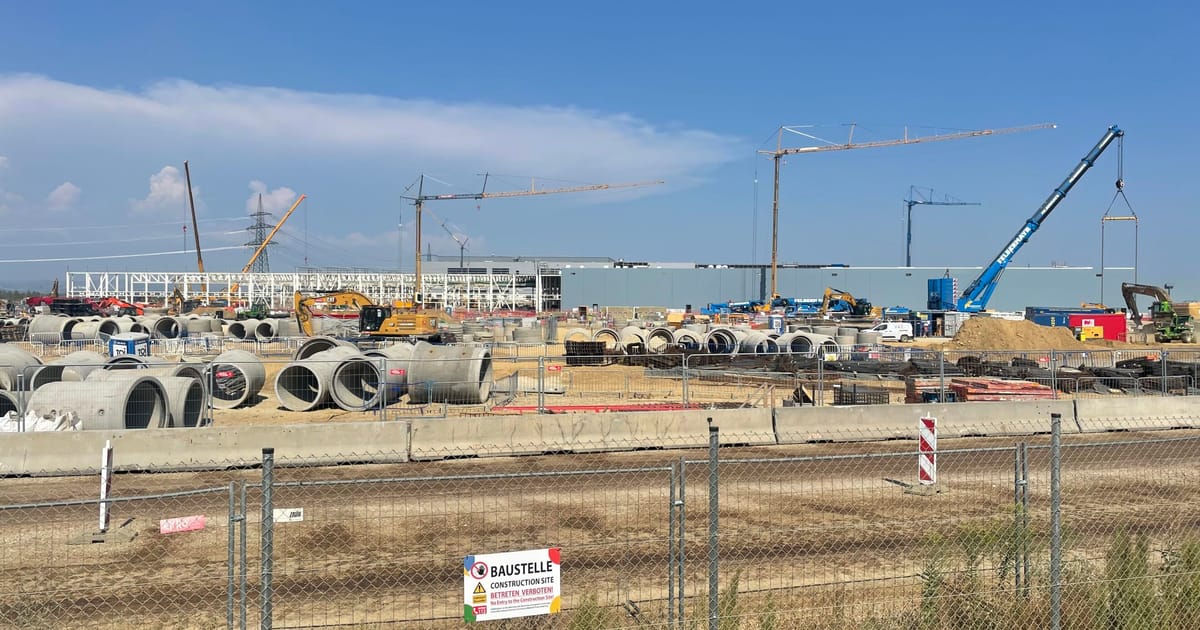
The problem intensifies at hyperscale sites, where operators stage rack installation across buildings that are still being constructed. Power-budgeting software coordinates the sequence of rack energisation with upstream capacity, cooling availability and construction progress. Without that coordination, an operator risks commissioning racks that the local electrical infrastructure cannot yet support.
Digital twins move planning into operations
The market is also being shaped by the adoption of digital-twin technology. Schneider Electric and ETAP have combined electrical digital-twin capabilities with NVIDIA Omniverse to simulate AI-factory power requirements from grid connection to individual chips. Jacobs models compute, power and cooling in a single virtual environment. These approaches extend rack budgeting from a static allocation exercise into scenario testing that covers design, commissioning and day-to-day operations.
Siemens has noted that rapidly shifting AI loads challenge traditional grid planning and data-centre design, an observation that applies equally to the software models used to manage those loads. The IEA's projection of 945 TWh of data-centre electricity consumption by 2030 gives a sense of the infrastructure strain ahead.
The data quality problem underneath
The value of a digital twin, or any power budget, depends on the quality of the data feeding it. Missing metering, outdated rack inventories, unmodelled redundancy states or disconnected cooling data generate false capacity signals. European energy-performance rules encourage better data discipline, but implementation still depends on consistent instrumentation and system integration at each facility.
Fragmented telemetry weakens budget accuracy precisely as operators begin using digital twins to test power and cooling changes before deployment. The risk is that operators build sophisticated simulation environments on top of incomplete data, producing confident answers to the wrong questions.
People mentioned
-
Sudip Saha
Organisations
Schneider Electric SE · Siemens AG · AVEVA Group Limited · Jacobs Solutions Inc. · Future Market Insights · International Energy Agency