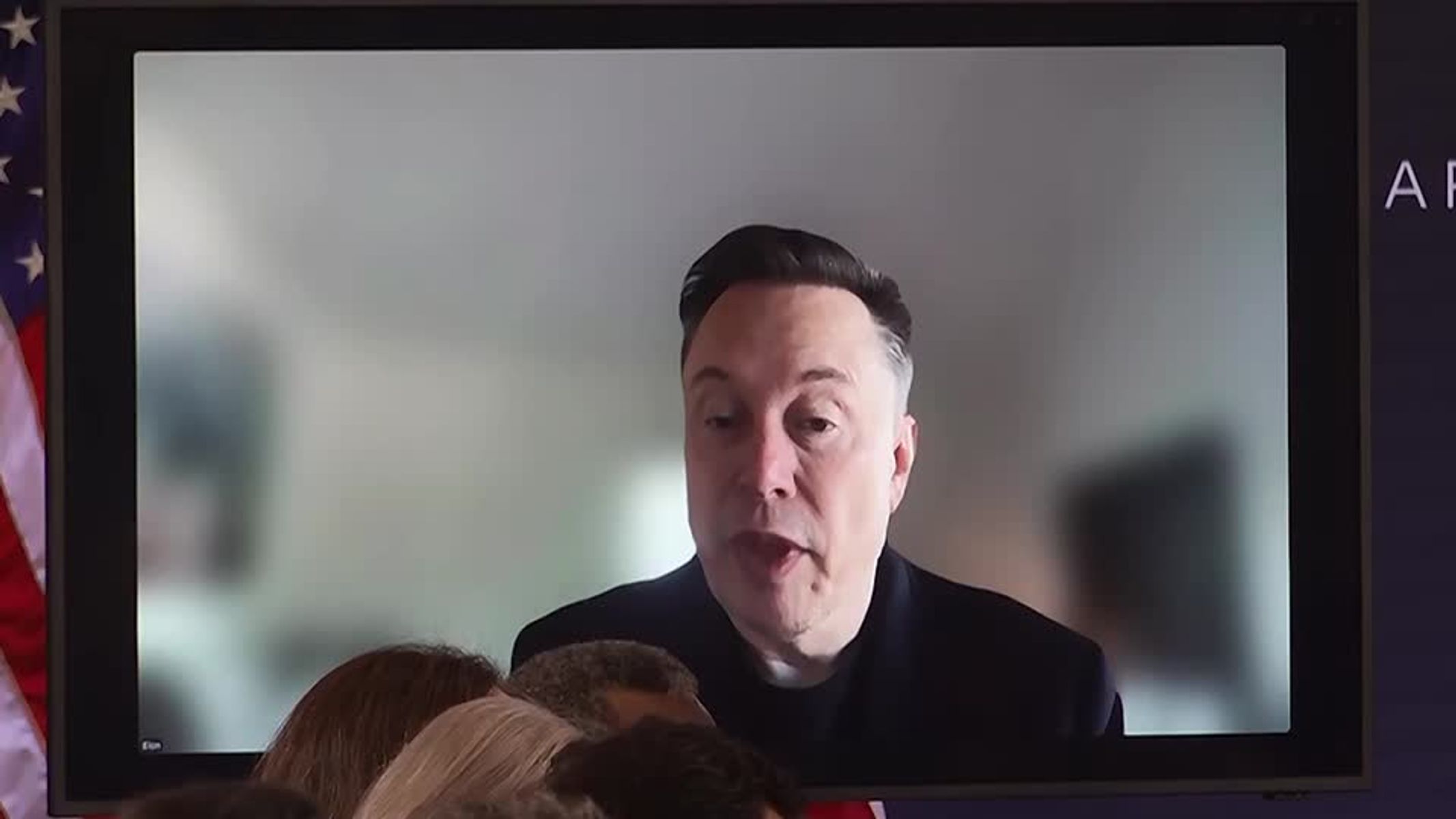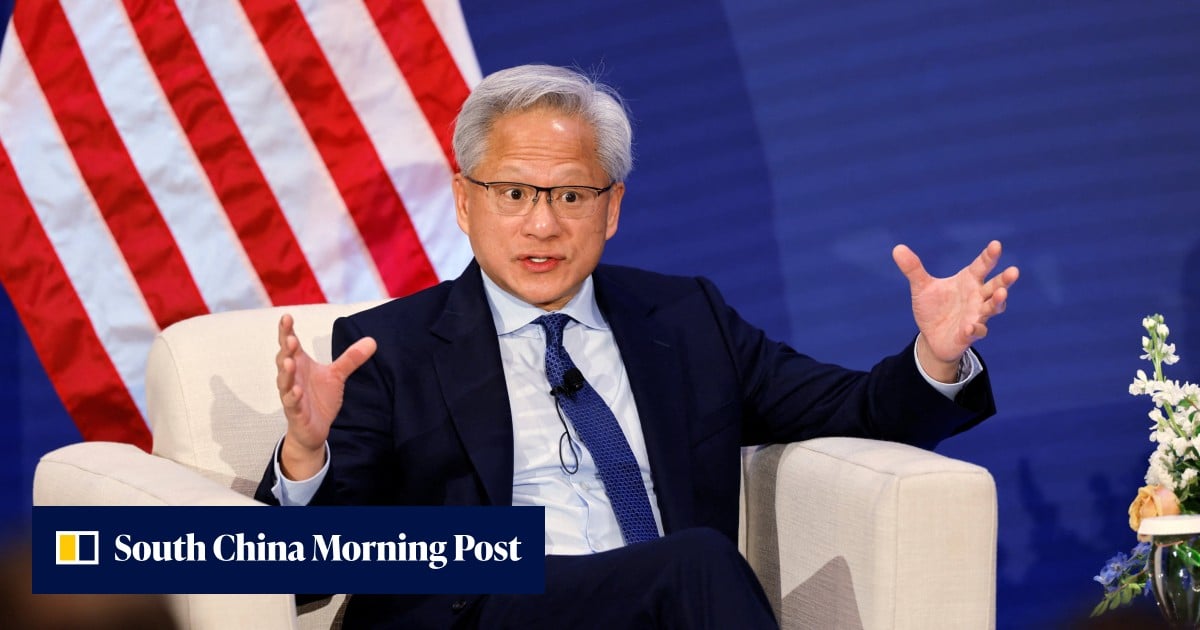
The chief executives of Nvidia and Tesla used a G20 meeting this week to deliver a blunt message to governments: back off artificial intelligence regulation, or risk losing the technological contest with China. Their argument, delivered at a gathering ostensibly about international economic cooperation, was really a challenge to the regulatory model that the European Union has spent years building.
Jensen Huang, whose company designs the graphics processors that power most of the world's large AI models, told policymakers at the G20 meeting in Chapel Hill, North Carolina, on Wednesday that AI rules should target what he called "actual and pragmatic harm" rather than "hypothetical theoretical harm". He warned that excessive regulation driven by fear would prevent countries from capturing the economic benefits of the technology.
"The worst outcome is that you don't take advantage of it, that you are left behind," Huang said, according to remarks reported from the session. The framing was deliberate. By invoking the possibility of being "left behind", he was asking governments to treat AI development as a zero-sum competition in which regulatory caution amounts to unilateral disarmament.
Musk's deregulatory pitch
Elon Musk, speaking at a separate G20 session on Tuesday, made a similar case in blunter terms. He told the audience that countries should create an environment "relatively free of regulation" in which new technologies were "default legal as opposed to default illegal". The phrase "default legal" is a striking inversion of how most regulatory systems work. In the EU, for instance, products from cars to chemicals must demonstrate safety before they reach the market. Musk was arguing that AI should operate under the opposite presumption: permitted unless proven harmful.
Musk's position carries a particular irony. He has repeatedly warned, including in public statements over several years, that artificial general intelligence could pose existential risks to humanity. In 2023, he was among the signatories of a letter calling for a pause on training AI systems more powerful than GPT-4. His appearance at the G20 arguing for minimal regulation suggests either a shift in his thinking or a strategic decision that existential concerns should not translate into binding rules for his own companies.
The China framing
Both executives anchored their arguments in geopolitical competition. The United States and China are racing to develop and deploy advanced AI systems, and the executives' message was that heavy-handed regulation would hand the advantage to whichever country moves fastest. It is an argument that resonates in Washington, where export controls on advanced semiconductors, including Nvidia's chips, have already been used to slow China's AI progress.
The geopolitical framing is harder to apply in Europe, which has neither Nvidia's chip design capabilities nor the large language model developers that dominate in the US. Europe's AI sector is comparatively small, and the continent's strategic calculus is different. Brussels has concluded that Europe's competitive advantage lies not in building the most powerful models but in setting the rules for how they are used.
The EU's existing regime
The subtext of the Chapel Hill sessions was the European Union's AI Act, which became law in August 2024 and is being phased in over two years. It classifies AI systems by risk level, from minimal to unacceptable, and imposes obligations on developers that increase with the potential danger of their applications. High-risk systems, such as those used in hiring, credit scoring or law enforcement, face strict requirements for data quality, transparency and human oversight. Certain uses, such as social scoring by governments, are banned outright.
The Act's approach is precisely what Huang and Musk were arguing against. Where the EU sees a spectrum of risk that requires graduated obligations, the American executives see a drag on innovation. Where Brussels insists on pre-market assessment for the riskiest applications, the tech chiefs want a default of permission. The disagreement is not about whether AI can cause harm; it is about who bears the burden of proof.
European officials have heard these arguments before. The same complaints about over-regulation were made about the EU's General Data Protection Regulation before it took effect in 2018. GDPR did not, as critics predicted, kill the European digital economy. It did, however, create compliance costs that weigh more heavily on smaller companies than on the large American platforms that lobbied hardest against it.
Huang's commercial interest
It is impossible to separate Huang's regulatory argument from his commercial position. Nvidia reported revenue of more than $60 billion in its most recent financial year, the vast majority of it from selling the graphics processing units that train and run AI models. Every regulatory restriction on AI development is, in effect, a restriction on the demand for Nvidia's products. When Huang says that regulation will leave countries behind, he is also saying that regulation will reduce the market for his chips.
This does not make his argument wrong, but it does require policymakers to weigh it accordingly. The question for governments is whether the person telling them to regulate less is doing so because regulation genuinely harms economic growth, or because it genuinely harms his revenue. The two overlap but are not identical.
What US Commerce Secretary Lutnick's presence signals
Howard Lutnick, the US Commerce Secretary, appeared alongside Huang at the G20 session. His presence on the panel matters. The Commerce Department oversees the National Institute of Standards and Technology, which has been developing an AI Risk Management Framework, and it administers the export controls that restrict Nvidia's chip sales to China. Lutnick did not, according to the reported remarks, push back on Huang's call for lighter regulation. That silence is itself a signal about the current posture of the US administration.
The United States has taken a fragmented approach to AI governance. There is no comprehensive federal AI law. Instead, the administration has issued executive orders, federal agencies have issued guidance under existing sectoral laws, and a handful of states have passed their own legislation. The result is a patchwork that large companies can navigate but that creates uncertainty for smaller firms. It is this regulatory vacuum that the EU's AI Act was designed to fill, at least within Europe.
Europe's strategic calculation
For European policymakers, the G20 speeches present a familiar dilemma. The continent is home to very few of the world's leading AI companies. France's Mistral AI is the most prominent European challenger, but its resources and reach remain a fraction of those of OpenAI, Google or Anthropic. If Europe regulates too heavily, it risks driving what little AI development exists to jurisdictions with lighter rules. If it regulates too lightly, it gains nothing from its regulatory infrastructure and still fails to compete with American and Chinese firms that have more data, more capital and more talent.
The European Commission has argued that regulation and innovation are not opposites, and that clear rules give businesses the legal certainty they need to invest. The AI Act, in this view, is a competitive advantage because it creates a single set of rules across 27 member states, replacing the national fragmentation that would otherwise prevail. Whether companies share that view is another matter. Several major American technology firms have already adjusted their European operations in response to the Act, and some have warned that compliance costs will divert resources from product development.
The burden of proof
The fundamental disagreement between the American executives and the European regulators comes down to where the burden of proof lies. Under the EU's approach, developers of high-risk AI systems must demonstrate that their products meet safety and transparency requirements before deploying them. Under the model Huang and Musk advocate, AI systems should be free to operate unless they cause demonstrable harm. The first approach prioritises prevention. The second prioritises speed.
There is a genuine trade-off. Preventive regulation can stifle applications that turn out to be benign, and it can entrench incumbents who can afford compliance teams. Reactive regulation can allow harm to accumulate before authorities intervene, and it can leave individuals without recourse when algorithmic decisions damage their lives. Neither approach is obviously superior; the choice depends on how much weight you give to innovation versus how much weight you give to the people who bear the consequences of innovation.
What made the G20 exchanges notable was not the substance of this debate, which is well-rehearsed, but the venue. The G20 brings together the world's largest economies, many of which are still deciding how to regulate AI. India, Brazil, South Africa and others have yet to settle on their frameworks. The executives' message was aimed as much at these undecided governments as at Brussels or Washington.
People mentioned
Organisations
Nvidia · Tesla · Group of Twenty · European Union