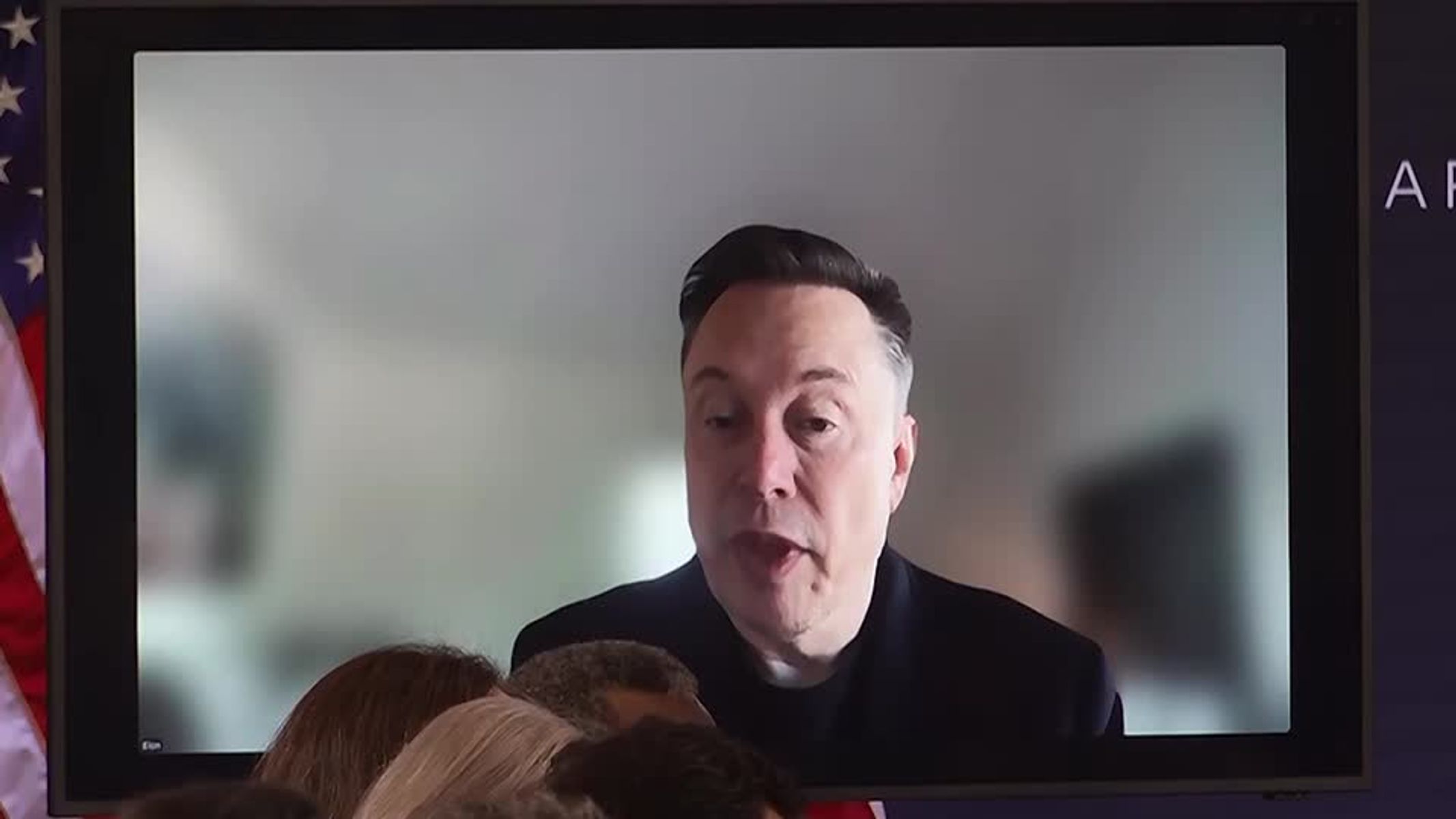
Elon Musk used a G20 technology meeting on 1 September 2026 to deliver a pointed critique of European Union technology regulations. The SpaceX chief executive told world leaders that the EU's policy framework inhibits progress for companies working on artificial intelligence and related technologies. His remarks came as governments worldwide grapple with how to regulate rapidly advancing AI systems while maintaining competitive positions in the global technology race.
Musk's intervention at the G20 gathering highlights growing tensions between technology entrepreneurs and regulators. European officials have spent years developing comprehensive rules governing artificial intelligence, data protection and digital markets. The approach prioritises consumer protection and fundamental rights, but industry leaders argue it places European companies at a disadvantage against competitors in regions with lighter regulatory touch.
The EU regulatory framework under scrutiny
The European Union has established itself as a global leader in technology regulation. The bloc's approach rests on the premise that technological advancement must not come at the expense of citizen rights, market fairness or democratic oversight. This philosophy has produced some of the world's most comprehensive digital rules, from the General Data Protection Regulation to the Digital Markets Act and the AI Act.
These regulations create compliance obligations that technology companies must meet before deploying products in European markets. For artificial intelligence systems classified as high-risk, the requirements include transparency obligations, human oversight provisions and conformity assessments. Companies face substantial fines for violations, creating strong incentives to build compliance into product development from the outset.
Industry representatives have consistently argued that this regulatory burden slows innovation and increases costs. The compliance requirements demand legal expertise, technical documentation and testing procedures that smaller companies may struggle to afford. Larger corporations can absorb these costs, but the barriers to market entry become higher, potentially reducing competition rather than enhancing it.
Energy demands from artificial intelligence infrastructure
Beyond regulatory concerns, Musk raised a separate but related issue: the energy required to power artificial intelligence systems. Training large AI models and running inference on them demands enormous computational resources. Data centres housing the necessary servers consume electricity at scales that strain national grids and contribute significantly to carbon emissions.
The SpaceX CEO urged leaders outside China to develop new energy sources specifically to power data centres. This comment acknowledges that China has made substantial investments in both AI capabilities and the energy infrastructure needed to support them. The implication is clear: countries that cannot secure adequate power for AI operations will fall behind regardless of their regulatory approach.
Energy consumption from data centres has grown rapidly as AI adoption accelerates. A single large language model training run can consume as much electricity as hundreds of households use in a year. Running these models for millions of users multiplies the demand further. Governments now face the challenge of expanding energy capacity while meeting climate commitments.
G20 dynamics and technology governance
The G20 brings together the world's largest economies to coordinate on issues ranging from trade to climate policy. Technology governance has become an increasingly prominent item on the agenda as artificial intelligence reshapes economies and societies. Member states hold divergent views on how to balance innovation incentives with risk management.
European G20 members generally support the regulatory approach that Musk criticised. They argue that rules create certainty for investors and protect citizens from harmful applications. The United States has taken a more permissive stance, allowing faster deployment but accepting greater risks. China pursues state-directed development with different priorities altogether.
Musk's comments at the G20 meeting reflect a broader debate about who should set the rules for emerging technologies. Technology leaders want flexibility to iterate quickly. Regulators want assurance that systems are safe before deployment. Finding workable compromises requires ongoing dialogue between these groups, though positions remain far apart.
European response to industry criticism
European officials have defended their regulatory approach against industry criticism. They point out that rules create a level playing field and prevent a race to the bottom on safety standards. The European Commission has emphasised that well-designed regulation can actually support innovation by creating trust in technology products.
There is also recognition within European institutions that implementation matters as much as the rules themselves. Overly burdensome compliance procedures could indeed disadvantage European companies. Officials have indicated willingness to refine implementation guidance based on practical experience as the regulations take effect.
The debate extends beyond Europe. Other jurisdictions watch how EU rules work in practice before adopting similar frameworks. If European regulations prove unworkable or excessively costly, other countries may choose different paths. If they succeed in managing risks without stifling innovation, they could become a global template.
The energy infrastructure challenge
Musk's comments on energy infrastructure touch on a constraint that affects all countries pursuing AI leadership. Building data centres is relatively straightforward compared to securing the electricity they need. Power grids require years of planning and investment. Generating capacity must match demand growth, or blackouts and rationing become risks.
Renewable energy sources offer a path to expand capacity while meeting climate goals. However, solar and wind power create intermittency challenges that require storage solutions or backup generation. Nuclear power provides reliable baseload electricity but faces long construction timelines and political opposition in some countries.
The International Energy Agency has highlighted data centre energy demand as a growing concern requiring policy attention. Governments must coordinate energy planning with technology strategy to avoid bottlenecks that could limit AI development regardless of regulatory environment.
What the criticism overlooks
Musk's critique focuses on regulatory constraints but does not address why those constraints exist. European policymakers argue that unregulated AI deployment creates risks to privacy, employment, democratic processes and physical safety. High-profile incidents involving algorithmic bias and misinformation have reinforced these concerns.
There is also the question of who benefits from deregulation. Large technology companies with resources to manage risk may prefer fewer rules. Smaller competitors and citizens affected by AI systems have less voice in these debates. Regulation attempts to balance these competing interests rather than simply maximising deployment speed.
The energy argument similarly contains tensions. Expanding power generation for data centres competes with other electricity demands from households, industry and transport electrification. Policymakers must allocate limited resources across competing priorities, not simply build capacity for one sector.
Broader implications for technology policy
The exchange at the G20 meeting illustrates a fundamental question facing all governments: how to govern technologies that evolve faster than policy processes. Traditional regulation moves slowly through consultation, drafting and approval stages. Technology development cycles compress into months or weeks.
Some propose adaptive regulatory frameworks that update automatically based on technical standards rather than legislation. Others argue for principle-based rules that apply regardless of specific technologies. Still others suggest industry self-regulation with government oversight. None of these approaches has proven definitively superior.
European officials maintain that their approach protects citizens while allowing innovation within defined boundaries. Technology leaders counter that boundaries should expand as understanding improves. The resolution of this tension will shape the technology landscape for decades.
People mentioned
Organisations
SpaceX · European Union · G20