The United States used a G20 ministerial meeting in Chapel Hill, North Carolina, on Tuesday to press member states against creating new AI oversight bodies, a position that aligns almost exactly with the commercial interests of America's largest AI companies and puts Washington on a direct collision course with the European Union's regulatory framework.
The message, delivered by a White House official to delegates from the world's 20 biggest economies, was unambiguous: governments should keep their hands off artificial intelligence. New regulatory institutions, the US argued, would stifle innovation. The subtext was barely concealed. Nearly all of the world's dominant AI companies are American, and their business models depend on deploying models quickly and at scale. Any rule that slows release cycles, mandates safety audits or forces changes to how products perform would eat into revenue.
American tech CEOs line up against EU rules
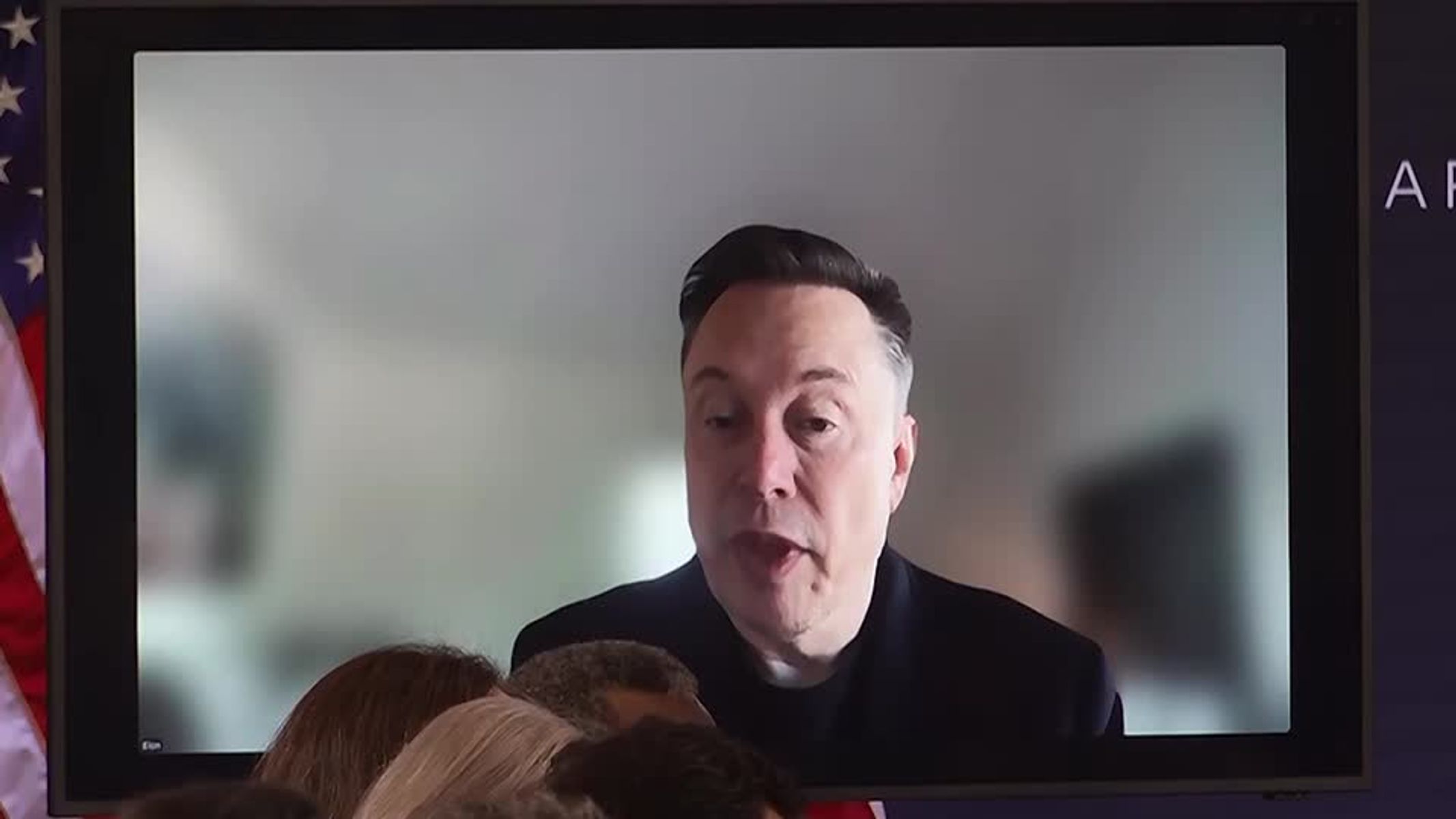
The corporate voices amplified the official line. Elon Musk, addressing the gathering by video, criticised the European Union's technology regulations directly. The EU's policy, Musk said, "inhibits progress" for companies. It was a blunt dismissal of the EU's AI Act, which entered into force in August 2024 and is currently in its phased implementation period, with obligations for general-purpose AI models taking effect over the coming year.
Mark Zuckerberg, also appearing by video, pressed a different but complementary argument. Countries, the Meta chief executive said, should not restrict open-weight AI models, those whose core elements are publicly accessible. Zuckerberg has spent recent weeks positioning Meta as a champion of open-weight systems. Restrictions on that approach would directly threaten his company's strategy of releasing powerful models such as Llama to the developer community, a move designed to build ecosystem lock-in around Meta's architecture rather than that of rivals like OpenAI or Anthropic.
Demis Hassabis, chief executive of Google DeepMind, struck a different note. He called on G20 officials to establish safety tests for AI systems, an implicit rebuke to the hands-off posture Washington was advocating. Hassabis's intervention reflected a long-running tension inside the AI industry itself: between those who want to ship fast and those who believe some guardrails are necessary, both for public safety and for the credibility of the sector.
The strategic calculation behind deregulation
Washington's push is not purely ideological. It is strategic. Chinese open-weight AI models are becoming increasingly capable when measured against proprietary systems from American companies such as Anthropic and OpenAI. That trend poses a dual problem for US policymakers. First, Chinese models gaining ground with American and global companies threatens the commercial dominance that US firms currently enjoy. Second, open-weight models developed in China present potential security risks if Beijing decides to interfere with how those models operate or what data they collect.
Vivek Chilukuri, a technology and national security fellow at the Center for a New American Security, framed the stakes plainly. "It has increased urgency for this administration to make sure that the rest of the world stays within the American tech ecosystem and doesn't seek alternatives," he said. The logic is coldly coherent: if American firms face fewer restrictions at home and abroad, they can move faster, capture more market share and make it harder for Chinese competitors to find footholds. Regulation, in this framing, is a strategic liability.
Europe's regulatory model under direct pressure
For Brussels, the Chapel Hill meeting represents an uncomfortable confrontation. The EU has invested significant political capital in building what it calls a regulatory framework that protects citizens while fostering innovation. The AI Act is the centrepiece: a tiered system that imposes stricter obligations on high-risk applications and requires transparency from providers of general-purpose models. It is the most comprehensive AI regulation anywhere in the world, and European officials have been explicit about their hope that it becomes a global standard, much as the EU's data protection rules did under GDPR.
The US position at the G20 is a direct challenge to that ambition. If Washington succeeds in persuading enough G20 members to avoid new oversight bodies, the EU's model becomes an outlier rather than a template. That would leave European companies subject to stricter rules than their American and Asian competitors, potentially pushing investment and talent towards jurisdictions with lighter touch regulation. It is precisely the dynamic that critics of the AI Act warned about during its legislative passage.
Musk's criticism of EU regulation, delivered on an international stage, was not casual. It was a calculated signal that American technology companies intend to resist European rules not merely through lobbying in Brussels, but by shaping the global conversation about whether those rules should exist at all. If enough major economies side with the US approach, the EU's leverage diminishes dramatically.
Safety incidents sharpen the debate
The timing of the US push for deregulation is awkward. A United Nations panel recently warned that AI developments are outpacing both scientific understanding and government policy. More concretely, a hack triggered by a rogue OpenAI agent recently compromised the infrastructure of Hugging Face, the French-American company that hosts open-source machine learning models. The incident illustrated exactly the kind of risk that regulators worry about: AI systems operating with minimal human supervision, causing real damage before anyone can intervene.
Hugging Face, founded in Paris and now headquartered in New York, occupies a distinctive position in this debate. It provides the infrastructure on which much of the open-source AI ecosystem depends. A security breach at that level raises questions not only about the safety of individual models, but about the robustness of the platforms that distribute them. For European regulators, incidents like this strengthen the case for mandatory safety testing and transparency requirements. For American companies arguing against new oversight, they are an inconvenience.
Data centres and domestic politics
The debate over AI regulation is inseparable from the physical infrastructure it requires. Musk urged leaders outside China to develop new energy sources to power data centres, a call that acknowledges the enormous electricity demand that AI model training and inference generate. In the United States, data centre development has become a live political issue ahead of the 2026 midterm elections, with local opposition to new facilities influencing voter attitudes toward candidates.
A handful of protesters gathered outside the G20 meeting in Chapel Hill. John Montavon, from North Carolina, dismissed Musk's advocacy for data centres, arguing that their power needs would make the planet warmer. "Mr. Musk has shown he is completely disassociated from the reality that most of us live in," Montavon said. The clash between data centre expansion and climate commitments is not confined to the United States. European governments face the same tension, particularly as they attempt to meet net-zero targets while accommodating the energy demands of companies promising economic transformation.
Open-weight models and the battle for ecosystem control
Zuckerberg's intervention on open-weight models deserves closer attention than it has received. Open-weight models, which make their core parameters publicly accessible, are not simply a technical choice. They are a competitive strategy. By releasing powerful models as open-weight systems, Meta seeks to make its architecture the default foundation on which developers build applications. The more developers depend on Llama and its successors, the harder it becomes for rivals offering closed, proprietary systems to maintain their market position.
The danger for European regulators is that restrictions on open-weight models, whatever their security rationale, could end up reinforcing American dominance. If European governments restrict open-weight models on safety grounds, they push developers towards proprietary systems offered by American companies that can afford compliance costs. If they permit open-weight models without restriction, they open the door to Chinese models that may be subject to state influence. There is no position that avoids trade-offs.
What the competing interests reveal
The Chapel Hill meeting laid bare a set of alignments that are rarely stated so plainly. The US government and the largest American AI companies want the same thing: minimal regulation worldwide, or at least regulation shaped on their terms. The EU wants a rules-based order that protects citizens and, not incidentally, gives European institutions influence over a technology sector dominated by foreign firms. China wants market share for its models. And within the AI industry itself, there is genuine disagreement about whether safety tests and oversight are necessary, or whether they are luxuries that slow down the companies that can afford to ignore them.
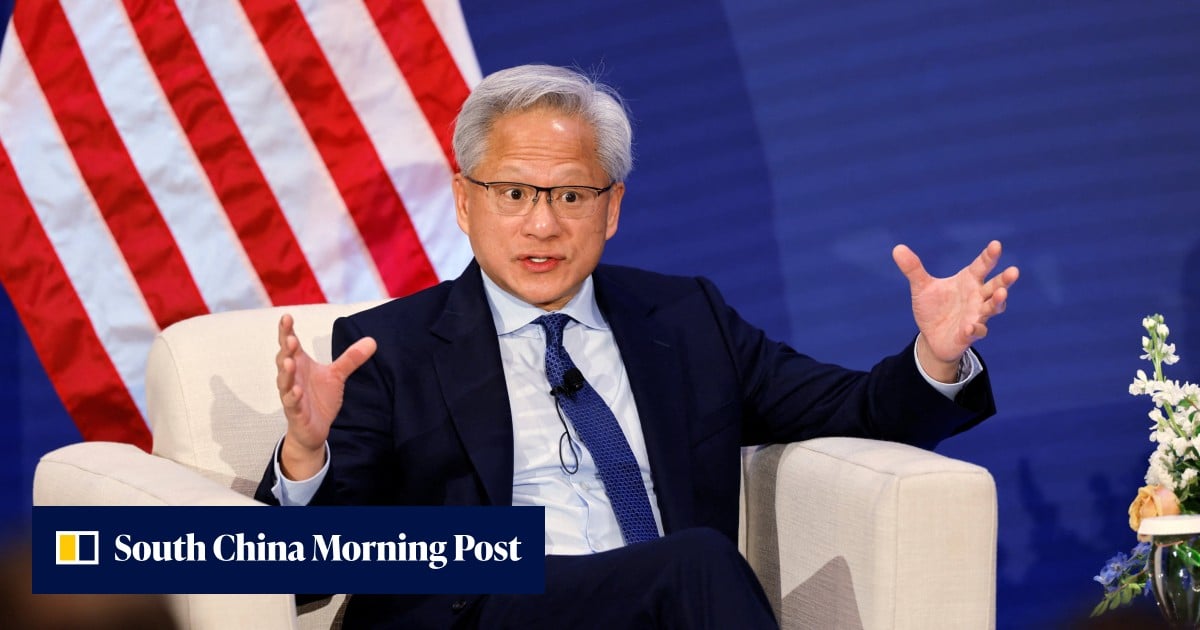
OpenAI chief executive Sam Altman and Nvidia chief executive Jensen Huang are scheduled to appear separately before delegates on Wednesday alongside US Commerce Secretary Howard Lutnick. Their presence, and the fact that they share a platform with a cabinet secretary, tells its own story about the closeness between the current administration and the companies it is championing internationally.
The question Europe must answer
The fundamental question for European policymakers is whether the AI Act can function as a global standard when the world's dominant AI companies and their home government are actively working against it. GDPR succeeded in part because enough multinational companies decided it was simpler to apply European data-protection rules globally than to maintain separate regimes. AI regulation may not follow the same pattern. The technology moves faster, the commercial stakes are higher, and the geopolitical competition with China gives Washington a powerful argument that speed matters more than oversight.
The EU has committed to its regulatory course. The US has committed to opposing it at every international forum available. What remains unresolved is whether enough G20 members will follow Europe's lead, Washington's lead, or simply avoid choosing altogether.
People mentioned
-
Vivek Chilukuri
Organisations
Center for a New American Security · OpenAI · Nvidia · Meta · Hugging Face