Seven of the world's eight Arctic nations now sit inside NATO. The eighth, Russia, has been frozen out of almost every Western security forum since its full-scale invasion of Ukraine in 2022. That geopolitical rupture has reshaped northern defence cooperation faster than any treaty revision could. Finland and Sweden joined the alliance at record speed, removing the last formal impediments to integrated Nordic and Baltic defence planning. The result is a dense, multi-layered architecture of political, military and coast guard formats that did not exist in any coherent form five years ago.
The Arctic Seven becomes a standing political format
The Arctic Seven (A7), Canada, Denmark, Finland, Iceland, Norway, Sweden and the United States, has evolved from an occasional consultation into a standing diplomatic machine. State leaders meet in the margins of NATO summits. Foreign and defence ministers convene alongside regular alliance meetings, most recently in Helsingborg, Sweden, in May 2026. Below them, foreign ministry policy directors and permanent representatives in Brussels maintain day-to-day coordination. The permanent representative track matters because those officials can translate political agreements into NATO committee work and force generation cycles.
Two non-papers circulated in 2024 and 2025 gave the A7 its first concrete output. The documents are not public, but their purpose was to define how NATO should perceive the Arctic and to stake out allied ownership of the organisation's emerging Arctic policy. Topics range from summit communique language to political guidance for defence planning and the military burden shift from the United States to Europe. The format deliberately excludes the diplomatic row between Washington and Copenhagen over Greenland, which is handled in a separate trilateral working group with Nuuk.
Canada and Denmark reverse long-standing reluctance
Two notable conversions underpin the A7's new vitality. Canada, historically wary of discussing Arctic affairs inside NATO for fear of encroaching on its sovereign northern territories, has rewritten its defence and defence industrial strategies to present itself as the guardian of the alliance's western and northern flanks. Ottawa now accepts that the Supreme Allied Commander Europe's joint operations area extends into waters it once insisted on calling the 'European Arctic' or 'High North'.
Denmark's shift came earlier, triggered by President Donald Trump's public musings about buying Greenland during his first term. Copenhagen, which had prioritised international operations and the Baltic Sea, concluded that silence in NATO forums left a vacuum others would fill. The Danish defence establishment now engages actively in Arctic discussions, and Greenlandic and Faroese representatives sit in the defence ministry roundtable established in 2024.
Joint Force Command Norfolk becomes the military hub
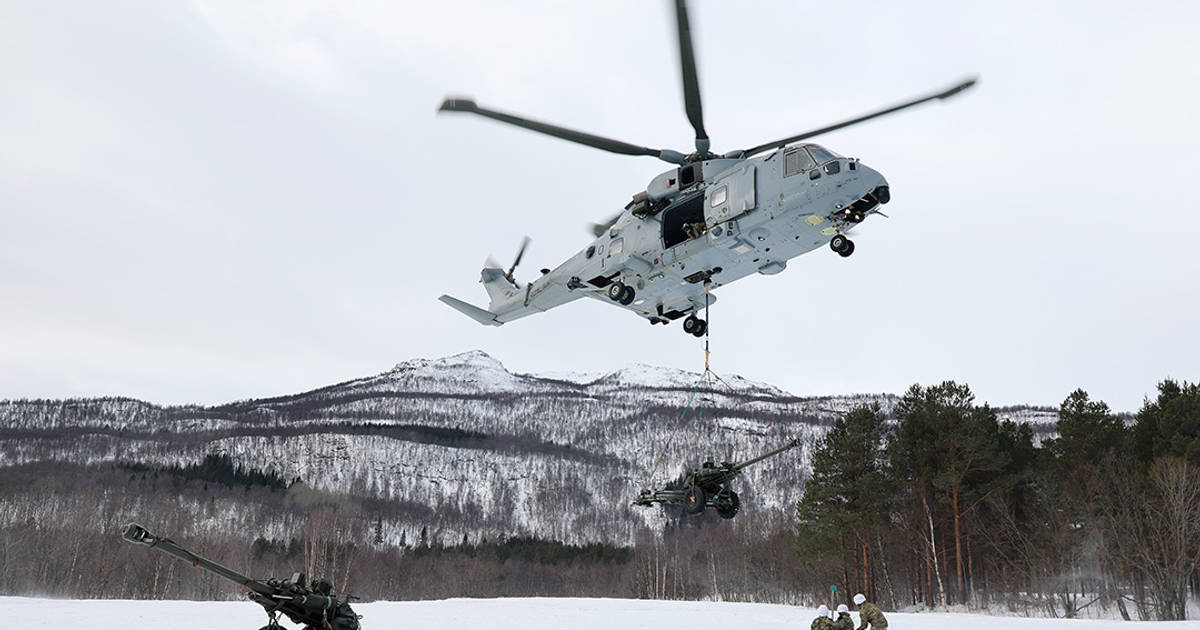
On the military side, NATO Joint Force Command Norfolk (JFC NF), stood up in 2019, provides the single operational headquarters for the alliance's Arctic activity. The command is heavily staffed by officers from the seven Arctic allies, plus the United Kingdom and the Netherlands, making it an integration hub as much as a warfighting headquarters. JFC NF owns the Regional Plan Northwest, which covers the North Atlantic, the Arctic Ocean and the Nordic region. Allied exercises in the high north, such as the 845 Squadron Merlin Mk4 underslung load training with 29 Commando Regiment Royal Artillery in northern Norway, are typically linked to this plan.
The command's location in Norfolk, Virginia, reflects the maritime geography: the Greenland-Iceland-UK gap and the approaches to the Barents Sea are best managed from the western Atlantic. But the staffing model ensures that Nordic and Canadian operational concepts feed directly into NATO planning, rather than being presented as national contributions after the fact.
Greenland tensions spawn Arctic Sentry and Nordic-Canadian alignment
The diplomatic crisis over Greenland, which intensified through 2025 and 2026, produced two distinct responses. European allies proposed Arctic Sentry, a 'multi-domain activity' led by JFC NF, to demonstrate allied presence and pre-empt any American claim of a security vacuum around Greenland. For now Arctic Sentry is a chapeau for existing exercises and operations, but the ambition is to evolve it into a coordination hub for allied activity, experimentation and transformation in the region.
Simultaneously, the Nordic prime ministers and Canada deepened their own coordination. A Nordic-Canadian summit in Oslo in March 2026 devoted a significant portion of its joint statement to Arctic security, committing to 'rule of law, human rights, and the territorial integrity and sovereignty of states', language clearly aimed at US territorial pressure on both Canada and Greenland. The same statement covered collective defence, Ukraine and the green transition, signalling a broader strategic alignment than the Arctic alone. Yet none of the six capitals wants a formalised Arctic Six format. All prioritise keeping the United States inside NATO structures, paraphrasing Lord Ismay's original formulation about the alliance's purpose.
Nordic Five and Nordefco remain the trusted core
Beneath the A7, the Nordic Five (N5), Denmark, Finland, Iceland, Norway and Sweden, remains the forum for the most sensitive exchanges. The five share a long history of mutual trust, cultural proximity and aligned global outlooks. Political similarities are considered stronger among the N5 than in the wider Nordic-Baltic Eight. In the NATO context, the N5 focuses on the European Arctic and the Regional Plan Northwest, but the format is not used as systematically as it could be for security policy. Officials acknowledge it may be enhanced.
Nordic Defence Cooperation (Nordefco), launched in 2008 to achieve procurement savings, morphed into a vehicle for joint exercises and operational cooperation. After Finland and Sweden joined NATO, Nordefco was reinvigorated to coordinate Nordic responses to alliance capability targets. It is not an Arctic-specific format, its remit covers northern European defence broadly, but its work feeds directly into the Nordic contribution to NATO's northern flank.
Defence ministry roundtables and military-to-military chains
Since 2024, the Arctic Seven defence ministries have run a parallel track: the Arctic Security Policy Roundtable (ASPR). Under a rotating annual presidency, the seven defence ministries, plus Greenland and the Faroes, meet twice a year, alternating between digital and physical sessions. The ASPR discusses defence cooperation, information sharing, strategic communication and coordinated positions for NATO meetings. It provides the policy framework for two older military formats.
The Arctic Security Forces Roundtable (ASFR), established in 2010 and co-chaired by US European Command and the Norwegian Defence Staff, meets twice a year, usually in Arctic cities. Russia participated until NATO suspended military-to-military cooperation in 2014. Observers include the UK, France, the Netherlands and Germany, and JFC NF has attended for the past two years. The 2025 meeting was in Norway, 2026 in Iceland, 2027 in Canada.
The Arctic Chiefs of Defence (ACHOD) have met regularly since 2012, typically in the margins of NATO CHODs meetings. The Russian chief of defence attended until the 2014 suspension. The three tracks, ASPR, ASFR, ACHOD, share an objective: situational awareness across the whole Arctic, including areas outside SACEUR's joint operations area such as the Bering Strait, and agreement on terms for cooperation. A roadmap to tie them more closely together is under development, though none of the formats engages in operational military activity.
Coast guard forum keeps Russia at the table
The Arctic Coast Guard Forum (ACGF) is the sole surviving format where Russia remains a member. Described as an independent, informal, operationally-driven organisation not bound by treaty, it focuses on safe, secure and environmentally responsible maritime activity. The eight members meet twice a year, supported by a permanent secretariat and working groups. Its strategic goals include search and rescue coordination, pollution response and maritime domain awareness. Because it is associated with the Arctic Council rather than NATO, the forum survived the 2022 rupture, though its practical output has inevitably narrowed.
US command integration and the NORUKUS triangle
Washington has not been passive. The Nordic Bridge concept, described by General Gregory Guillot, Commander of US Northern Command, ties together US Northern Command, North American Aerospace Defense Command, US European Command and the Supreme Allied Commander Europe. The aim is to ensure the various US commands 'aren't sending a disproportionate amount of force to the region, or failing to send anyone at all.' The initiative reflects Pentagon recognition that Arctic operations span geographic combatant command boundaries in ways the current structure handles poorly.
At the sharper end, the NORUKUS trilateral, Norway, the United Kingdom and the United States, has grown from a special forces initiative into a multi-domain cooperation covering air, naval, space and subsea capabilities. Concepts such as the British Atlantic Bastion, Shield and Strike are being developed to build a future sensor network of uncrewed systems, space assets and underwater technology. Anti-submarine warfare dominates but the work extends beyond it. Deterrence has become what one official called an 'ongoing reflexive effort' where shaping, compelling and influencing matter as much as signalling and posturing, requiring careful calibration across the three capitals.
People mentioned
-
Gregory Guillot
Organisations
NATO · Joint Force Command Norfolk · Nordic Defence Cooperation · Arctic Coast Guard Forum · US Northern Command · North American Aerospace Defense Command