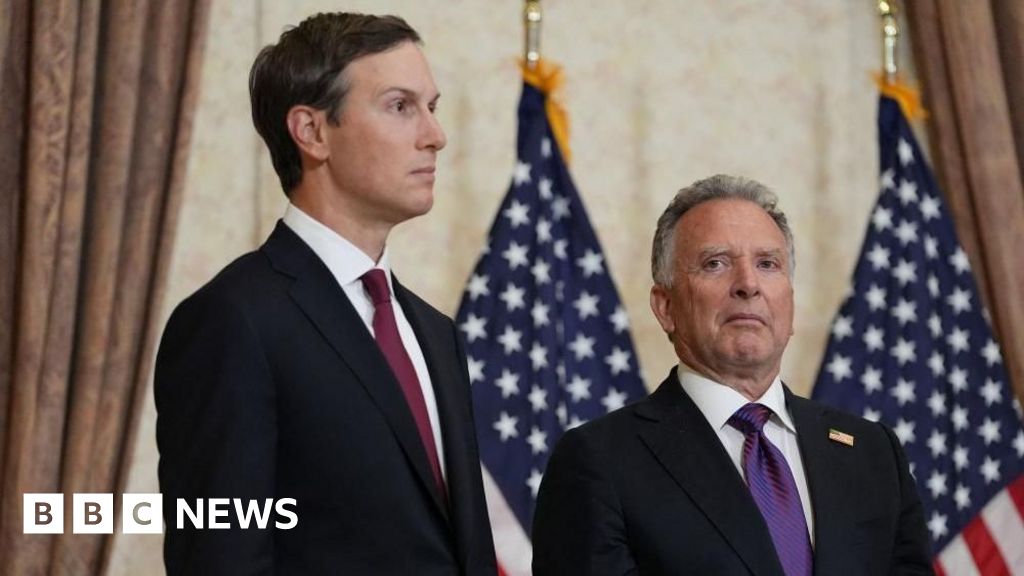
Donald Trump's two designated peace envoys, Steve Witkoff and Jared Kushner, will hold talks with Russian President Vladimir Putin in Moscow on Saturday before travelling to Kyiv to meet Ukrainian President Volodymyr Zelensky on Sunday. It is the first time the pair will visit the Ukrainian capital since Trump began his push for a negotiated end to the war.
The itinerary was confirmed by Zelensky on Friday and reported by Russia's state news agency Tass, which cited a source saying the envoys were expected to arrive on 5 and 6 September. Kremlin spokesman Dmitry Peskov was more cautious, telling reporters: "I wouldn't announce anything, but when these contacts take place, we will inform you." The phrasing is characteristic of Moscow's approach to diplomacy: neither confirming nor denying, preserving room to adjust or cancel, and maintaining leverage over the narrative.
Putin's conditional openness
Speaking at an international economic forum on Thursday, Putin said "there are chances" a peace deal could be reached, adding: "First of all, Moscow and Kyiv must agree between themselves." The statement is consistent with long-standing Kremlin rhetoric: an outward willingness to negotiate paired with conditions that amount to Ukrainian capitulation.
Putin showed no sign of retreating from his maximalist demands, which include further territorial concessions from Ukraine beyond what Russia already occupies. Kyiv and its European allies have rejected those terms repeatedly, describing them as tantamount to surrender. The gap between the two positions has not narrowed meaningfully since the early months of the full-scale invasion, and nothing in the current diplomatic schedule suggests it will close this weekend.
Drone strike on the SBU chief's office
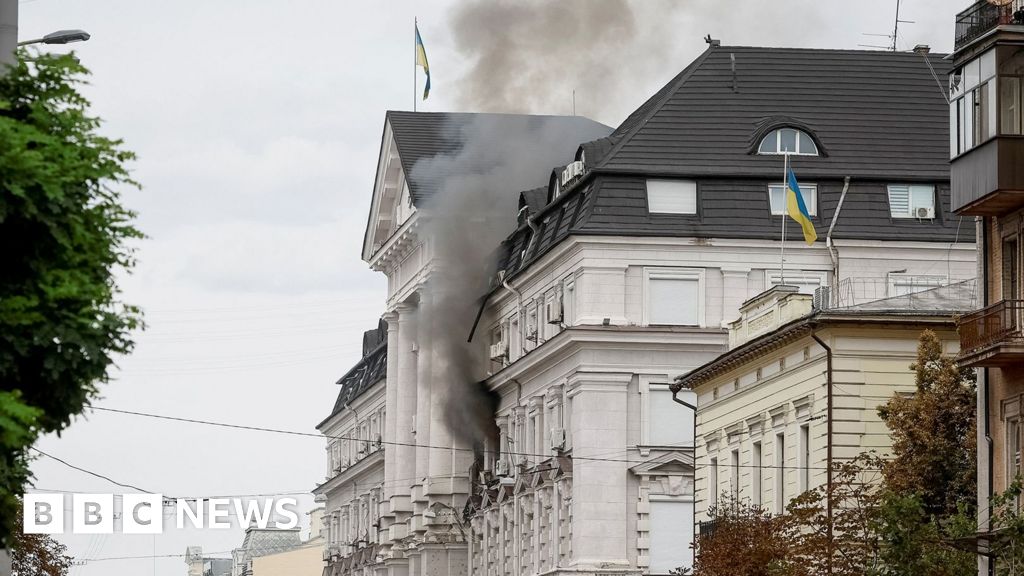
The diplomatic manoeuvring was accompanied by a stark reminder that the war continues. Zelensky said on Friday that a Russian drone had struck the Kyiv office of Oleksandr Poklad, the head of Ukraine's SBU security service. Poklad appears to have been unharmed.
Zelensky said he had ordered Poklad to respond "adequately" to the attack. The timing is unlikely to be coincidental. Drone strikes on central Kyiv have been a recurring feature of the war, but targeting the SBU chief's office specifically, in the same week that peace talks are being arranged, serves as a demonstration that Russia retains escalation capacity and does not feel pressured into restraint by the prospect of negotiations.
The Kushner-Witkoff channel
Kushner, Trump's son-in-law, and Witkoff have become the primary American conduits for peace discussions with Moscow. Their repeated visits to Russia, and their direct access to Putin, suggest the Kremlin sees them as interlocutors worth engaging. That access is itself a form of recognition, and it gives Moscow a direct line to the White House that bypasses the State Department and the broader foreign policy establishment.
Their lack of prior diplomatic experience in the region, and their personal ties to Trump, have raised questions in European capitals about whether the channel is designed to produce a genuine settlement or to create the appearance of progress ahead of domestic political calculations in Washington. The concern is not merely about competence; it is about the structure of the negotiations themselves. A process that runs through two individuals with personal loyalty to the president, rather than through established diplomatic institutions, is more vulnerable to shifts in political mood and less likely to produce durable agreements.
European absence from the talks
No European Union officials, no representatives from Kyiv's European military backers, and no NATO officials are listed as participants in either the Moscow or Kyiv meetings. That absence is striking, because any durable peace settlement will require European security guarantees, European financial commitments, and European enforcement mechanisms.
The exclusion reflects a pattern in Trump's foreign policy: bilateral deals preferred over multilateral frameworks, personal relationships prioritised over institutional processes, and European allies treated as secondary parties rather than essential stakeholders. Several European governments have privately expressed concern that the Kushner-Witkoff channel operates without coordination with the contact group that has managed Western support for Ukraine since 2022.
The concern is not only about the substance of any deal but about the precedent. If Washington can negotiate over European security heads, the broader transatlantic relationship shifts in ways that will persist beyond any single administration. European governments have spent billions on military and humanitarian aid to Ukraine, have taken in millions of refugees, and have imposed significant sanctions on Russia. Being excluded from the talks that could determine the terms of peace would represent a considerable political and strategic loss.
Airspace guarantees and security logistics
Zelensky said he would guarantee the safety of Russian airspace during the envoys' visit to Kyiv and called on Russia to do the same for Ukraine. The offer is a practical necessity: both capitals are within drone and missile range of the other side, and the safety of visiting American officials cannot be taken for granted in an active war zone.
The mutual guarantee also serves a symbolic purpose. It creates a small area of temporary de-escalation, a brief window in which both sides agree not to attack the other's capital while American intermediaries are present. Whether that window extends beyond the weekend is an open question. Russia has previously used temporary pauses in attacks on Kyiv to reposition forces or replenish missile stocks, and there is no indication that this particular pause represents a broader shift in military posture.
What the talks can and cannot achieve
The most likely outcome of this weekend's meetings is not a breakthrough but a continuation of the current pattern: incremental diplomatic activity that keeps the possibility of negotiations alive without altering the fundamental positions of either side. Russia wants territorial concessions and a neutral Ukraine. Ukraine wants its territorial integrity restored and security guarantees that prevent future Russian aggression. Those positions are not reconcilable without one side making a concession it currently refuses to make.
What the visits may accomplish is a clearer understanding of where the red lines currently sit. Kushner and Witkoff will hear directly from Putin what Russia insists upon, and directly from Zelensky what Ukraine will not accept. That information, if accurately conveyed to Washington, could inform the next phase of American diplomatic strategy, whether that involves pressing Ukraine toward concessions, increasing pressure on Russia, or pursuing a different framework entirely.
People mentioned
Organisations
Security Service of Ukraine · Kremlin