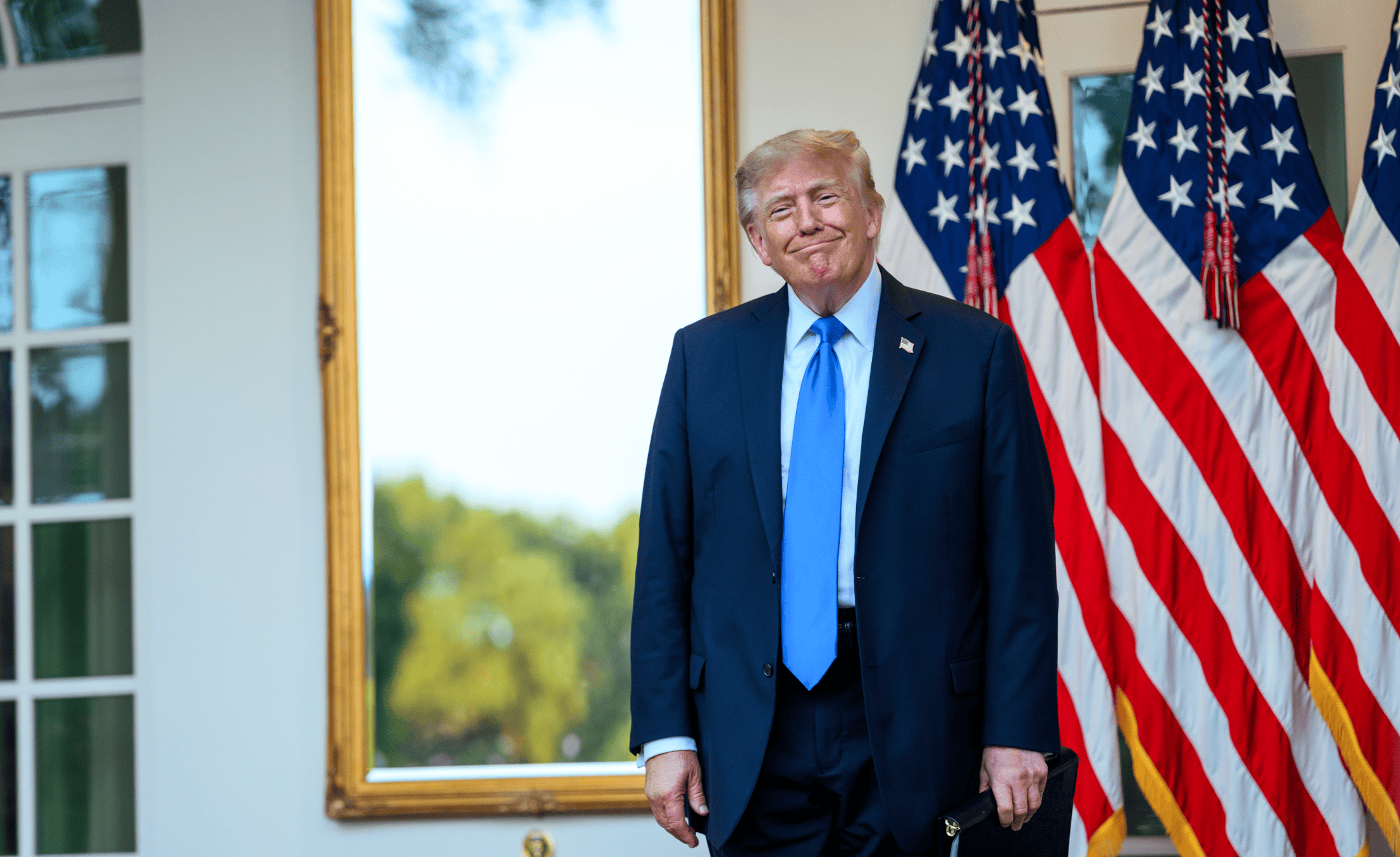
Donald Trump has escalated his long-running demand that European allies compensate the United States for support provided to Ukraine, posting on Truth Social that Washington will seek repayment of what he described as "hundreds of billions of dollars" given to Kyiv and NATO "free of charge" under the Biden administration. The president did not identify which European countries he believes owe money, nor did he set out a legal or diplomatic mechanism for collecting it.
What the numbers actually show
The figure Trump cites far exceeds the amounts appropriated by Congress since Russia's full-scale invasion in February 2022. According to the NATO summary of allied contributions and US government tracking, total American commitments to Ukraine across military, financial and humanitarian channels stand at roughly $175 billion. Of that, about $110 billion is direct military assistance, weapons, training, intelligence and equipment drawn from US stocks or procured through the Ukraine Security Assistance Initiative. The remainder covers budget support for the Ukrainian government and humanitarian aid.
European contributions, by contrast, are larger in aggregate than the US total when EU-level financing is included. The European Commission calculates that the EU and its member states have committed more than €130 billion since the war began, comprising macro-financial assistance, military support through the European Peace Facility, humanitarian aid and loans backed by frozen Russian assets. Germany, the United Kingdom, France, Poland and the Nordic countries rank among the largest national donors. The disparity between Trump's "hundreds of billions" and the documented totals suggests the president is conflating several distinct budget lines, including NATO's common-funded budgets, which members pay according to agreed cost-shares, not as gifts to the alliance.
NATO funding and the burden-sharing debate
Trump's reference to NATO in the same breath as Ukraine aid reflects a persistent misunderstanding, or deliberate blurring, of how the alliance is financed. NATO's civil and military budgets, roughly €3.6 billion annually, are funded by member states through a formula based on gross national income. The United States contributes approximately 16 per cent of those common costs, not the lion's share. Separate from the common budgets, allies commit to spending at least 2 per cent of GDP on national defence, a target many European members have only recently begun to meet after years of pressure from Washington across multiple administrations.
The burden-sharing argument predates Trump. Barack Obama and Joe Biden both pressed European allies to increase defence spending, and the 2014 Wales summit set the 2 per cent guideline in response to Russia's annexation of Crimea. Since 2022, European defence outlays have risen sharply: collective European NATO members' defence expenditure grew from 1.7 per cent of GDP in 2021 to an estimated 2.1 per cent in 2025, according to alliance figures. Trump's demand for retroactive reimbursement, however, has no precedent in NATO treaty obligations or in any bilateral agreement with EU capitals.
Munitions claims and the arms-sales freeze
In the same post, Trump dismissed reports that US munitions stocks have been depleted by support for Ukraine and by recent strikes against Iranian targets. "We have virtually unlimited amounts of Mid to High Grade Ammunition," he wrote, adding that production is running at "levels never seen before." He confirmed that the administration has temporarily suspended overseas arms sales, retaining output for US stockpiles, but promised that "sales to Allies will soon again, begin."
The suspension affects European NATO members mid-procurement. Several countries, including Poland, Romania and the Baltic states, have pending orders for artillery shells, air-defence interceptors and precision-guided munitions from US production lines. European defence officials have warned for months that American industrial capacity, while expanding, cannot simultaneously replenish US reserves, sustain Ukraine and fulfil allied contracts at the pace originally promised. The freeze underscores a structural dependency: Europe's own ammunition production remains insufficient to cover its needs without US supply, a gap the European Defence Industrial Strategy aims to close by 2030.
European reactions and legal reality
No European government has formally responded to the reimbursement demand as of Friday morning. Diplomats in Brussels and national capitals describe the claim as legally baseless: US aid was authorised by Congress under presidential drawdown authority and the Ukraine Security Assistance Initiative, neither of which creates a repayment obligation. The EU's own financial assistance operates through loans and grants approved by the Council and Parliament, with no provision for third-party reimbursement. Some officials privately worry that the rhetoric could harden domestic opposition in the US to future Ukraine funding, while giving European sceptics of continued support a rhetorical shield.
The episode also revives questions about the reliability of the US security guarantee. At the 2024 NATO summit in Washington, allies agreed a new defence industrial pledge and a long-term security assistance package for Ukraine, the so-called NATO Security Assistance and Training for Ukraine (NSATU) command. Trump's unilateral announcement, made without consulting allies, suggests he views those commitments as optional. European leaders will be watching closely to see whether the reimbursement demand is raised at the next NATO foreign ministers' meeting in December or whether it remains a social-media provocation.
The Iran dimension and contingency planning
Trump's assertion that the US is "building up stockpiles and preparing for contingencies" points to the undeclared conflict with Iran that has intensified since early 2026. US and Israeli strikes on Iranian missile-production facilities and proxy networks have consumed significant numbers of air-defence interceptors and long-range precision munitions. The Pentagon has not published updated inventory figures, but defence analysts estimate that several critical missile types, including SM-6 and PAC-3 MSE interceptors, are below the war-reserve levels required for a major-power conflict in the Indo-Pacific. The arms-sales freeze is almost certainly driven by that shortfall rather than by Ukraine support alone.
What the reimbursement claim would require
For the demand to become policy, the administration would need to articulate a legal theory, perhaps invoking the NATO Status of Forces Agreement, bilateral defence cooperation treaties, or a novel interpretation of the 2014 Wales pledge. Congress would likely need to authorise any collection mechanism, and the Treasury would have to designate a receivable. European capitals would almost certainly challenge the move in the WTO or through diplomatic protest. The more probable outcome is that the threat becomes leverage in negotiations over trade tariffs, digital-services taxes, or the next round of NATO burden-sharing targets due for review in 2027.
People mentioned
Organisations
North Atlantic Treaty Organization · European Union · White House