The European Union's deadline for member states to start enforcing full biometric border checks on non-EU citizens passed on 6 September, and nothing much changed. The discretionary period that allowed border guards to ease off fingerprinting and facial scans has formally ended, but several countries are still not running the system as designed, and the infrastructure at some of Europe's busiest crossing points is not ready.
A deadline that changes nothing on the ground
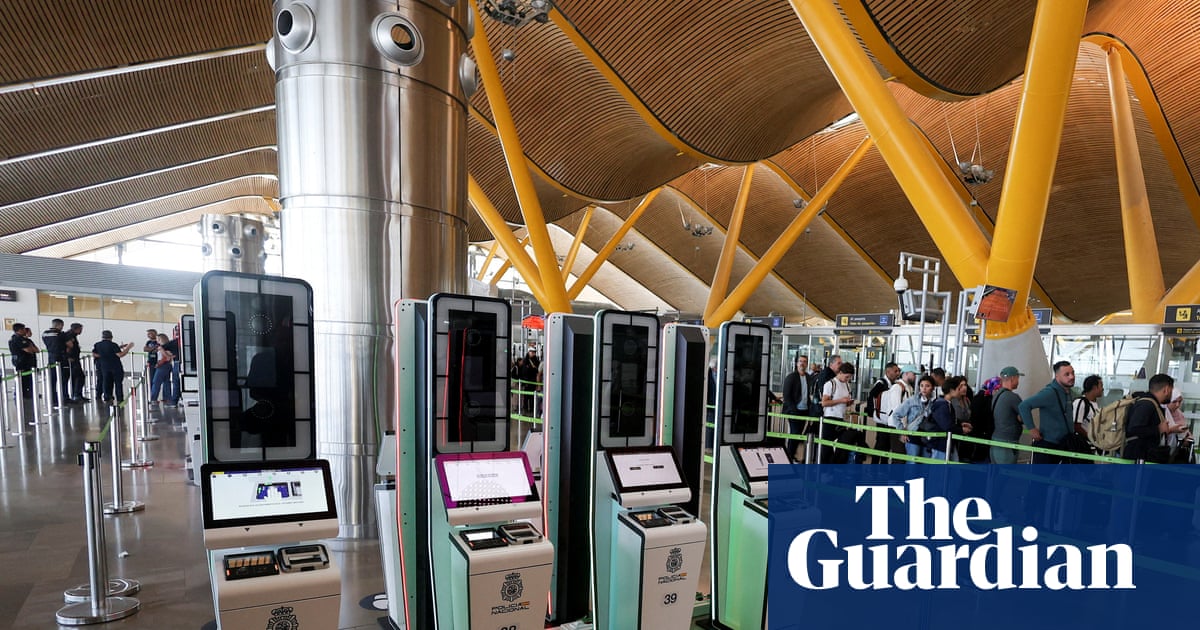
The Entry/Exit System, or EES, is supposed to register the biometric data of every non-EU national crossing into the Schengen area: fingerprints and facial images, logged at first entry and tracked on departure. It was conceived as a security upgrade, replacing manual passport stamps with a digital record. The problem is that rolling it out has been messy. Early summer saw long queues at several European airports, with passengers missing flights. Border authorities responded by selectively relaxing the checks, a flexibility that the European Commission tolerated through a discretionary period that ran until 6 September.
That period is now over. The Commission has not extended it. But the practical effect is limited, because a number of member states are simply not enforcing the full requirements yet, and the Commission's own language suggests it accepts this. A spokesperson said Brussels was in "close and constructive contact" with "those few member states where some adjustments are needed at certain border crossing points" and stood ready to provide support during "an additional period of operational adjustment".
That phrasing, with its careful vagueness about timescales, amounts to a quiet concession: the system is not working as intended, and there is no firm date for when it will.
France's software is not ready
The most conspicuous gap is at the Channel crossings. Travellers heading from Britain to France will not face new biometric checks next week, because the EES software commissioned by French authorities has technical problems. The fingerprinting kiosks purchased and installed at Eurotunnel, the Port of Dover and Eurostar's London St Pancras terminal, at considerable expense, are still not operational.
Dover has said it is not expecting changes in the coming week. Car drivers have yet to be subject to EES checks at all. A Eurotunnel spokesperson said the operator was "awaiting confirmation from the French authorities on the timing of this next phase" but was prepared to implement full checks once formal clearance arrived. Eurostar confirmed that EES enrolments would continue to be completed manually by border officers.
In other words, the most heavily used passenger route between Britain and the EU is still running on manual procedures, and there is no public timetable for when that will change. The Frontex agency, which oversees the system's implementation, has not commented publicly on the delays at French border points.
Airlines push back
The aviation industry has been vocal about the damage caused by inconsistent implementation. The International Air Transport Association, which represents airlines globally, called last week for an official extension of the discretionary period through the end of 2026. Thomas Reynaert, Iata's head of external affairs, was blunt: "These are real impacts being felt by passengers. It gives Europe a bad reputation. When systems fail, passengers lose the trust in the system and when people are late, airlines pay a high cost."
The peak summer holiday season did not bring a repeat of the chaos seen at some airports in early summer, but a senior airline source said that was only because border officials in key tourist destinations chose not to enforce the checks. Greece, one of the most popular destinations for British travellers, has unofficially exempted UK passengers from EES processing to keep queues manageable. The source said they expected the practice to continue.
Abta calls for pragmatism
Luke Petherbridge, director of public affairs at Abta, the UK travel industry trade body, said the organisation was continuing to press the Commission for a discretionary suspension beyond September, "recognising that there is still some way to go until EES is fully and consistently operational across all participating countries".
That phrase, "fully and consistently operational", does a lot of work. The EES is nominally in force. In practice, enforcement depends on which border you cross, which country staffs the checkpoint, and whether the equipment happens to be working. A system designed to create uniformity across the Schengen area is producing the opposite.
The Commission's delicate position
The European Commission faces an awkward balance. It cannot publicly abandon the EES timetable without conceding that one of its flagship border-management projects has failed to launch properly. Yet it also cannot force member states to impose checks that would create queues severe enough to deter visitors and disrupt commerce. Its statement that it stands ready to provide "additional support" during an "additional period of operational adjustment" is bureaucratic language for an extension by another name, without calling it one.
The Commission's home affairs directorate has overseen the EES project for years. The system was originally due to start in 2022, then delayed repeatedly. Each postponement has been attributed to technical or operational readiness, but the underlying problem is that registering biometric data for hundreds of millions of non-EU travellers at thousands of border crossing points is a logistical challenge that no member state has solved convincingly.
What the patchwork looks like in practice
Right now, a British traveller flying to Athens may well pass through without a fingerprint scan, while one flying to Amsterdam might be processed in full. Someone driving through the Channel Tunnel will not encounter biometric checks at all. Someone entering via a smaller airport in a different member state may face a different experience again. The system is not merely incomplete; it is inconsistent in ways that passengers cannot predict.
For the travel industry, unpredictability is almost as damaging as delay. Airlines and tour operators cannot tell customers what to expect, and they cannot plan staffing or scheduling around a border process that varies by country and by week.
People mentioned
-
Luke Petherbridge
-
Thomas Reynaert
Organisations
European Commission · Abta · International Air Transport Association · Eurotunnel · Eurostar · Port of Dover