Europe's defence planners have moved past the question of whether the continent could repel a Russian attack and on to a more uncomfortable one: how long it could keep fighting afterwards. The shift is visible in joint procurement programmes, national restructuring plans and a quiet reassessment of what NATO's eastern flank actually requires. Initial troop readiness is no longer the binding constraint. What happens in the third and sixth month of a war is.
The endurance problem
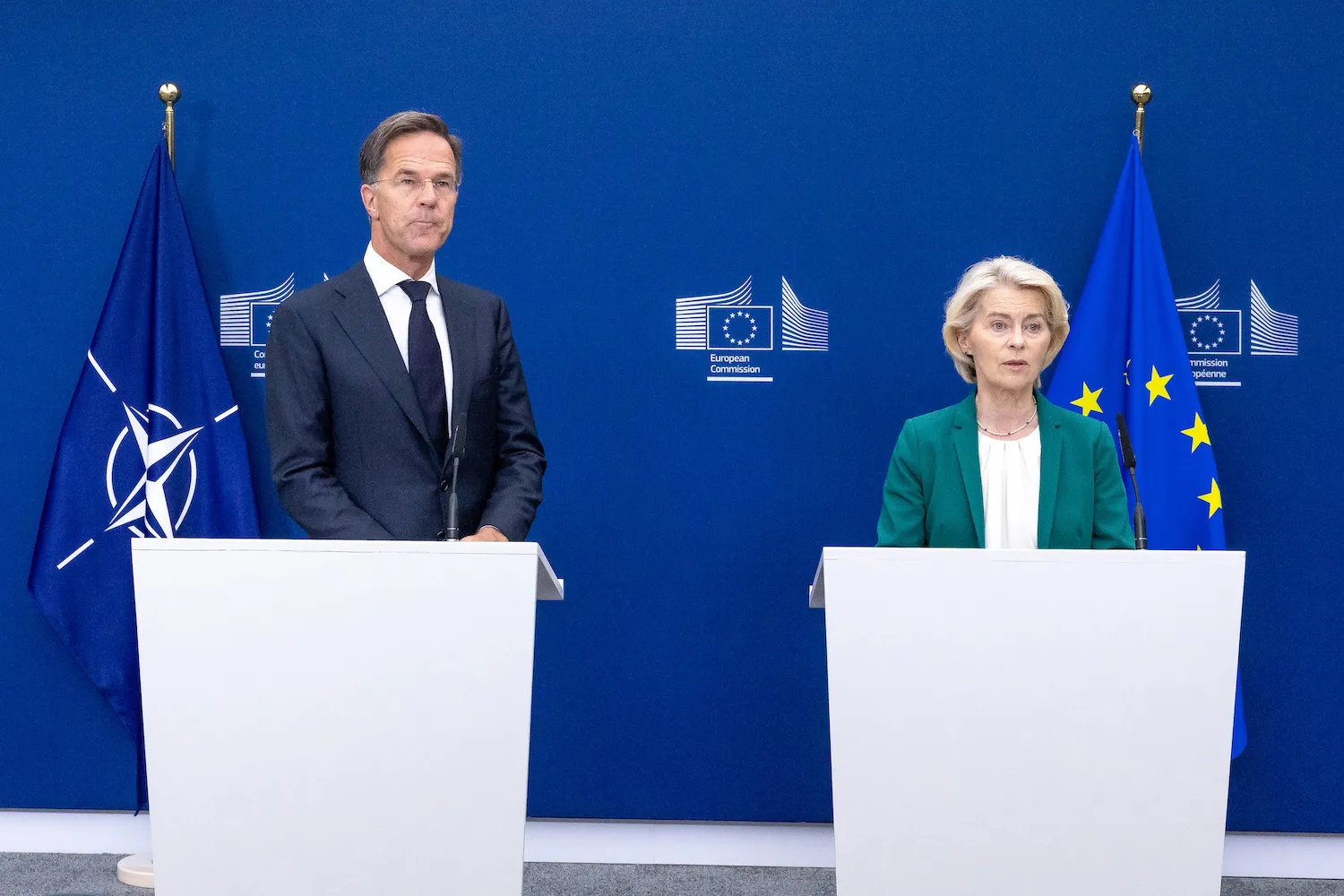
In June, European Union heads of government asked member states to lift defence readiness decisively by 2030 and to close capability shortfalls that would otherwise force reliance on external suppliers. NATO has issued a parallel instruction. Secretary General Mark Rutte told allied governments in July that European, Canadian and American defence industries must raise output together, on the grounds that Moscow has reorganised its economy around a wartime footing. Europe, he noted, is shouldering a bigger share of NATO's conventional tasks while the United States remains present.
The arithmetic underneath those statements is unforgiving. A high-intensity campaign on European soil would burn through artillery shells, interceptors, armoured vehicles and air-defence munitions at rates that peacetime procurement was never designed to sustain. Ukraine's trajectory has become the reference case: stocks that looked adequate at the start of 2022 were depleted within months, and the country has spent much of the time since begging donors for replacements.
Munitions, missiles and spare parts
Three categories dominate the worry list. Artillery ammunition, particularly 155mm shells, is the most visible because the consumption rates are publicly tracked. Air and missile defence is the most expensive, since modern interceptors cost orders of magnitude more than the rockets or drones they are designed to stop. Logistics and industrial capacity, the unglamorous third leg, is in some ways the most consequential: a factory that can turn out a few dozen precision-guided munitions a year is useful in a crisis only if it can be retooled to produce thousands.
The deeper lesson European planners now treat as fixed is that modern conventional defence is not won by stocking the right kit before a war. It is won by the ability to replace what gets fired, blown up or worn out, at scale, while the fighting continues.
Joint procurement as NATO's workaround
Joint procurement is the answer NATO has settled on. Nine allies agreed in July to develop a prototype for a shared 155mm artillery round, a munition that today comes in slightly different specifications from each national supplier. Six others are running a parallel study into ground-based precision strike. NATO's pitch is straightforward: common production lines cut unit cost, simplify the logistics tail and shorten the queue for allies that would otherwise be at the back of every national order book.
Those schemes remain small relative to the scale of the underlying problem. A prototype artillery round is years away from a high-rate production line, and the precision-strike project is still at the feasibility stage. Their value, officials argue, is as much institutional as industrial: they lock allies into shared specifications before national budgets are written, which is harder to undo later.
The American shadow over European plans
Underneath the procurement drive runs a second uncertainty, this time about Washington. American officials have signalled that they expect European allies to carry more of the conventional load, and reporting this year has pointed to possible cuts in the US troops and equipment earmarked for European contingencies. No formal withdrawal has been announced, and the alliance's nuclear umbrella is not in question. The working assumption in several European capitals is still that less American weight will be available in a crisis than during the years after 2014.
That assumption feeds directly back into the industrial question. If American airlift, munitions and reinforcement timelines become less reliable, then European stockpiles have to be deeper, factories have to be faster, and the period a country can fight alone has to be measured in months rather than weeks.
Germany's quiet restructuring
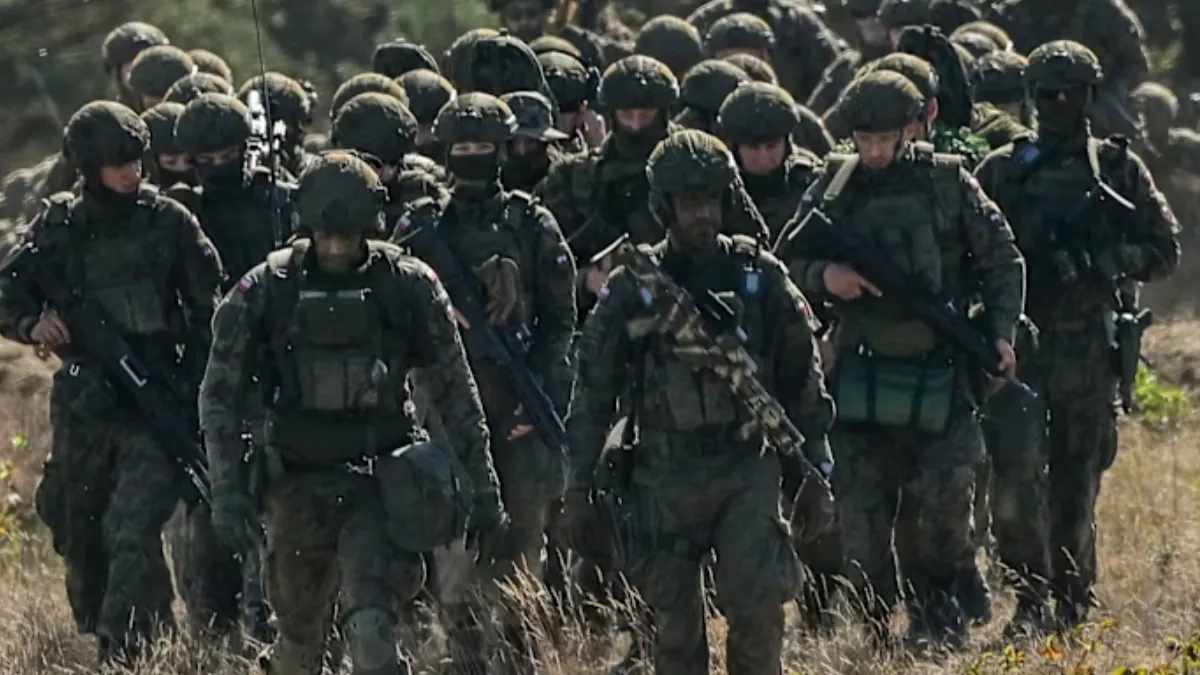
Europe is not starting from zero. Germany's Bundeswehr has built its 2026 Quadriga exercise, one of its biggest in years, around scenarios closer to a real contingency than to a rehearsal script. NATO retains a high-readiness Allied Reaction Force and says it could mobilise hundreds of thousands of additional personnel if directly challenged. Germany has named Russia as its principal security threat and is reorganising its armed forces around long-term endurance rather than the smaller, more deployable shape favoured in the post-Cold War decades.
Defence officials increasingly frame the question not as 'could Europe respond?' but as 'for how many months could it keep responding without leaning heavily on the United States?' That window is where ammunition factories, missile interceptors and trained reserves start to weigh more than brigade lists on paper.
Beneath the conventional balance
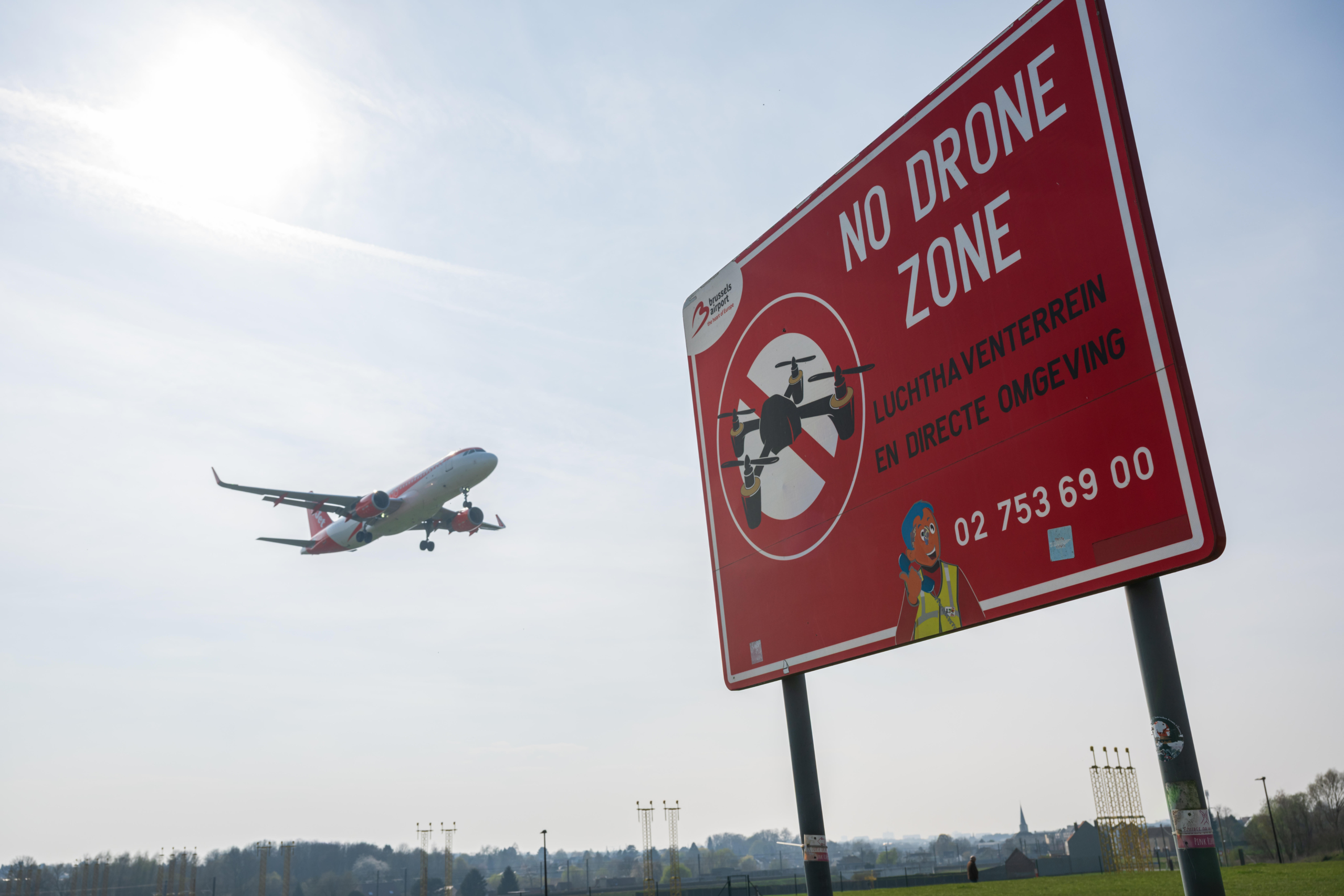
Alongside the conventional balance sits a quieter pattern that NATO says has intensified. Cyber intrusions, infrastructure sabotage and drone incursions have become more frequent across allied territory, layered on top of familiar airspace probes. Each sits on the same planning table as tank brigades and artillery tubes, and each makes the industrial-base argument harder, since the factories Europe needs to protect are increasingly the ones it would need to fight with.
People mentioned
Organisations
NATO · European Union · Bundeswehr