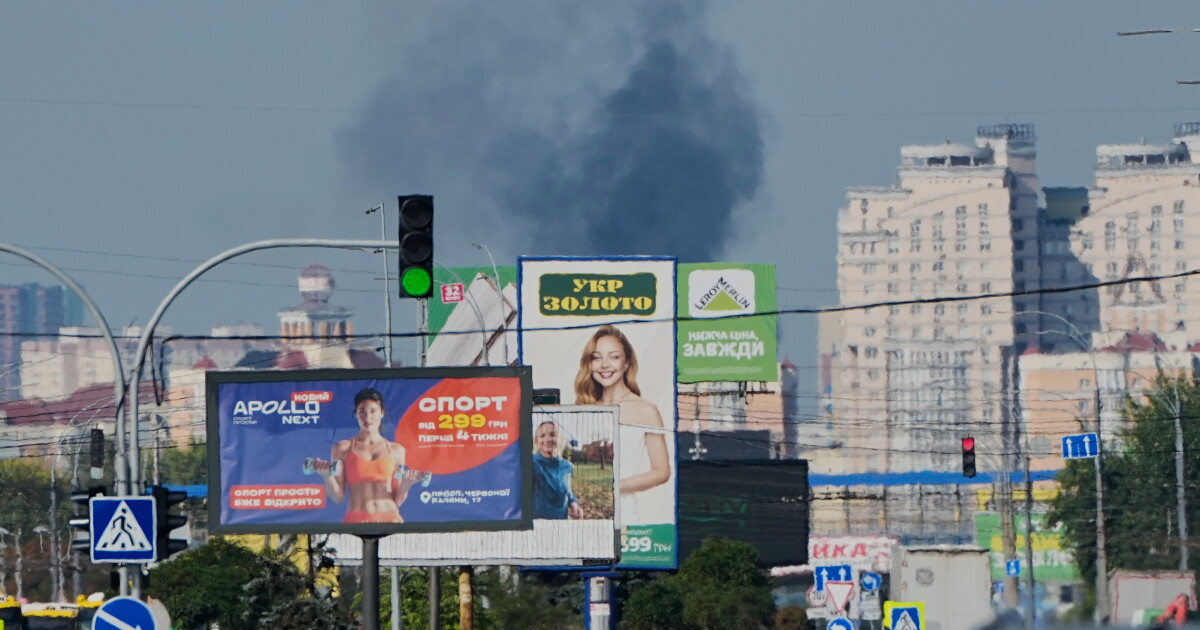
A Russian drone struck a gas station in Yahodyn, a small town in northwestern Ukraine situated hundreds of metres from the border with Poland, Ukrainian authorities said on Sunday. Debris from the attack set fire to the station building and several trucks parked nearby, according to Ukrainian broadcaster Suspilne.
The strike is the latest in a pattern of Russian attacks targeting fuel infrastructure close to NATO's eastern frontier, an area through which significant volumes of military and humanitarian aid enter Ukraine from Poland.
A strike within sight of NATO territory
Yahodyn sits on one of the busiest crossing points between Ukraine and Poland. A Polish official told Reuters the drone impact occurred just hundreds of metres from the border itself. The crossing was briefly shut after the strike but resumed normal operations by 10 a.m. local time on Sunday.
Ukraine's foreign minister, Andrii Sybiha, framed the attack as a deliberate signal. "Russia's barbaric strikes at the Ukraine-Poland border crossing point in Yahodyn are not just a continuation of its attacks on our state borders," he wrote on X. "This is Putin's terror 'knocking' directly on the doors of the EU and NATO."
The proximity matters. An incident that causes damage or casualties on NATO soil could, under Article 5 of the North Atlantic Treaty, trigger the alliance's collective defence commitment. Russia has not yet crossed that line, but strikes this close to the border raise the risk of debris, malfunction or miscalculation doing so.
Gas stations as repeated targets
The Yahodyn attack fits a broader pattern. Russian forces have been hitting Ukrainian gas stations with enough regularity that one Ukrainian fuel network has begun installing mesh cages around its facilities in Kyiv to limit blast radius and reduce damage during strikes.
Targeting fuel distribution rather than just storage depots or refineries suggests a calculated approach: gas stations are dispersed, difficult to defend entirely, and their destruction disrupts both civilian mobility and military logistics at the local level.
Drone hits passenger train near Polish border
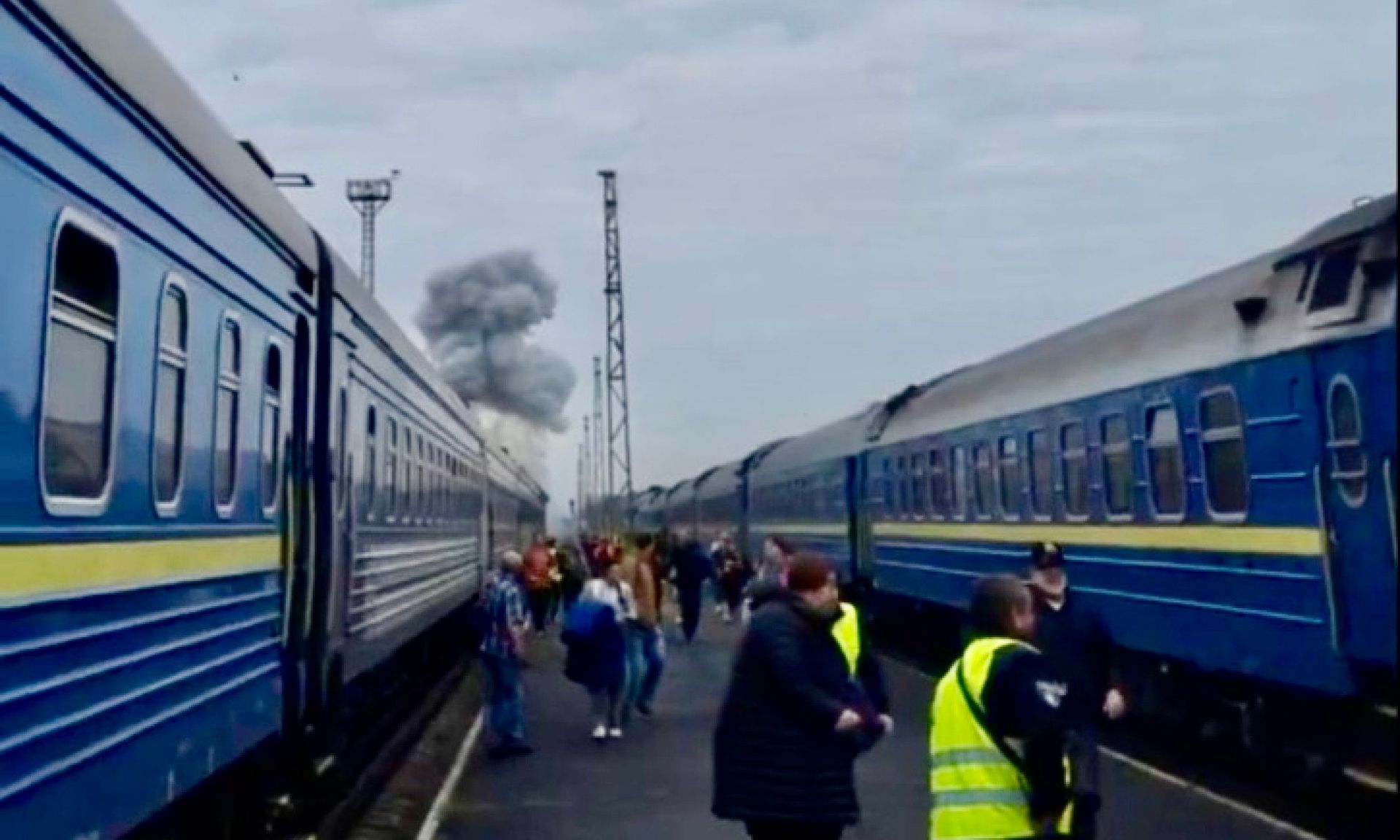
In a separate incident the same morning, Ukrainian Railways reported that a Russian drone struck the locomotive of a passenger train in Volyn, roughly two kilometres from the Polish border. President Volodymyr Zelensky said Russia had "deliberately burned a train locomotive and damaged a gas station in a drone strike."
Ukrainian Railways remains a critical piece of wartime infrastructure, moving civilians away from front-line areas and military supplies toward them. A strike on a passenger train, rather than a freight convoy, also signals that Russia is not discriminating between military and civilian transport.
The scale of the drone campaign
Zelensky said Russia had fired more than 2,000 drones at Ukraine in the past week alone. Many of those, he added, were jet-powered models, which travel faster and are harder to intercept than the slower propeller-driven Shahed-type drones that have formed the backbone of Russia's long-range attacks.
The shift toward faster drones complicates Ukraine's air defence picture. Intercepting a jet-powered drone requires quicker detection and response times, and puts more pressure on the limited supply of Western-provided air defence systems that Ukraine has been deploying around major cities and critical infrastructure.
Ukraine strikes Tatarstan refinery
While Russia pressed its campaign near the Polish border, Ukrainian forces struck back deep inside Russian territory. Ukraine's Special Operations Forces said they had hit the TANECO oil refinery in Nizhnekamsk, in the republic of Tatarstan, in an overnight attack carried out with the Security Service of Ukraine and the Main Intelligence Directorate.
Tatarstan lies more than 1,000 kilometres from the Ukrainian border. The TANECO refinery is one of Russia's largest, and has been hit before. Officials in Tatarstan said two civilians were killed and others injured in the attack on Nizhnekamsk.
Strikes on Russian refining capacity serve a dual purpose: they reduce fuel available to Russia's military, and they impose economic costs by forcing export reductions or increased reliance on imports of refined products.
NATO states on edge
NATO countries bordering Ukraine remain on high alert for drones straying into their airspace. On Sunday, Lithuania closed Vilnius airport and NATO scrambled at least one fighter jet after a perceived drone sighting in Lithuanian airspace. The alert was lifted after the NATO aircraft identified the object as birds, according to Lithuania's National Crisis Management Centre.
A similar incident occurred in Poland last week, when a suspected drone incursion also turned out to be birds. The false alarms illustrate the strain on NATO's early-warning systems, which must distinguish between small unmanned aerial vehicles and other radar returns in real time.
People mentioned
Organisations
Ukrainian Railways · NATO · Ukrainian Special Operations Forces