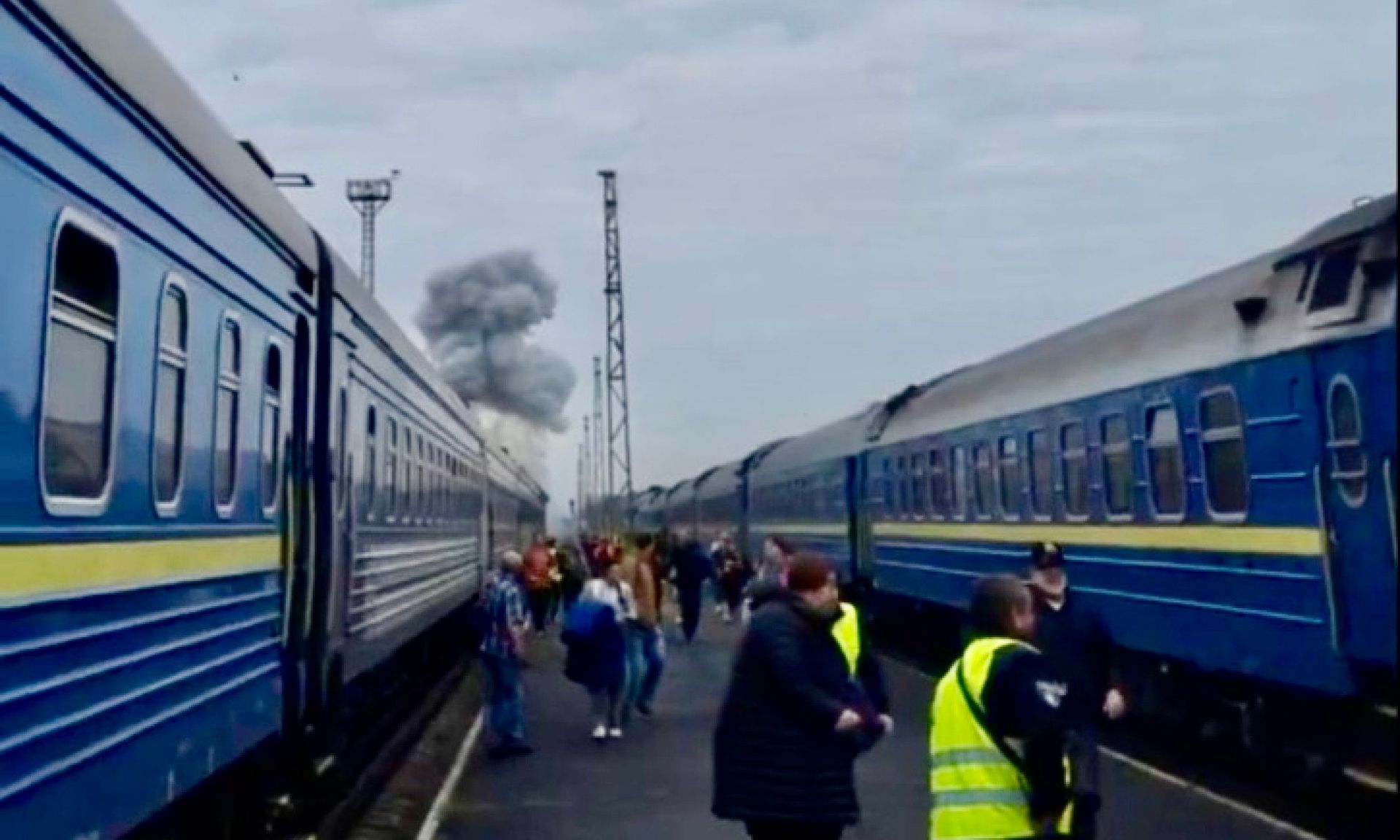
A Russian drone struck a train at Yahodyn station in western Ukraine on 13 September 2026, minutes after a group of senior western officials, including former British prime minister Boris Johnson, had been at the same railway stop near the Polish border.
The locomotive of a Warsaw-bound passenger train was hit. Footage from the scene shows people running along the platform as the explosion erupts in the distance. No casualties among the western delegation have been reported.
Who was at the station
Johnson and former CIA director David Petraeus were among those at Yahodyn, along with several former European leaders and security advisers from EU member states. They were returning from the annual Yalta European Strategy conference in Kyiv, which brings together figures from politics, business, security and media to discuss Ukraine's situation.
Ukrzaliznytsia, Ukraine's state railway operator, confirmed that a diplomatic train had been at the station shortly before the strike. "Shortly before the locomotive was hit at the Ukrainian-Polish border, a diplomatic train was at Yagodyn station," the company said in a statement.
Johnson's response
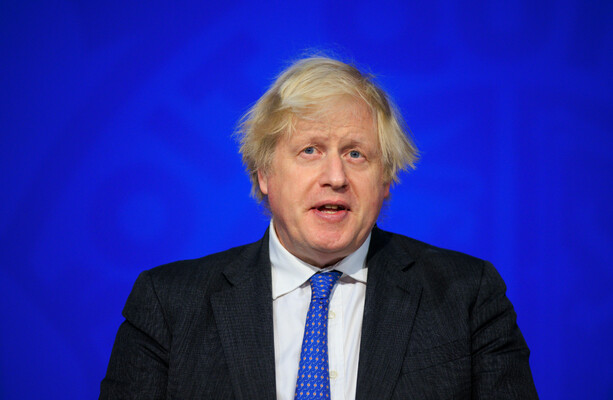
Johnson, writing on X, did not claim the attack was aimed at him. "I don't know what warped logic drove Putin to blow up a stationary Ukrainian locomotive on the Polish border this morning," he wrote. "What we can say for sure is that this is the kind of random and senseless attack Ukrainians are enduring every day, even on civilian railways."
He added that 1,700 Ukrzaliznytsia staff have been killed since Russia's full-scale invasion began in February 2022. "They and their daily passengers are absolutely heroic," he wrote.
A strike at the alliance's perimeter
Yahodyn sits directly on the border with Poland, a NATO member state. The crossing, opposite Dorohusk on the Polish side, handles freight and passenger traffic and is one of the busiest on the EU's eastern frontier. It is also a primary conduit for military and humanitarian aid entering Ukraine from the west.
Ukrainian foreign minister Andrii Sybiha described the strike as "Putin's terror 'knocking' directly on the doors of the EU and NATO." His framing was deliberate. A Russian drone striking a target within metres of the Polish border demonstrates that the war's effects reach the alliance's perimeter, even if the drone did not cross it.
"Russian barbarians are at your gate, dear partners," Sybiha wrote. "Act now: throw the full weight of your sanctions at Putin's aggressive regime. Make Moscow feel the consequences of its terror." He called for decisive action that would increase the cost of the war for Russia to an "unacceptable level."
Ukraine's railways under sustained attack
Ukrzaliznytsia has been a recurring Russian target throughout the war. The network's importance to civilian evacuation, military logistics and western diplomatic movement makes it both a vital asset and a conspicuous one. Russia has struck rail infrastructure across Ukraine repeatedly, aiming to disrupt supply lines and hamper internal movement.
Western officials travelling to Kyiv have typically used the rail network because it is considered safer than road or air travel in a country with active combat zones. This strike challenges that assumption, at least near the western border.
Escalation questions
Whether Russia knew that western officials were transiting through Yahodyn at that moment is unclear. Russian intelligence has targeted Ukrainian transport infrastructure systematically, and the presence of a diplomatic train at a border station might have been detectable through surveillance or signal interception. It might also have been coincidence: a drone striking a train at a crossing point that sees regular traffic.
Had the drone crossed into Polish territory, even inadvertently, it could have triggered consultations under NATO's Article 4 or raised Article 5 considerations. Russia has previously seen drones and missiles land in Polish and Romanian territory without triggering a full alliance response, but each incident narrows the margin for miscalculation.
People mentioned
Organisations
Ukrzaliznytsia · Central Intelligence Agency · Yalta European Strategy