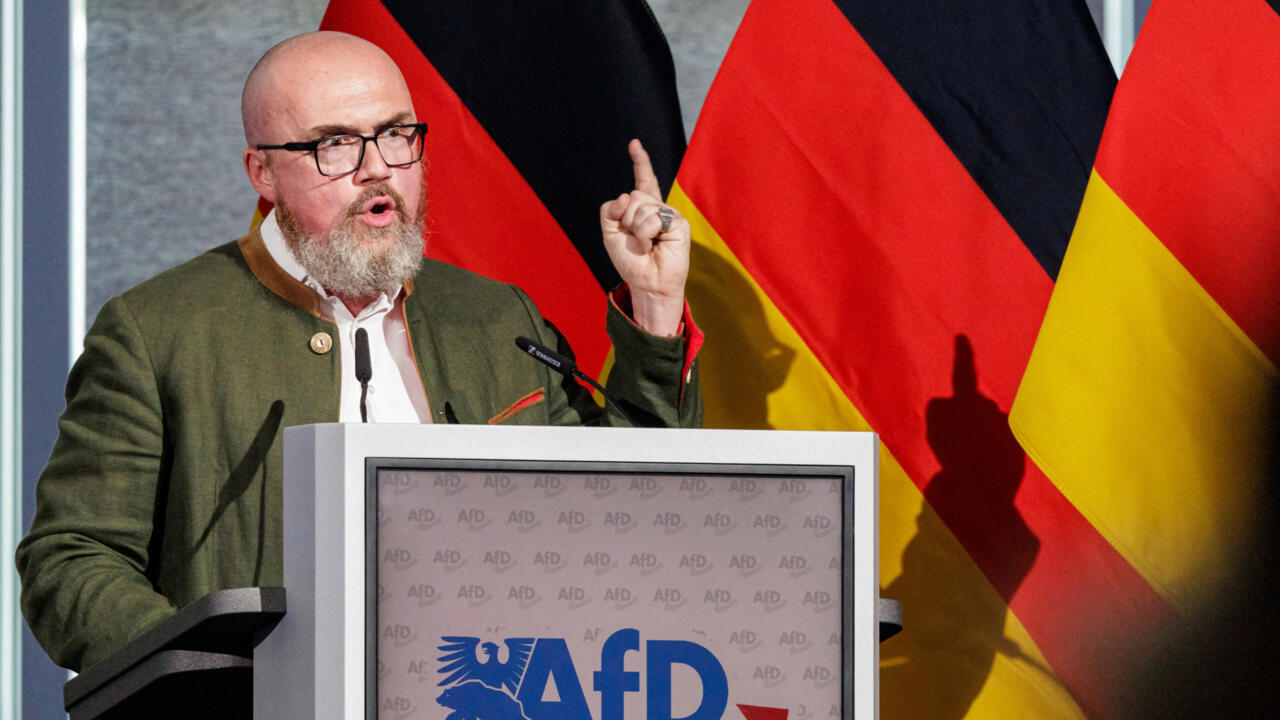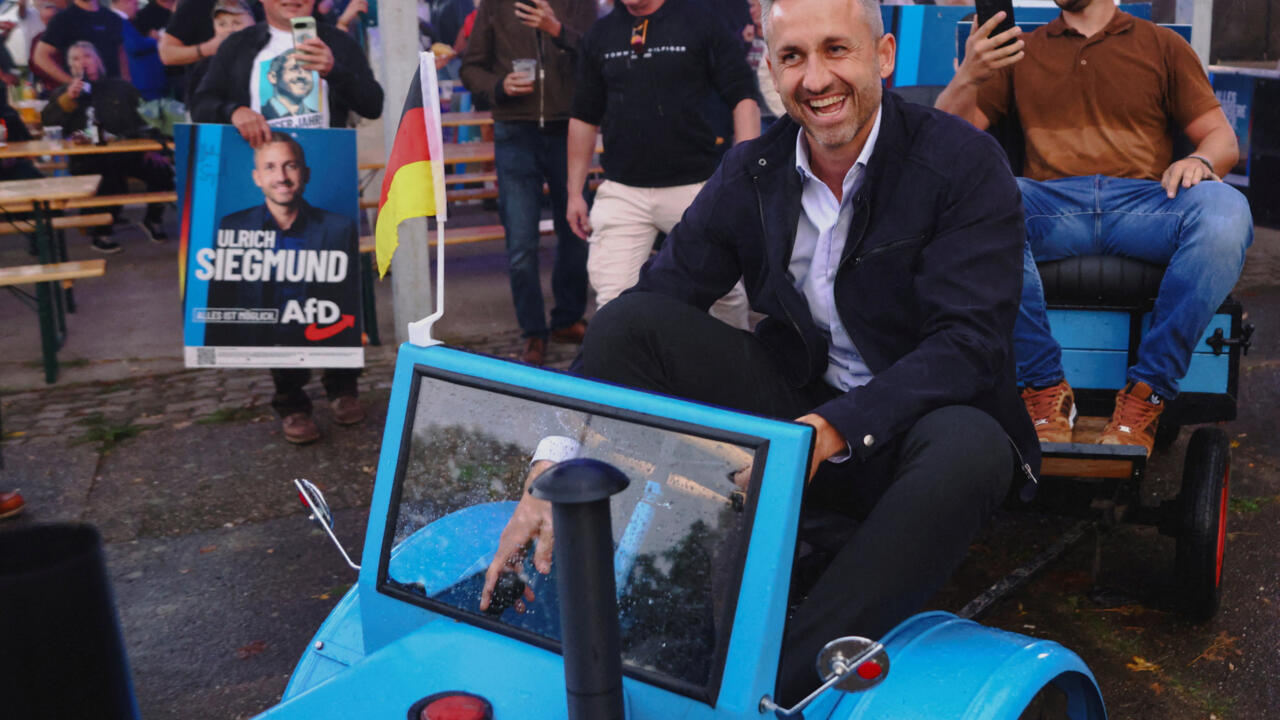
Voters in Saxony-Anhalt go to the polls this weekend in an election that could shatter a taboo held since the foundation of the Federal Republic. The Alternative for Germany (AfD) has led every opinion survey for months, and its lead candidate, Ulrich Siegmund, stands a plausible chance of becoming the first politician from a party classified as right-wing extremist by domestic intelligence to head a German state government since 1945.
A perfume salesman at the gates of power
Siegmund, 37, does not fit the caricature of a firebrand demagogue. Before entering politics full-time, he ran a small perfume business in the Harz mountains. Colleagues describe him as disciplined, softly spoken and meticulous, traits that have served him well in a party where internal discipline is often in short supply. He joined the AfD in 2015, the year of the migration crisis that propelled the party from a eurosceptic professors' club into a nationalist force. By 2021 he had secured a seat in the Magdeburg state parliament; two years later he won the leadership of the state parliamentary group, seeing off rivals from the party's more radical Flügel faction.
His biography is useful to the AfD's attempt to broaden its appeal beyond its core. He is young enough to claim a future, eastern enough to embody the region's grievances, and professionally ordinary enough to deflect the 'extremist' label that dogs the party's leadership in Thuringia and Saxony. The domestic intelligence agency (BfV) still classifies the Saxony-Anhalt AfD as a 'suspected extremist' grouping, a designation the party contests in court. Siegmund's own rhetoric, however, has hardened. He speaks of 'remigration', demands the closure of mosques that 'preach hate', and has called for the dissolution of the federal Office for the Protection of the Constitution.
The Spiegel cover and the perfume salesman's response
The campaign's defining image arrived three weeks ago when Der Spiegel, Germany's most influential news magazine, placed Siegmund on its cover beneath the headline 'Germany's most dangerous man'. The accompanying essay argued that his combination of bourgeois demeanour and radical programme made him more effective than louder ideologues. The AfD's communications team recognised the gift immediately. Within hours, Siegmund was photographed at a rally in Halle holding a copy, marker pen in hand, signing autographs for supporters who queued to buy the edition. 'They wanted to demonise him,' a party strategist told local media. 'They made him a folk hero.'
The stunt encapsulates a dynamic that has frustrated the AfD's opponents for a decade: every institutional warning, from the BfV, the churches, the trade unions, the mainstream press, is recycled by the party as proof that the 'cartel parties' fear the only genuine opposition. In Saxony-Anhalt, where trust in federal institutions runs well below the national average, the effect is amplified. A Forsa poll published in late August showed that 42 per cent of AfD voters in the state believe the intelligence agency's classification is politically motivated.
AfD's eastern stronghold
Saxony-Anhalt has been fertile ground for the AfD since the party's inception. In the 2016 state election it won 24.3 per cent, its best result in any western or eastern state at the time. In 2021 it improved to 23.7 per cent despite a national dip, becoming the second-largest force in the Landtag behind the CDU. The state's demographics explain much: an older population, below-average incomes, net out-migration of the young and educated, and a landscape pockmarked by deindustrialised chemical towns such as Bitterfeld and Leuna. Unemployment stands at 7.1 per cent, nearly two points above the national average, while GDP per capita is the second-lowest of Germany's sixteen states, according to Destatis.
But economics alone does not capture the mood. Three decades after reunification, many eastern Germans feel their biographies were devalued by a western-dominated transition. The AfD has weaponised this resentment, framing itself as the defender of 'the East' against a condescending Berlin elite. Siegmund's campaign posters carry the slogan 'Wir sind das Volk', we are the people, echoing the 1989 Monday demonstrations that toppled the SED dictatorship. Critics call it appropriation; supporters call it continuity.
The coalition arithmetic
Even if the AfD finishes first, polls suggest 30 to 33 per cent, forming a government is another matter. The CDU, currently governing in a coalition with the SPD and FDP, has ruled out cooperation at every level. The SPD and Greens refuse outright. The Left Party (Linke), which holds 11 seats in the outgoing parliament, is polling below the five per cent threshold and may not return. The FDP hovers at four per cent. The most likely arithmetic, therefore, is a CDU-led minority government tolerated by the SPD and FDP, or a 'Kenya coalition' of CDU, SPD and Greens that would command a bare majority but require the Greens to swallow deep policy compromises.
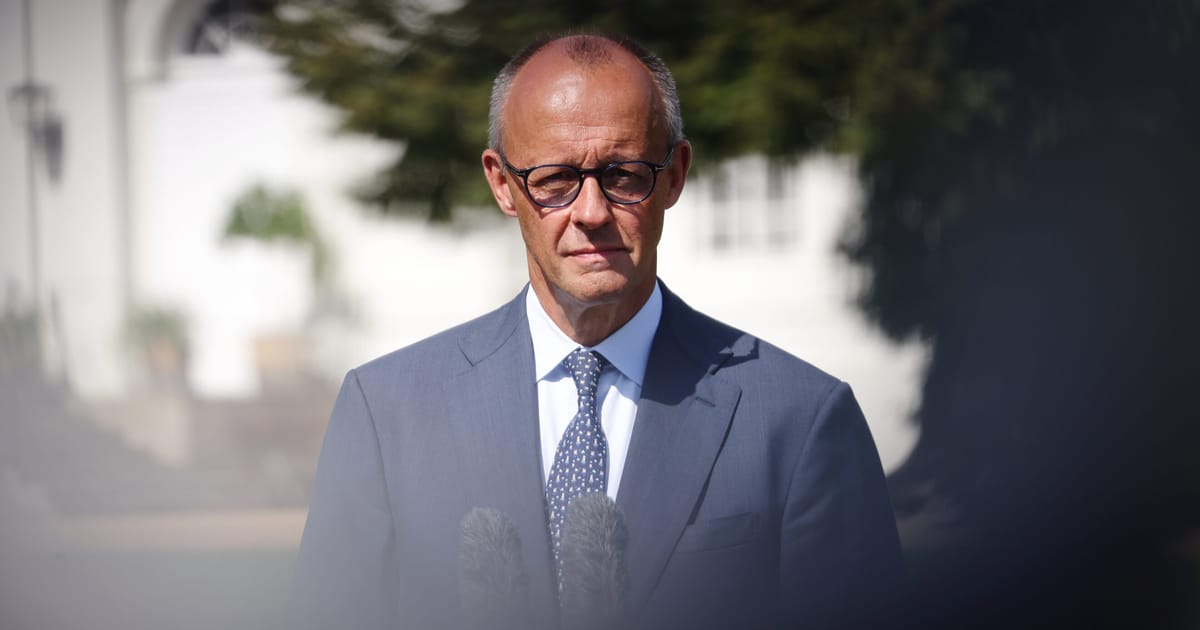
There is a precedent. In Thuringia in 2020, the AfD's Björn Höcke blocked the election of a minister-president for weeks, forcing the CDU into an unstable minority arrangement that collapsed within months. Saxony-Anhalt's constitution requires an absolute majority in the first two ballots; only the third allows a plurality. That gives the AfD leverage: it can deny the CDU a majority indefinitely, forcing fresh elections or a rupture of the firewall. CDU state premier Reiner Haseloff has said he would rather lead a minority government than break the taboo. His federal party leader, Friedrich Merz, has been less categorical, telling the Bild am Sonntag in July that 'local decisions belong to local associations.'
What the vote means for Berlin
The federal government is watching with anxiety. Chancellor Olaf Scholz's traffic-light coalition (SPD, Greens, FDP) is polling at historic lows nationally. An AfD minister-president in Magdeburg would be a psychological earthquake, signalling that the firewall has failed at the state level and legitimising the party as a governing force ahead of the 2027 federal election. It would also complicate the CDU's positioning. Merz has staked his leadership on a 'conservative renewal' that draws a sharp line against the AfD while adopting its rhetoric on migration and identity. A breakthrough in Saxony-Anhalt would empower the CDU's right wing to demand formal cooperation, or at least a relaxation of the 'Unvereinbarkeitsbeschluss', the incompatibility resolution that bars joint voting with the AfD.
The international dimension is not lost on allies. France and Poland have both expressed quiet concern about the normalisation of a party whose leaders have questioned Germany's eastern borders and called for a 'Dexit' referendum. In Brussels, the European Commission monitors rule-of-law developments in member states; an AfD-led state government would test the limits of Article 7 procedures designed for national executives, not regional ones.
A test for the firewall
The term 'Brandmauer', firewall, entered German political vocabulary in 2020 after the Thuringia crisis. It describes the informal but binding agreement among democratic parties not to cooperate with, tolerate, or depend on the AfD. In Saxony-Anhalt, the firewall faces its severest test. The CDU's state association has expelled members who voted with the AfD in local councils. Yet the pressure from below is mounting. A survey by the Konrad-Adenauer-Stiftung in June found that 28 per cent of CDU voters in the state believe their party should 'talk to the AfD' on substantive issues. Among AfD voters, 81 per cent want the CDU to govern with their party.
Siegmund has been careful not to demand a coalition publicly. 'We want to govern,' he told the Mitteldeutsche Zeitung in August. 'If the CDU shares our positions on migration, energy and education, they know where to find us.' That conditional language is deliberate. It shifts the onus onto the CDU: either adopt AfD policies, or accept AfD votes. Both outcomes serve the party's long-term strategy of normalisation.
The week in Europe: migration, Macron and missiles
The Saxony-Anhalt campaign has not unfolded in isolation. In London, Emmanuel Macron began a state visit marked by the loan of the Bayeux Tapestry, a gesture of cultural diplomacy that barely concealed tense discussions on Channel migration. Keir Starmer, in his first months as prime minister, is seeking a returns agreement with Paris that would allow Britain to send asylum seekers back to France. Macron wants a broader EU-UK security pact in return. Meanwhile, Nigel Farage and Jordan Bardella, leaders of Reform UK and the Rassemblement National respectively, appeared together in Birmingham, projecting a trans-Channel nationalist axis that both hope will energise their domestic bases.
Further east, Kyiv endured its most intense Russian bombardment in four years. Cruise missiles, ballistic missiles and swarms of drones overwhelmed air defences, killing at least twelve civilians. Ukraine's foreign minister appealed directly to Western capitals for additional Patriot interceptor missiles, warning that stocks are exhausted. Since June, more than 43,000 Ukrainian drones have struck or been intercepted over Russian territory, according to Associated Press figures, illustrating a war increasingly defined by asymmetric attrition rather than front-line movement.
People mentioned
Organisations
Alternative for Germany · Der Spiegel