Germany faces a political threshold on Sunday that has not been crossed since the foundation of the Federal Republic. In Saxony-Anhalt, a state of 2.2 million people in the former East Germany, the Alternative for Germany (AfD) is polling above 40% and could become the first far-right party to form a state government since 1945. The election is not merely a regional contest; it is a test of whether the firewall that has contained the AfD at state level since its founding in 2013 can hold.
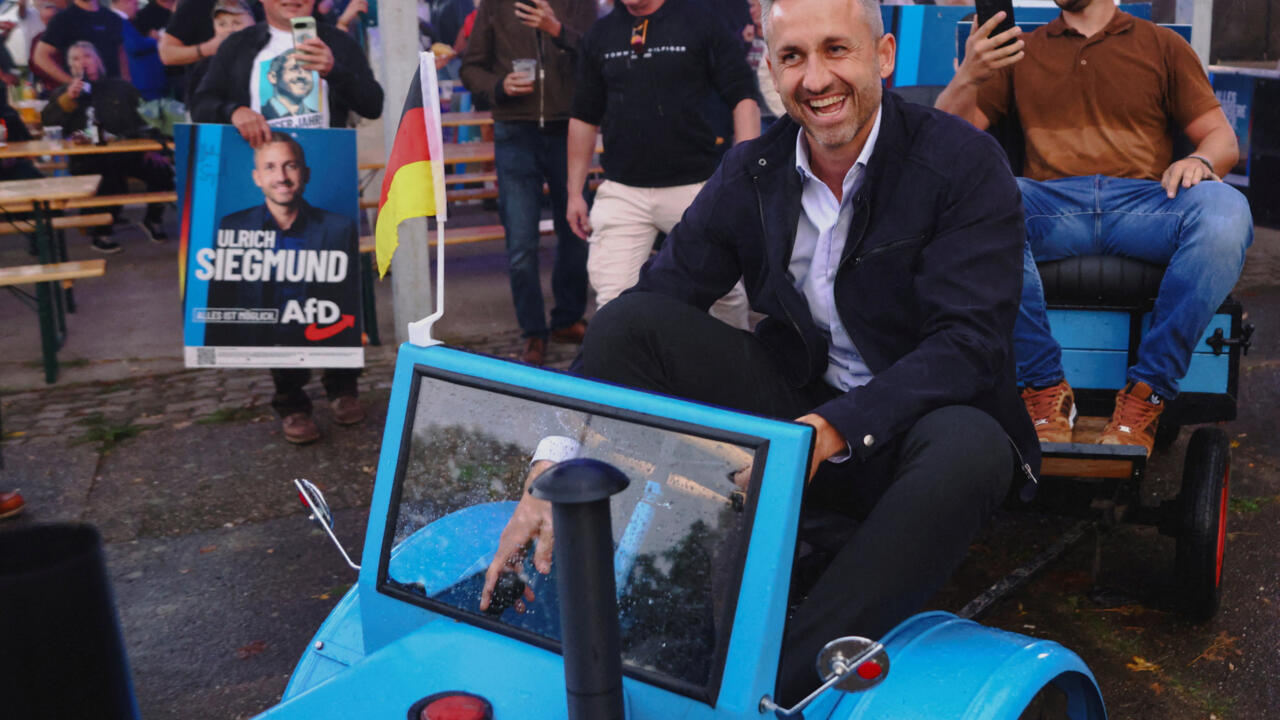
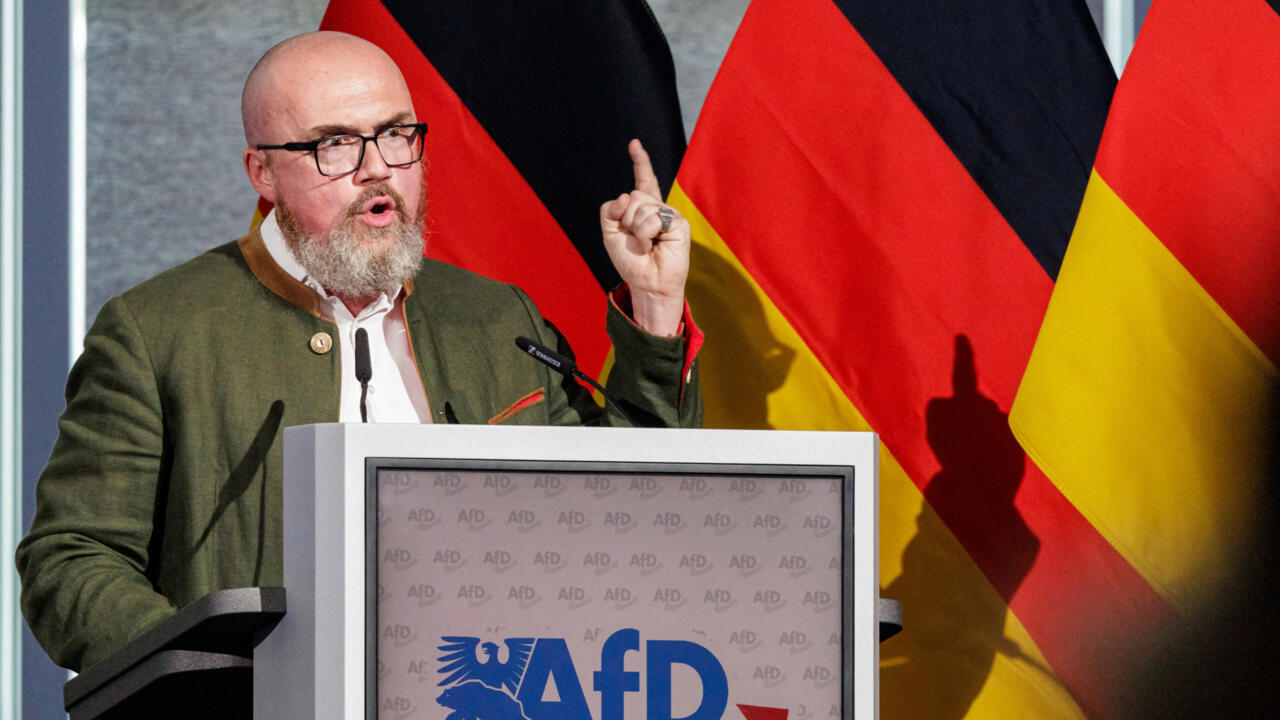
The campaign has two faces. Ulrich Siegmund, the party's lead candidate, is a social-media phenomenon who styles himself as a 'normal citizen' and floods TikTok and Instagram with punchlines. Hans-Thomas Tillschneider, 48, is the ideologue who writes the programme. 'If Ulrich Siegmund is the presentable candidate who sells the party's agenda to the public, Hans-Thomas Tillschneider is more of the mastermind of this campaign,' says Anna-Sophie Heinze of the University of Lüneburg. The division of labour is deliberate: Siegmund provides the smile, Tillschneider the substance.
An ideologue with an unusual biography
Tillschneider's curriculum vitae reads less like that of a German nationalist than a cosmopolitan academic. Born in Timișoara, Romania, to ethnic Germans, he studied Islam and philosophy in Fribourg and Leipzig, spent time in Damascus researching an 18th-century Muslim jurist, and completed a doctorate on the subject. German media have dubbed him 'Dr Extreme Right'. Yet his intellectual formation has not moderated his politics; it has supplied him with a vocabulary of civilisational conflict that he now deploys against the German mainstream.
His pro-Russian activism is equally conspicuous. Shortly after Russia's full-scale invasion of Ukraine in 2022, Tillschneider travelled to Moscow to demonstrate solidarity with Vladimir Putin and sought to visit occupied Donbas, only to be dissuaded by party leadership. In 2024 he appeared in Kaliningrad waving a Russian flag alongside other AfD members. A recent Bild report photographed a Russian army mug in his home; a video of him downplaying the find circulated widely. The platform reflects this alignment: it calls for an end to sanctions against Russia, for Ukrainian refugees to be treated 'like other refugees', and for more Russian to be taught in schools.
Russia, remigration and the culture war
The AfD's Saxony-Anhalt programme places 'family and children' first, 'immigration and remigration' second, and 'culture' third. No other state AfD branch elevates culture so high; the federal programme mentions it on page 104 of 114, Mecklenburg-Vorpommern's on page 92 of 93. For Tillschneider, culture is the terrain on which the party can act immediately. Immigration policy sits with the federal government in Berlin; education, heritage and arts funding sit in Magdeburg.
Sven Leunig of the University of Jena, who studied the platform, describes it as 'a conservative-reactionary programme that proposes rolling back on 20 to 30 years of social progress, especially in recognition of the LGBTQ+ community and women's rights. It advocates a strongly anti-immigration stance and denies the urgency of acting on global warming.' The term 'remigration', a euphemism for mass deportation, appears explicitly. The climate denial is categorical. The Russia position is unconditional.
Bauhaus, Bismarck and the language of the 1930s
Tillschneider's cultural targets are specific. He has promised to stop 'public funding promoting anti-German art' without defining the term. The Bauhaus movement, founded in Weimar in 1919 and forced to close by the Nazis in 1933, is singled out as representing 'a modernity which is losing its way', phrasing that Jan Niklas Reiche notes echoes the Nazi denunciation of 'degenerate art'. In education, the programme demands 'more Bismarck and less Hitler', a formulation that Reiche reads as a coded appeal to voters nostalgic for an authoritarian past without the inconvenience of National Socialism.
The historical resonance is deliberate. Saxony-Anhalt is the cradle of German Protestantism and the birthplace of the Bauhaus. Attacking both allows the AfD to claim the mantle of a 'true' German tradition while positioning the cultural establishment as alien. 'The extreme right underlines these issues, whether it's gender or sociocultural issues related to immigration, more than the economy,' Heinze observes. 'Culture is often an issue that allows the far-right to garner support.' It also allows the party to present German identity as homogeneous, a prerequisite for the 'patriotic political culture' Tillschneider advocates.
A laboratory for the national party
If the AfD wins, Tillschneider is expected to take the expanded Ministry of Education, which oversees higher education, research and cultural affairs. That portfolio would give him direct control over university appointments, museum funding, school curricula and heritage protection. 'The state of Saxony-Anhalt will become a laboratory for the recommended measures and for the continuation of normalising extremist discourse,' Reiche warns. The experiment would be watched closely by AfD branches across Germany, particularly in Thuringia and Saxony, where the party also polls strongly.
The federal AfD leadership has historically tried to distance itself from the most radical state associations. The Saxony-Anhalt branch, led by Tillschneider and the state chairman Martin Reichardt, has long been considered the party's most ideological wing. A victory here would embolden the hardliners nationally and complicate the party's attempt to present a governable face ahead of the 2029 federal election. It would also force the CDU, which has ruled Saxony-Anhalt since 1990, into an existential dilemma: cooperate with a party the federal CDU has vowed to exclude, or accept an AfD minister-president.
The firewall and the arithmetic
Current polls put the AfD between 40% and 42%, the CDU around 23%, the Sahra Wagenknecht Alliance (BSW) near 15%, the SPD at 10% and the Greens and FDP below the 5% threshold. Even if the AfD falls short of an absolute majority, it would be the largest party by a wide margin. The CDU has ruled out a coalition with the AfD. A 'Kenya' coalition of CDU, SPD and Greens is arithmetically possible but politically fragile. A CDU-BSW alliance would depend on a party that shares the AfD's Russia-friendly line. Every plausible government combination is unstable.
The federal Office for the Protection of the Constitution (BfV) has designated the Saxony-Anhalt AfD as a 'proven right-wing extremist' entity since 2021, allowing surveillance of its members. Tillschneider himself is a subject of that surveillance. The designation has not dented the party's support; if anything, it reinforces the narrative of a corrupt establishment persecuting patriots. The BfV's 2023 report on the state association runs to more than 200 pages, documenting anti-constitutional statements by leading figures including Tillschneider.
The result will reverberate beyond Magdeburg. In Brussels, a far-right state government would complicate Germany's role in EU migration and climate policy. In Moscow, it would be read as validation. In Berlin, the traffic-light coalition, already fragile, would face renewed questions about its eastern strategy. The firewall has held for a decade. Sunday will show whether it holds for another week.
People mentioned
-
Jan Niklas Reiche
-
Sven Leunig
-
Anna-Sophie Heinze
Organisations
Alternative for Germany · Martin Luther University Halle-Wittenberg · University of Jena · University of Lüneburg