Germany's political faultlines are about to be tested in a state smaller than many European cities. On Sunday 6 September, voters in Sachsen-Anhalt, population 2.1 million in a country of 84 million, will elect a new parliament. Polls consistently place the Alternative für Deutschland (AfD) above 40 per cent, a level that could translate into an absolute majority under Germany's five-per-cent threshold system. If that happens, the AfD would form the first single-party state government in the country's post-war history, led by a party whose Sachsen-Anhalt branch the domestic intelligence agency classified as right-wing extremist in 2023.
Why a small state election matters nationally
The significance extends far beyond Magdeburg. Germany's federal system gives its 16 states direct legislative power at the national level through the Bundesrat, the upper chamber where each state government casts its votes as a block. Sachsen-Anhalt holds four of the chamber's 69 votes; a majority requires 35. On paper, four votes change little. In practice, an AfD-led government would introduce a party that rejects the euro, advocates "re-migration", and maintains ties to Moscow into a body that has operated since 1949 on intergovernmental compromise and personal trust between state leaders.
The Bundesrat's rules amplify the disruption. A state's votes cannot be split: if coalition partners disagree, the state abstains, which counts as a no on legislation requiring Bundesrat consent. Over years, the chamber has become a mosaic of coalitions, 15 states are governed by multi-party alliances, only Saarland by a single party. Even when the same parties control both federal and state levels, they do not always vote identically. Majorities are stitched together case by case, often in mediation committees involving minister-presidents and Bundestag members. An AfD minister-president would use every procedural right to confront rather than cooperate.
The arithmetic of an absolute majority
Germany's electoral law creates a peculiar dynamic. Parties below five per cent win no seats; their votes are discarded. If the AfD takes 42 per cent, the CDU 25 per cent, the SPD 12 per cent, the Left 8 per cent, and smaller parties split the rest below the threshold, the AfD's share of *represented* votes rises sharply. With the BSW (Bündnis Sahra Wagenknecht) polling near the threshold, its entry or exclusion swings the calculus. An absolute majority for the AfD is not guaranteed, but it is no longer theoretical.
If the AfD falls short, the alternative is a protracted vacuum. Every other party in Sachsen-Anhalt has ruled out cooperation with the AfD. That leaves a potential CDU-SPD-Left coalition, an alliance spanning the ideological spectrum from conservative to democratic socialist, or a minority government dependent on case-by-case toleration. Until a new government forms, the outgoing CDU-led administration remains in office as a caretaker, its legitimacy to take positions on contentious federal legislation diminished. The same dynamic will replay in Mecklenburg-Vorpommern and Berlin on 20 September.
A federal government already under strain
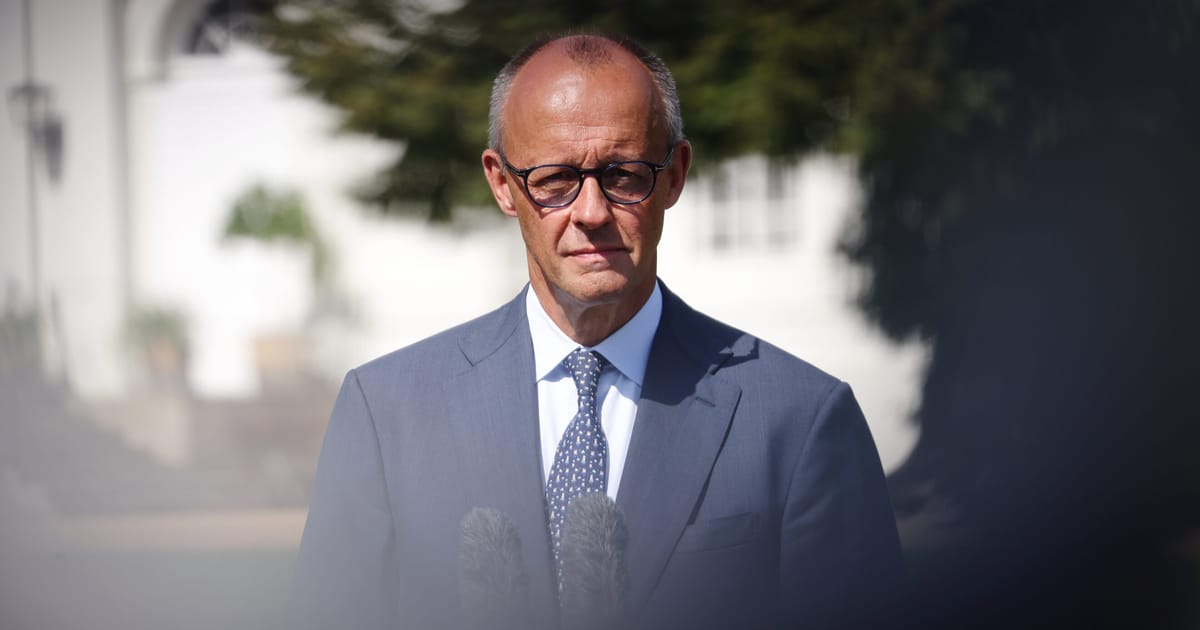
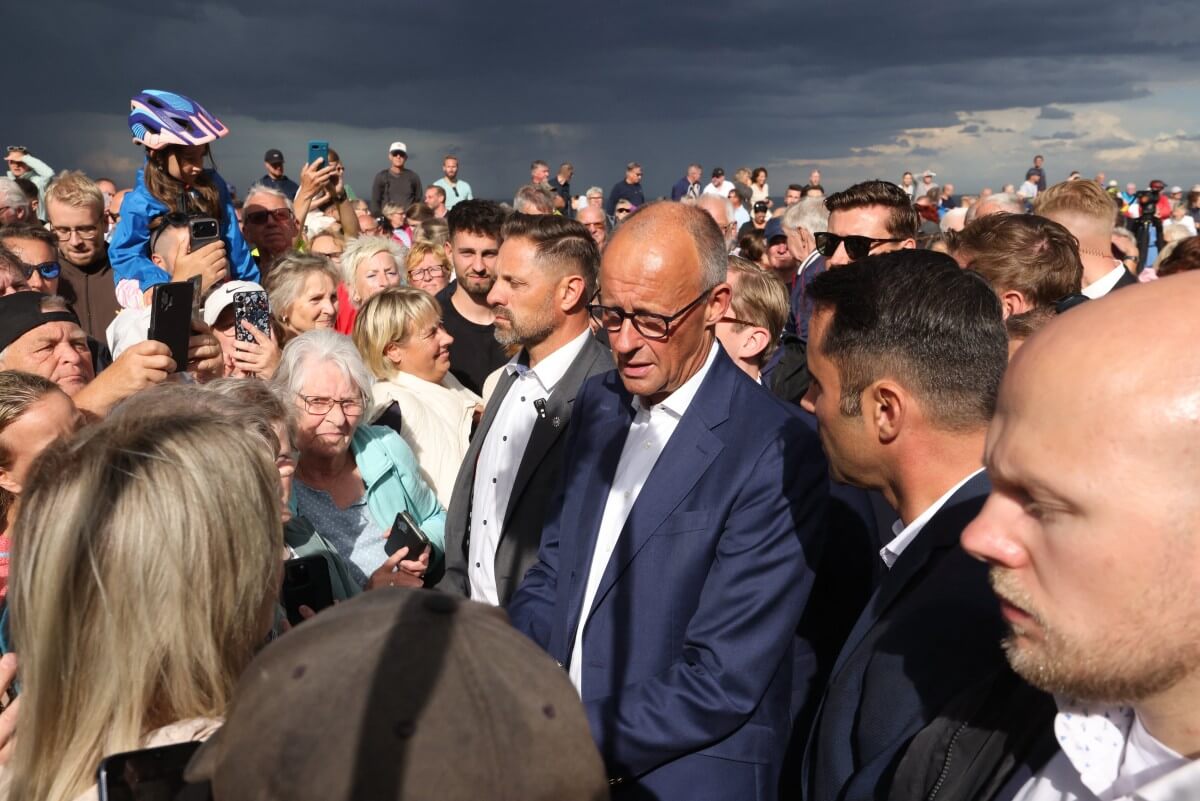
Chancellor Friedrich Merz took office pledging to revive Germany's stagnant economy and modernise pension and health systems for an ageing population. His CDU/CSU-SPD coalition holds a solid Bundestag majority, but public approval has eroded. The September elections arrive at the worst possible moment: the federal government needs Bundesrat consent for key economic and social reforms before year-end. Every state election that produces a caretaker government or an AfD-led administration reduces the pool of reliable partners.
Merz's balancing act between his CDU, the Bavarian CSU, and the SPD was already delicate. A strong AfD showing hands the opposition momentum and exposes the governing parties to further electoral losses. The Bundesrat will still be able to assemble 35 votes, but each majority will become more politically costly, more unpredictable, and more dependent on last-minute deals that demand high-level attention the chancellor can ill afford.
The European dimension is indirect but real
Germany's EU engagement will not change overnight. The federal government remains committed to supporting Ukraine and rebuilding European defence. But the AfD's narrative, "what is in it for us, the Germans?", has already seeped into mainstream discourse. If political blockades prevent fundamental reform of Germany's economy and social systems, electoral dissatisfaction will deepen, and the far right will rise further. A weaker, more divided Germany is the last thing the EU needs as it negotiates the long-term budget, competitiveness strategy, and security architecture.
The European Parliament already contains an "Europe of Sovereign Nations" group driven by the AfD. A state government would give the party a new institutional platform: the right to speak in the Bundesrat, to table initiatives, to shape Germany's positions in EU committees where states are represented. The AfD would use that platform strategically, well beyond the chamber.
A chamber built on trust faces a stress test
The Bundesrat has been called a chamber of the "old" Federal Republic: diverse, sometimes fractious, but ultimately held together by a shared instinct to keep the federation functional from Munich to Schwerin. Personal relationships between minister-presidents, built over years of negotiation, oil the machinery. An AfD minister-president would have no investment in that culture. The party's Bundestag behaviour, procedural obstruction, rhetorical escalation, rejection of consensus, offers a preview.
This does not mean legislative paralysis. The Bundesrat's majority threshold is low enough that cross-party coalitions can still form. But the path to 35 votes will narrow. Legislation on climate policy, digital infrastructure, housing, and social security, all requiring Bundesrat consent, will face longer negotiations, more public grandstanding, and a higher risk of failure. The federal government will need to invest political capital in state-level diplomacy that it would rather spend on substance.
What the polls do not capture
National surveys now place the AfD near 30 per cent, ahead of the CDU. That is a nationwide average; in eastern states the party runs stronger. But polls measure voting intention, not coalition viability. The BSW's fate is pivotal: if it clears five per cent, it enters parliament and complicates both AfD majorities and non-AfD coalitions. If it falls short, its votes vanish, boosting the AfD's seat share. Turnout differentials, historically lower in the east, could shift results by several points. The only certainty is uncertainty.
People mentioned
Organisations
Alternative für Deutschland · Christian Democratic Union · Christian Social Union · Social Democratic Party · Bündnis Sahra Wagenknecht · The Left Party