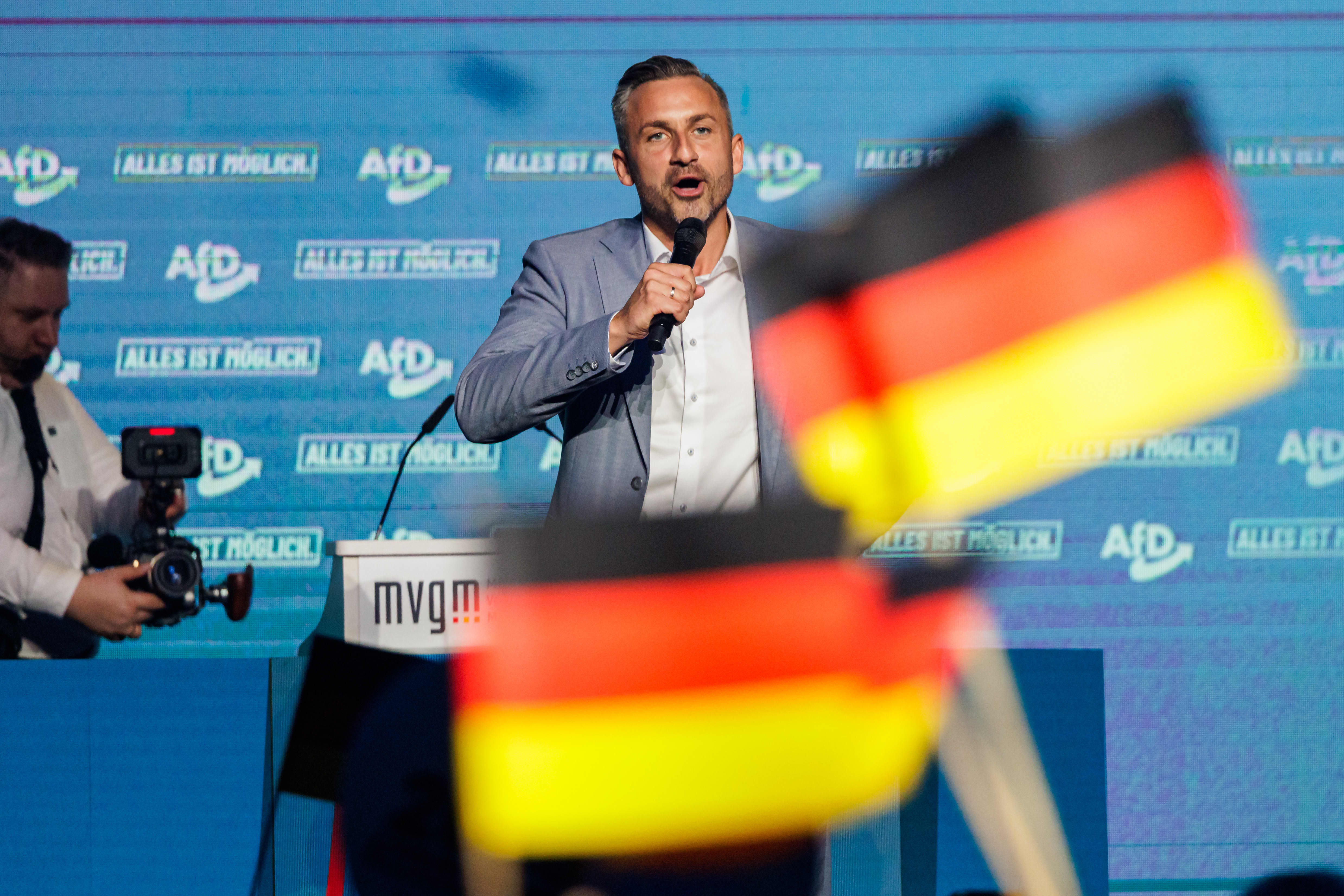
Sunday's election in Saxony-Anhalt will almost certainly deliver a result that would have been unthinkable a decade ago. The Alternative for Germany, designated extremist by the federal government, is polling above 40% in the eastern state. Its nearest competitor trails in the low 20s. If several smaller parties fail to clear the 5% threshold for parliamentary entry, their votes would be redistributed, potentially handing the AfD an outright majority in the Magdeburg legislature.
A firewall under pressure
The informal agreement among all other parties, from the Christian Democratic Union to Die Linke, to exclude the AfD from government has held since the party entered state parliaments in 2014. But the firewall's durability is being tested. In Saxony-Anhalt, the AfD has embedded itself in local clubs, volunteer fire brigades and community organisations across the rural east, becoming what Marcus Böick, professor of German history at Cambridge University, calls 'the people's party of the East.' The firewall, argues AfD Bundestag member Ronald Gläser, has had an unintended consequence: 'The firewall made us the only real opposition in Germany. Anyone who is upset turns to us.'
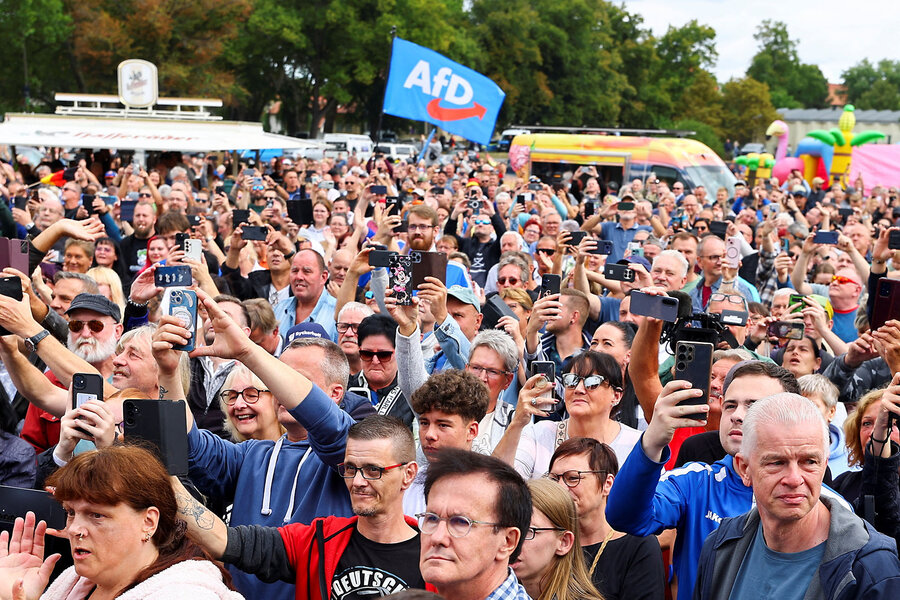
At Thursday's final rally in Magdeburg, 6,000 supporters waved German flags, a sight that still unsettles many in the west, where flag-waving carries associations with the nationalism that led to catastrophe. Gerda Werner, a grandmother with red hair and sunglasses, summed up the mood: 'We must change. All the other parties talk and do nothing.' Her frustration echoes across a region where the promised prosperity of reunification never fully arrived.
The east that reunification left behind
Saxony-Anhalt's trajectory since 1990 explains much of the AfD's appeal. When the German Democratic Republic collapsed, the factories, youth organisations and communal festivals that structured daily life vanished. 'The whole fabric of eastern German society was disrupted massively,' says Böick, who grew up in the GDR. 'No one filled those gaps.' Western investment rebuilt city centres but did not restore the social cohesion that had centred on state enterprises. A map of last year's federal election results resembles the old inner-German border: AfD finished first across almost the entire former East.
Markus Ziener of the German Marshall Fund in Berlin argues that western politicians misunderstood the depth of the rupture. 'There was a feeling that, as long as we built up their cities and gave them money, they would be happy and vote for middle-of-the-road parties,' he says. 'There was so much beneath that superficial prosperity that we misjudged.' Eastern Germans, he adds, 'feel the west Germans are in control of everything', a perception reinforced by the dominance of western elites in business, media and the federal bureaucracy.
Two Germanys, two histories
The divide runs deeper than economics. West Germans spent decades confronting the Nazi past through a remembrance culture embedded in education, media and public life. East Germans, by contrast, grew up under a communist regime that framed anti-fascism as state doctrine while suppressing discussion of the Holocaust. When the Wall fell, the west's remembrance culture became the national norm, but many easterners experienced it as imposition rather than invitation. 'Voting for right-wing populists is a very rational thing to do in the rural areas of the East,' Böick says. 'It is a cry for support.'
Gläser articulates this divergence bluntly: 'Nazism is a thing of the past. It was a bad part of our history, but there is no neo-Nazi element in our country, at least not in any significant way.' For supporters, such statements are liberation from a guilt they never chose. For critics, they signal a dangerous minimisation of history. 'If you start questioning this,' Ziener asks, 'are you abandoning the core principle of who we are?'
What the numbers could deliver
The arithmetic of Sunday's vote hinges on the 5% hurdle. If the Free Democrats, Greens and other small parties all fall short, their combined vote share, potentially 10-15%, would be redistributed proportionally among parties that clear the threshold. With the AfD already above 40%, that redistribution could push it past 50% of seats. Even without a majority, the AfD would emerge as the largest faction, entitled to the minister-presidency under state convention, though the firewall would likely coalesce around an alternative candidate.
A federal government already weakened
The election arrives at a fraught moment for Chancellor Friedrich Merz's coalition in Berlin. His government's approval ratings have slumped amid disputes over migration, energy prices and the pace of digital modernisation. The AfD has made opposition to Merz central to its campaign, framing the election as a referendum on a federal establishment it portrays as detached and ineffective. A strong AfD result will embolden the party's national leadership ahead of the 2029 federal election and intensify pressure on the CDU to harden its own rhetoric on migration and identity, risking further erosion of the centre-right's traditional voter base.
The morning after
Whatever the outcome, the structural forces that brought the AfD to this point will not vanish on Monday. Saxony-Anhalt's population is ageing and shrinking; its per-capita GDP remains 20% below the western average. The social infrastructure that once bound communities together has not been rebuilt. If the firewall holds, the AfD will claim martyrdom. If it breaks, Germany enters uncharted territory. As Böick puts it: 'The question has a lot to do with our history, that we face what happened in World War II. If you start questioning this, are you abandoning the core principle of who we are?' The answer will not be found in Magdeburg alone.
People mentioned
-
Ronald Gläser
Organisations
Alternative for Germany · Christian Democratic Union · German Marshall Fund of the United States · University of Cambridge