The Alternative for Germany has achieved what no far-right party has managed since the Second World War: finishing first in a German state election. Exit polls from the ARD broadcaster put the AfD on 44.5% in Saxony-Anhalt on Sunday, more than double the 18.5% recorded by Chancellor Friedrich Merz's Christian Democrats. The Social Democrats and Greens both cleared the 5% threshold to enter the Landtag, but the combined strength of the traditional parties no longer guarantees a majority.
A result that rewrites the postwar map
Saxony-Anhalt, a state of 2.1 million people in the former East Germany, has been governed by the CDU since reunification. The AfD's surge to nearly 45% represents a 20-point swing from the last state election in 2021, when the party took 20.8% and the CDU won 37.1%. Turnout of roughly 76% was the highest in a Saxony-Anhalt state election since 1990, suggesting the AfD mobilised voters who typically stay home while also winning over former CDU supporters.
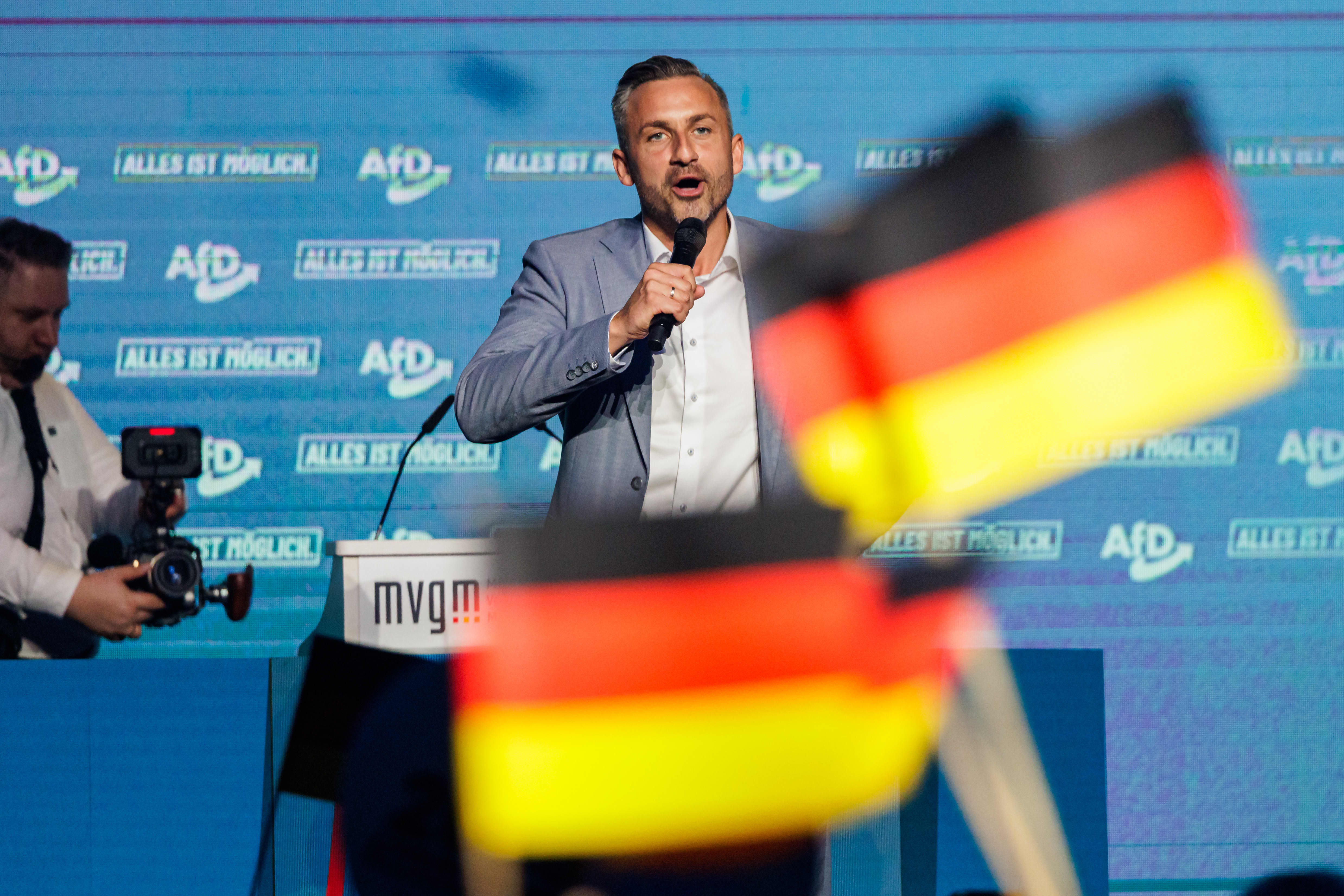
Ulrich Siegmund, the 35-year-old AfD lead candidate who drew thousands to rallies across the state, declared: "We have made history in this country". He framed the victory as a first step towards national power in the federal election due in 2029. Alice Weidel, the party's federal co-leader, echoed the claim, calling the result historic and insisting the AfD now had a clear mandate to govern.
The firewall holds, for now
Germany's mainstream parties have long maintained a Brandmauer, a firewall, refusing any coalition or formal cooperation with the AfD at federal, state or local level. That policy remains intact. The CDU, SPD, Greens and FDP have all ruled out governing with the AfD, which is classified as a suspected right-wing extremist organisation by the Federal Office for the Protection of the Constitution (BfV). The designation means the domestic intelligence service may use surveillance tools against the party, a status the AfD contests in court and dismisses as political scaremongering.
In practice, the firewall means the AfD's 44.5% translates into opposition status unless it finds a partner. The only theoretical candidate is the Bündnis Sahra Wagenknecht (BSW), the left-wing populist party founded by the former Left Party leader. Exit polls placed BSW hovering at the 5% threshold; if it enters the Landtag, an AfD-BSW combination could command a majority. If BSW falls short, the arithmetic forces a coalition of three or more established parties, a fragile construction in a parliament where the AfD is the single largest bloc.
Merz's authority erodes further
For Friedrich Merz, the result is a personal and political blow. The chancellor, who took office in May 2025 after the CDU/CSU won the federal election, has struggled to revive growth in Europe's largest economy. Germany slipped into technical recession in late 2025, and the coalition's disputes over energy policy, migration and the debt brake have dominated headlines. Merz's personal approval ratings have fallen below 30% in recent Forsa and Infratest dimap surveys. Losing Saxony-Anhalt, a state the CDU governed for 32 years, to a party the intelligence service monitors as extremist will intensify calls from within his own ranks for a sharper profile on migration and economic competence.
Nina Warken, a senior CDU figure, called Sunday a turning point for the country. Her phrasing is deliberate: the CDU can no longer treat the AfD as a protest phenomenon confined to the east. National polls now consistently place the AfD ahead of the CDU, with the AfD at 24-26% and the Union at 20-22%. The firewall that once seemed a settled consensus now looks like a dam holding back a rising tide.
What the AfD actually proposes
The AfD's Saxony-Anhalt programme offers a window into how the party would govern if the firewall ever breaks. It calls for schools and cultural institutions to promote "traditional values", a vague formulation that in practice means restricting gender studies, limiting diversity programmes and rewriting history curricula to emphasise national pride. On migration, the party demands immediate border closures, accelerated deportations and an end to family reunification for recognised refugees. Its media policy targets public broadcasters, MDR in Saxony-Anhalt, proposing to shrink their mandate and funding. On foreign policy, the AfD advocates warmer ties with Russia, opposition to further EU integration and a referendum on euro membership.
The BSW wildcard
Sahra Wagenknecht's party adds a layer of unpredictability. BSW combines left-wing economics, higher wages, rent caps, wealth taxes, with anti-immigration rhetoric and opposition to German military aid for Ukraine. That overlap with AfD positions on migration and Russia has led some analysts to speculate about a "red-brown" alliance. Wagenknecht has not ruled out cooperation with the AfD at state level, though she rejects the extremist label. If BSW clears 5%, it holds the keys to a majority; if it fails, the CDU, SPD and Greens must find a three-way coalition that excludes both the AfD and the Left Party, which also risks falling below the threshold.
Coalition arithmetic and the coming weeks
The final official result, due within two weeks, will confirm whether BSW enters the Landtag. If it does, the AfD will demand the right to form a government as the largest party. Sven Schulze, the outgoing CDU minister-president, has already congratulated the AfD and acknowledged its status as strongest party, a symbolic concession that normalises the result. If BSW falls short, the CDU, SPD and Greens must negotiate a "Kenya coalition" (black-red-green) with a combined 55-60% of seats. Such coalitions have governed in Brandenburg and Saxony but are prone to paralysis on migration and climate policy.
People mentioned
-
Nina Warken
Organisations
Alternative for Germany · Christian Democratic Union · Social Democratic Party of Germany · Alliance 90/The Greens · Bündnis Sahra Wagenknecht · Federal Office for the Protection of the Constitution