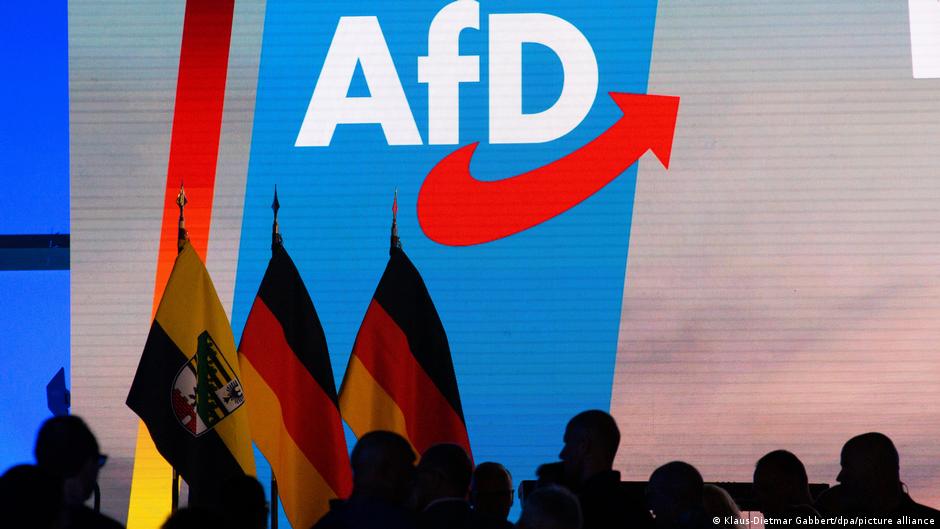
A state of 2.1 million people, tucked between the Harz mountains and the Elbe, is about to test whether a party designated as right-wing extremist by domestic intelligence can win a German election outright. Saxony-Anhalt votes on 6 September. Every poll since the spring has placed the Alternative for Germany (AfD) above 40%, a lead of roughly 15 to 18 percentage points over the Christian Democratic Union (CDU) that has run the state without interruption since reunification.
The numbers that define the race
The CDU trails at 23% to 26%. The Left Party sits at 13%. The Social Democrats hover between 6% and 7%. Both the Greens and the Free Democratic Party risk falling below the 5% threshold needed to enter the Magdeburg parliament. If the polls hold, the AfD would emerge as the largest party by a wide margin, though not necessarily with a majority. Ulrich Siegmund, the AfD's lead candidate, would then claim the right to form a government, a prospect that would shatter a postwar taboo.
The state's Office for the Protection of the Constitution has classified the AfD as a "confirmed right-wing extremist" organisation. In most German states, that label is political poison. Here it appears to have hardened the party's core vote. Benjamin Höhne, a political scientist at Chemnitz University of Technology, told Deutschlandfunk: "I think the AfD is currently watching the United States very closely." He sees parallels with the Trump administration's approach to democratic norms, though he cautions that a single federal state lacks the levers to rewrite the constitutional order on its own. "You cannot simply pull a lever in one state and expect everything to fall into line with a far-right script," he said.
A precedent from the 1990s
This is not the first time the far right has broken through in Saxony-Anhalt. In 1998, the German People's Union (DVU), also classified as extremist, won 12.9% and entered the state parliament. Internal feuding destroyed it before the next election. Observers argue that the DVU's voter base never disappeared; it migrated to the AfD. The current polling suggests that base has expanded, absorbing voters who once backed the CDU or stayed home.
Demography as destiny
The state's demographic profile reads like a case study in eastern German decline. The average age reached 48.3 in 2024, the highest of any German state. Among 18- to 29-year-olds, men outnumber women by roughly 120,240 to 103,177, a gap that social researchers link to the selective outmigration of young women after 1990. Foreign nationals accounted for 9% of the population at the end of 2025, compared with 15% nationally, yet that figure has more than doubled since 2015, according to the Federal Statistical Office. Opposition to immigration runs high despite the low absolute numbers.
Economic roots of discontent
Jobs vanished after reunification, especially in lignite mining and the chemical sector. The Chemical Triangle around Leuna and Bitterfeld still provides about 10,000 positions, but the coal phase-out forces the southern districts into another structural reinvention. Unemployment remains above the national average. The Bundesbank has repeatedly noted the persistent productivity gap between eastern and western states, a gap that fuels the sense of being left behind which the AfD channels into votes.
The CDU's long reign and its final premier
Reiner Haseloff led the state for 15 years before stepping down in January 2026. In a Der Spiegel interview he described sitting in the Magdeburg parliament "as though I were in the final phase of the Weimar Republic's Reichstag, or later in Berlin's Sportpalast", a reference to Goebbels's 1943 total-war speech. His successor, Sven Schulze, also CDU, now carries the burden of defending a record that many voters associate with managed decline. The CDU's last coalition partnered with the SPD and FDP; that arithmetic looks impossible to replicate.
What a far-right government could attempt
Höhne warns that an AfD-led administration would seek to reshape the constitutional order from within, eroding rule-of-law standards and liberal democratic safeguards. The practical limits are real: education, policing and cultural policy are state competencies, but federal law, the courts and the Bundesrat constrain radical moves. Still, a Siegmund premiership would legitimise a party that the intelligence services treat as a threat to the democratic order, shifting the Overton window across Germany.
People mentioned
-
Reiner Haseloff
-
Benjamin Höhne
Organisations
Alternative for Germany · Christian Democratic Union · Social Democratic Party · The Left Party · Free Democratic Party · Alliance 90/The Greens