Giorgia Meloni's administration this week became the longest-serving government in Italy since the second world war, a milestone her allies marked with a festival in the southern port city of Bari. Ten thousand supporters were bussed in for an evening of food trucks, light shows and a prime ministerial address flanked by coalition partners Matteo Salvini and Antonio Tajani. The slogan plastered on volunteers' T-shirts, Il Governo più stabile, l'Italia più forte, summed up the message: stability as strength.
A milestone built on survival
The achievement is real. Since 1945 Italy has averaged a new government every 13 months; Meloni has now held office for 887 days. Her Brothers of Italy party remains the largest in parliament, and the coalition's parliamentary majority has held firm. Michele Picaro, a Brothers of Italy MEP, told the Bari crowd the moment would be written in history books. Yet the celebration masks a shift that could define the next election. Since February, a party led by a former army general has climbed to about 8 per cent in national polls, overtaking both the League and Forza Italia to become the third-largest force on the right.
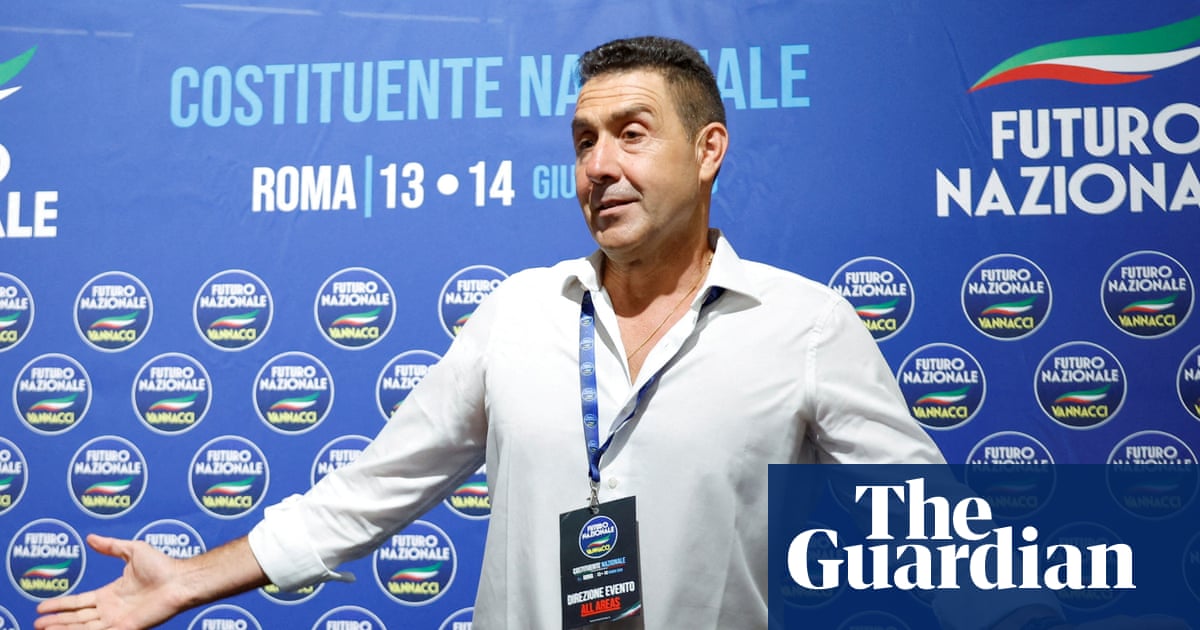
Vannacci's rapid ascent
Roberto Vannacci entered public life in 2023 with a self-published book containing racism, homophobia, Islamophobia and antisemitism. The Italian army dismissed him; the book topped bestseller lists. In 2024 he won a European Parliament seat for the League, then left to form Futuro Nazionale. His manifesto declares that "abortion is not a right", proposes banning gay people from television between 6am and 11pm to shield children from "homosexualist" content, mandates military education in high schools, and advocates a "remigration" plan to expel irregular migrants and foreign nationals who commit crimes. On foreign policy, he has said he would choose Vladimir Putin over Volodymyr Zelenskyy and campaigns to halt weapons deliveries to Ukraine.
In July he staged a "Futuristic Triathlon" in Sanremo, an event critics compared to fascist-era mass gymnastics. The spectacle drew attention but not isolation. Defectors from all three coalition parties have joined his ranks, and he is actively courting disillusioned Five Star Movement voters. Giulia Pastorella, an MP with the centrist Azione party, read his book to understand the opponent. "Here's a military man, who is really a mirror of the worst impulses of people. The scary thing is, I think he's genuine and not a PR construct," she said.
The vacuum on the far right
Meloni's Brothers of Italy has neofascist roots, but in government she has governed more moderately than many expected. She has maintained a pro-Ukraine, pro-NATO line abroad while deploying hardline rhetoric on migration for domestic consumption. That positioning has left space to her right. Vannacci has filled it with a clarity of extremism that the prime minister's pragmatic coalition cannot match without alienating moderate voters or international partners. The dilemma is whether to chase him or contain him.
Coalition strains and electoral calculations
The government's record is mixed. Unemployment has fallen and irregular arrivals have dropped, achievements Picaro cited in Bari. Tax cuts for the self-employed and an investment initiative for the south are also in train. Yet Lia Quartapelle of the Democratic Party argued the stability has been wasted: "None of the core issues have been addressed, we have stagnant productivity and growth, salaries that have lagged behind for many years and an education system that is not up to the pace." Pastorella added that Meloni's foreign policy focus has left voters hungry for domestic debate, a vacuum Vannacci exploits.
Scandals have forced the resignation of a tourism minister and a culture minister, undermining the "seriousness" narrative. With an election possible as early as April 2027, Meloni has pivoted back to harder rhetoric, notably on the influx of migrants into the Spanish enclave of Ceuta. She is also pushing a contested electoral law that would award a majority bonus to any alliance clearing 42 per cent, a threshold her coalition might reach only with Vannacci's support or acquiescence.
Forza Italia draws a line
Alessandro Cattaneo of Forza Italia insisted his party could not govern with Vannacci: "We in Forza Italia believe that Vannacci is too far removed from our political culture. It would not be possible to govern with him … the coalition needs to continue to work seriously for the remainder of this administration and explain better to people what we have done. The best antidote to the extreme right is to show our seriousness." Whether that line holds if the arithmetic demands otherwise remains the central question of the coming months.
People mentioned
-
Michele Picaro
-
Giulia Pastorella
-
Lia Quartapelle
-
Alessandro Cattaneo
Organisations
Brothers of Italy · League · Forza Italia · Futuro Nazionale · Azione · Democratic Party