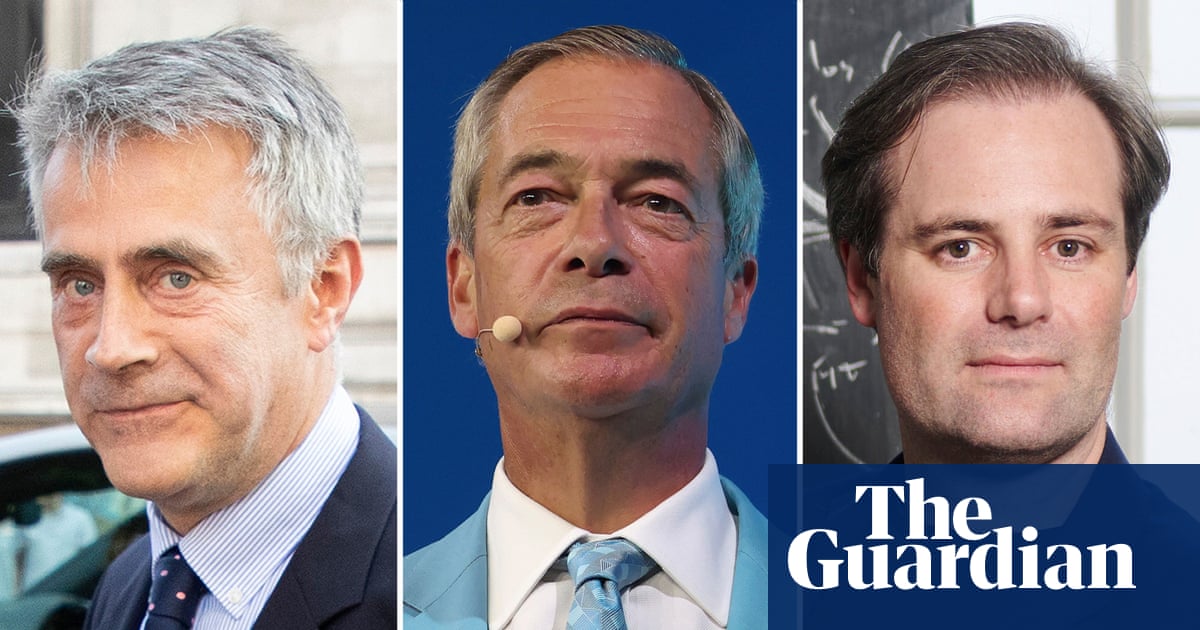
A single weekend in September rewrote the politics of party funding in Britain. Two crypto entrepreneurs, Christopher Harborne and Ben Delo, handed Reform UK £36m each, a combined £72m that dwarfs any previous donation in modern British history. The money arrived just as the government's elections bill, which extends the franchise to 16-year-olds and tightens rules on foreign donors, was moving through the Commons. That bill contains no cap on what UK-based individuals may give. The omission, once a technical detail, has become a political crisis.
The loophole that £72m drove through
British election law has long restricted overseas donations. Since 2000, parties may only accept money from permissible donors, essentially UK-registered electors, companies, trade unions and a few other bodies. But there is no ceiling on the size of a permissible donation. A British citizen can write a cheque for any amount. Harborne, who holds UK and Thai citizenship, and Delo, who recently moved back from Hong Kong, both fall within the permissible category. Reform UK says it is "100% confident" the donations are legal and will never have to be returned.
The elections bill does introduce a new retrospective cap of £100,000 a year on donations from Britons who have lived abroad or returned within the past 12 months, backdated to March 2026. Whether that catches Harborne or Delo depends on residency facts that remain opaque. Harborne's primary residence is unclear; Delo's return date is unknown. Angela Rayner, the communities secretary, told the BBC the legislation was not targeted at individuals but at foreign interference. Reform's economy spokesperson, Robert Jenrick, called the influx a "breakthrough moment" that finally puts his party on a "fair, even playing field" with Labour and the Conservatives.
Why the government held back
Andy Burnham, as a mayor and leadership candidate, backed caps on domestic donations. As prime minister he has not included them in the bill. Senior sources say the decision was driven by trade union anxiety. GMB, one of the largest unions, argued that any statutory limit on individual giving would create a precedent a future right-wing government could use to restrict union affiliation fees and political levies. That fear froze the government's hand. A No 10 source said the bill was "not the right vehicle but this is not the end of the story", promising a review once a newly commissioned taskforce and the Electoral Commission report.
Unions shift ground
The Reform donations have fractured union unity. Sharon Graham of Unite, the second-largest union, declared on Sunday: "For individual donors there must be a cap. I think at some point it gets beyond what people think as normal." Unison, the largest, said it would "fight attempts by billionaires to influence politics." Andrea Egan, its general secretary, linked the donations directly to Nigel Farage: "As his support dwindles in this country, Farage is turning to crypto billionaires in an attempt to undermine our democracy." Paul Nowak of the TUC struck a more cautious note before the congress opening in Brighton: "No one wants the UK to become a country for hire in the way Reform is clearly a party for hire. But we'll have to do that in a way that doesn't cut across workers having their voice heard politically." The TUC congress this week will test whether the movement can agree on a common position.
Parliament's second chance
The bill returns to the House of Lords next week. Labour peers, including Michael Wills, see an "unmissable opportunity" to force the government to set a timetable and remit for the promised review. Stella Creasy, whose Commons amendment for a £100,000 annual cap attracted cross-party support but was withdrawn after ministerial promises of a taskforce, is now liaising with peers on a fresh amendment. Former shadow chancellor John McDonnell urged ministers to move faster and unions to get onboard: "It's clear now to the trade unions meeting in congress this week that action is needed to protect our democracy." Two prominent business donors, John Caudwell and Dale Vince, added public weight. Caudwell, a former Conservative donor, told BBC Radio 4 there should be "a definite change in law". Vince called the system "anti-democratic" and said the end game should be publicly funded politics.
Retrospective law and legal risk
The government's willingness to backdate the overseas-donor cap to March 2026 is unusual. Retrospective tax legislation is common; retrospective electoral law is rare and legally contested. The Political Parties, Elections and Referendums Act 2000 has never been amended retroactively to invalidate donations already accepted. If ministers extend that principle to domestic donors, they will face challenges on human rights grounds, specifically Article 1 of the First Protocol (protection of property) and Article 10 (freedom of expression). Reform's confidence that its donors will meet residency criteria even under the new rules suggests the party has legal advice that the cap will not bite. The Electoral Commission, which must enforce whatever Parliament passes, has not yet commented on the enforceability of a retrospective domestic cap.
What happens next
Three tracks now run in parallel. In the Lords, peers will table amendments this week forcing a domestic cap or a binding timetable for the review. In Brighton, the TUC congress votes on a motion that could commit the movement to supporting legislation. In Whitehall, the taskforce, its membership still unannounced, must produce recommendations before the next election, which Burnham has hinted could come as early as spring 2027. The Electoral Commission is separately reviewing the regulatory framework. If the government resists Lords amendments, it risks a ping-pong battle that delays the entire bill, including the 16-year-old franchise. If it accepts, it must draft a cap that survives legal challenge and does not inadvertently strangle union funding. The next fortnight will show whether the £72m shock produces law or merely more promises.
People mentioned
-
Stella Creasy
-
Sharon Graham
-
Paul Nowak
-
Ben Delo
Organisations
Reform UK · Labour Party · Unite · Unison · GMB · TUC