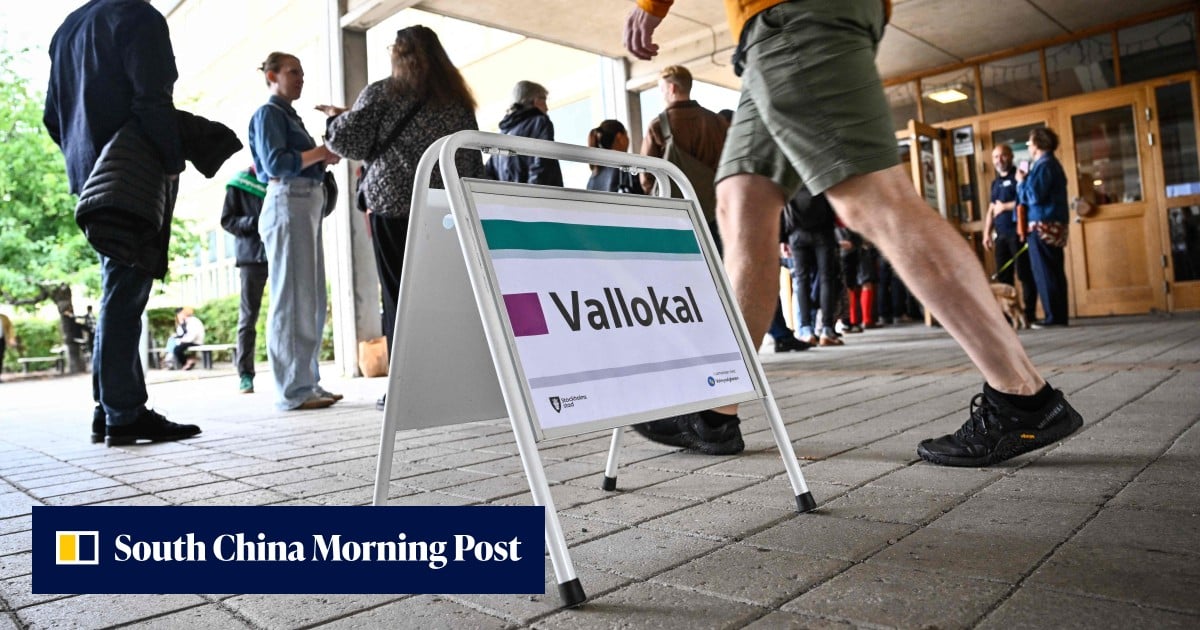
Sweden is voting in a general election that could deliver the Sweden Democrats, a party with neo-Nazi origins, their first ministerial positions. Four years after breaking a longstanding taboo by entering a governing arrangement, the party has accumulated enough influence to demand a formal place in government should the right-leaning bloc retain power. One recent poll put the gap between the two blocs at 0.3 percentage points.
From fringe movement to governing partner
The Sweden Democrats were founded by people with ties to neo-Nazi movements. For years they were treated as pariahs by every mainstream party. That changed in 2022, when the Moderates, the Christian Democrats and the Liberals agreed to form a minority coalition dependent on SD's parliamentary support. The arrangement, named after Tidö Castle where the agreement was signed, gave SD leverage far beyond what its vote share alone would command.
Over four years as a supporting party, SD has pulled Swedish politics rightward on immigration and criminal justice. The party has toned down its overtly racist rhetoric, replacing it with arguments that immigration is responsible for Sweden's crime problems. The shift has been enough to make cooperation acceptable to parties that once ruled it out entirely. The Liberals, who previously refused to countenance any deal with SD, reversed their position to join the Tidö arrangement, a move that illustrated how far Sweden's political centre of gravity had moved.
This time, the calculation has shifted again. SD is Sweden's second-largest party and has been promised a prominent role in government, including key ministerial posts, if the right-leaning bloc wins. The step from confidence-and-supply arrangement to full coalition partner would be significant: it would place politicians with roots in the extreme right inside the Swedish state apparatus for the first time.
A campaign of provocations
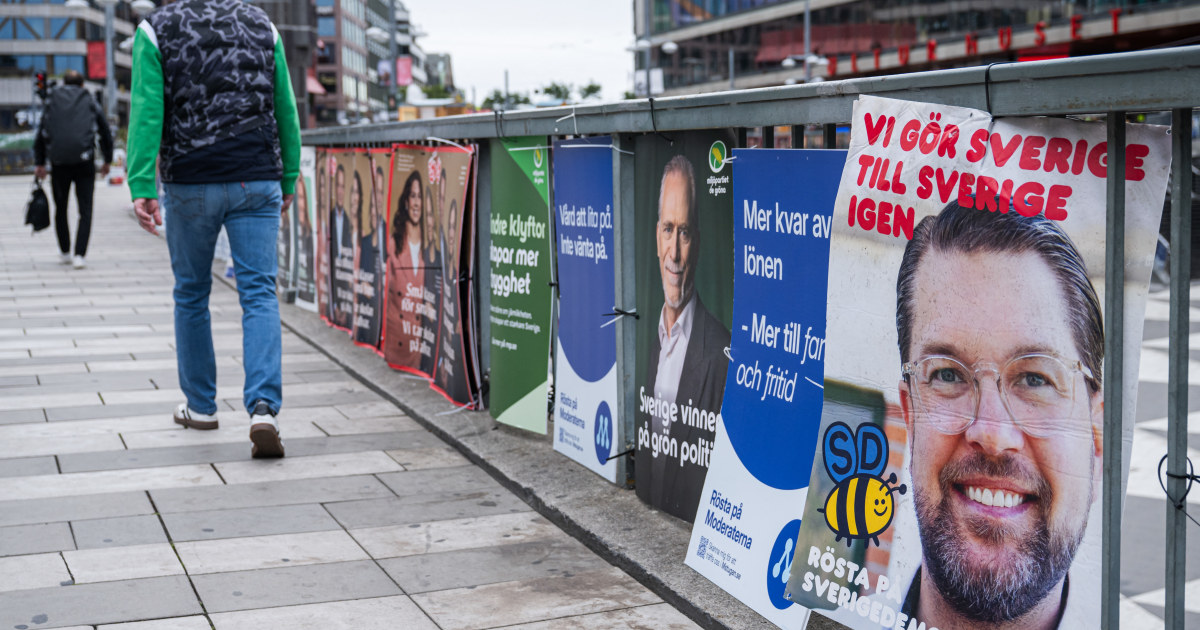
The election campaign has been unusually abrasive. SD's slogan, "Make Sweden Sweden Again", borrows deliberately from Donald Trump's "Make America Great Again". The party ran advertisements on buses reading: "Do you miss Mogadishu? The repatriation grant will help you get home." Bus drivers refused to operate vehicles carrying the ads, which were subsequently removed.
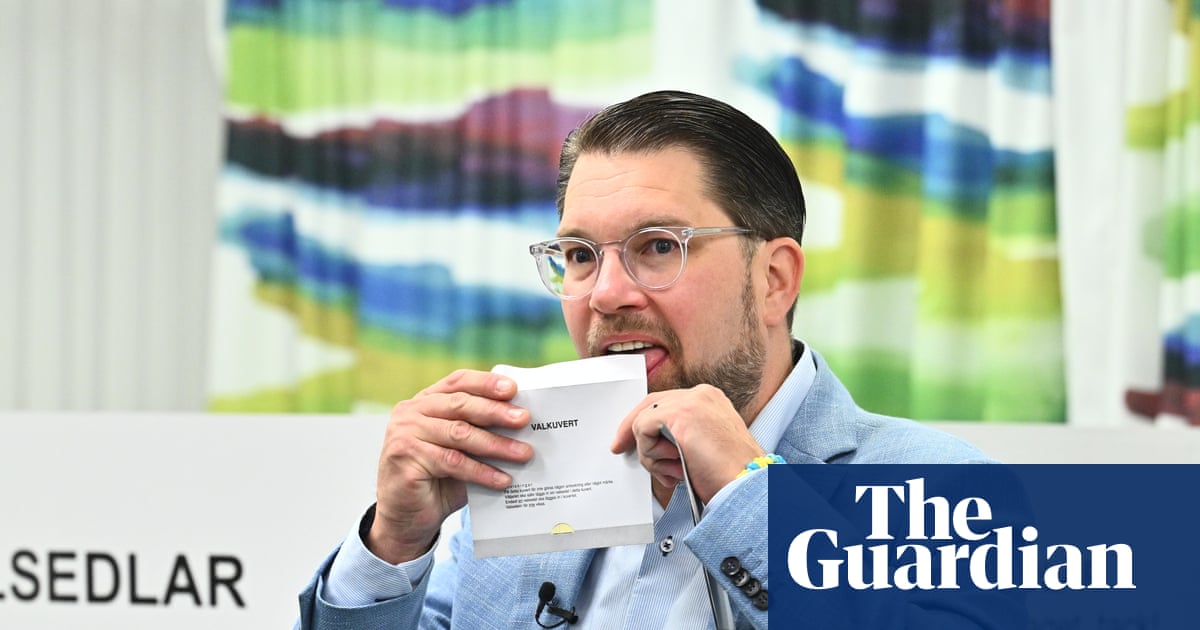
Party leader Jimmie Åkesson was accused of sexism after asking Social Democratic leader Magdalena Andersson during a televised debate why she was so angry, a formulation widely seen as dismissive of a female opponent.
A more serious controversy surrounded Gustav Gellerbrant, a leading SD figure. An investigation by the magazine Expo linked his Russian partner, who works as a parliamentary civil servant for SD, to Russian state actors and the dissemination of Russian propaganda. Gellerbrant called the reporting an attempt to raise suspicion about her origins and has since gone on leave.
The leaders' closing arguments
Ulf Kristersson, the Moderate leader seeking re-election as prime minister, concentrated his final days of campaigning on criminal sentencing discounts, accusing Andersson of failing to stand up for female rape victims. Andersson responded by accusing him of weaponising men's violence against women for political gain.
Andersson, who voted on Sunday morning in Nacka, a Stockholm suburb, described the campaign as two-sided. "There have been a lot of lies and bickering, but at the same time there are so many sensible people out there across the country," she told broadcaster SVT. "The focus is on winning and setting a new direction for Sweden."
ABBA's Benny Andersson made a cameo at Social Democratic headquarters, performing a reworked version of the band's "Mamma Mia" with the title lyric replaced by "Magdalena".
Voters want one thing, parties offer another
Surveys consistently show healthcare, law and order, immigration and the economy as the issues that matter most to Swedish voters. The actual campaign has been dominated by something different: competing promises of personal financial relief, as OECD data on Sweden's economy shows the pressure households face from inflation and stagnating wages.
Fredrik Furtenbach, senior political correspondent at Radio Sweden, described the campaign as "a sort of auction" in which parties have tried to outbid each other with spending pledges. The disconnect between voter priorities and party messaging is a feature of several recent European elections, but it is striking in a country where gang violence and healthcare waiting lists have dominated headlines for months.
What the numbers will show
A record 3.6 million voters cast ballots during the early voting period, suggesting high turnout for an election that could reshape Sweden's governing arrangements. Exit polls will be released at 8pm local time, with a broadcast forecast from SVT an hour later and a preliminary count expected between 10.30pm and 11pm.
Regardless of the outcome, coalition negotiations are expected to take weeks, possibly months. If the right bloc wins, the question of which ministerial portfolios SD receives will be the first test of an arrangement that has already stretched the other parties' credibility. If the left bloc wins, Andersson will need to hold together a coalition that spans a wide ideological range, from pro-business centrists to the Left Party's democratic socialists.
People mentioned
Organisations
Sweden Democrats · Moderates · Social Democrats