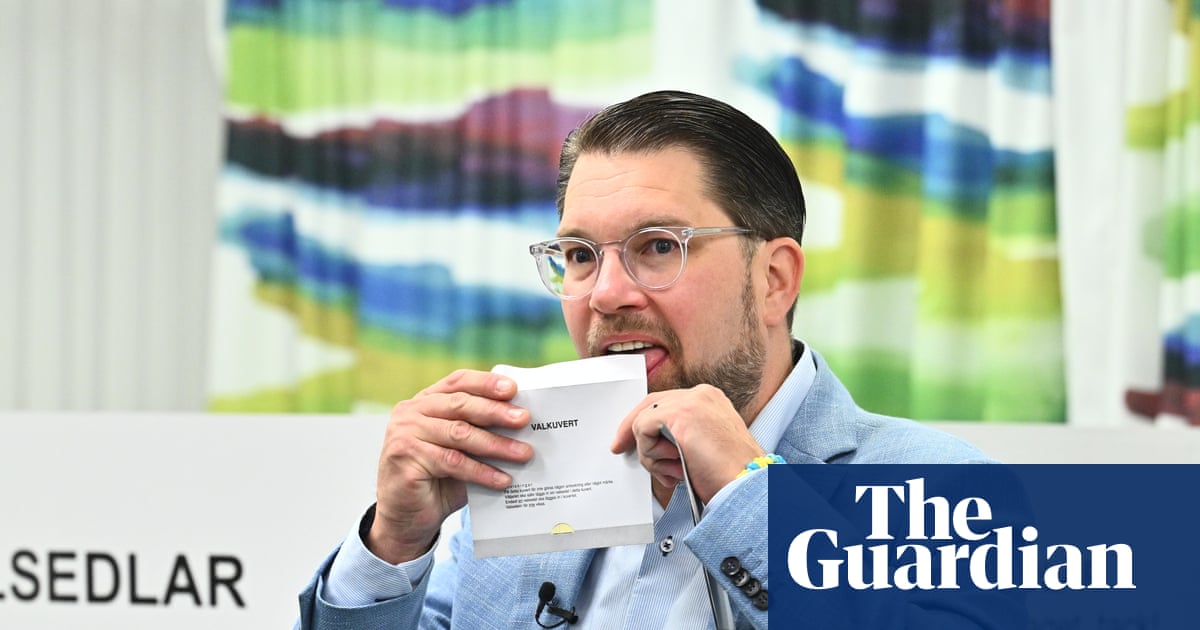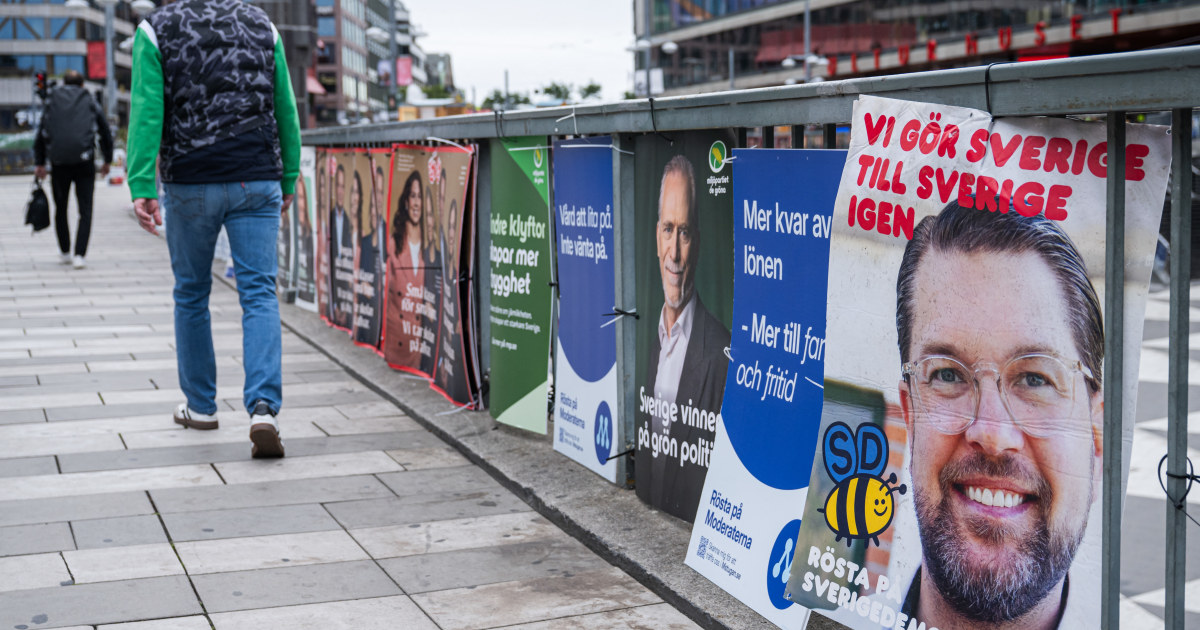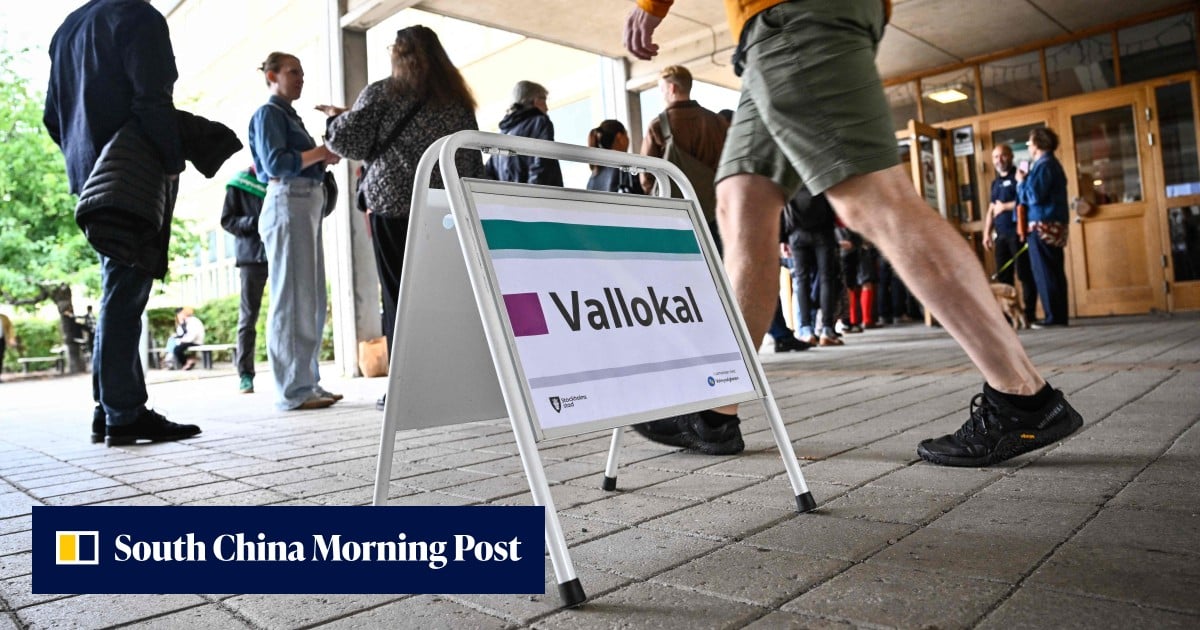
Sweden votes today in a parliamentary election that could see the far-right Sweden Democrats enter government for the first time, a prospect that would mark a profound shift for a country that has long regarded itself as a bastion of Scandinavian liberalism.
Prime Minister Ulf Kristersson, who has trailed in opinion polls for much of his four-year term, has closed the gap with the centre-left opposition in the campaign's final weeks. Several polls this week showed the Social Democrat-led bloc under Magdalena Andersson holding only a narrow lead.
The defining question of the election is whether Kristersson follows through on his pledge to bring the Sweden Democrats into a governing coalition, rather than relying on their external support as he has done since taking office in 2022.
A coalition promise with consequences
Kristersson made his intentions explicit in the campaign's closing days. "We can unify parties, voters and issues into joint action. That's why we get things done," he told reporters this week.
The statement was carefully worded but the meaning was clear: a vote for his bloc is a vote for formal coalition with a party rooted in Swedish nationalism. The Sweden Democrats, founded in 1988 with origins in white supremacist movements, have spent years attempting to rebrand as a mainstream conservative force. Entry into government would represent the culmination of that effort.
For Kristersson, the calculation is straightforward. His Moderate Party cannot govern alone. The Liberal Party and Christian Democrats bring limited parliamentary weight. Without the Sweden Democrats, who hold the largest share of right-wing seats in the Riksdag, there is no viable majority. The current arrangement, in which the Sweden Democrats support the government through a confidence-and-supply agreement, has delivered policy wins on immigration but has also constrained Kristersson's legislative freedom. Bringing them inside the tent carries political risk; leaving them outside has carried governing inconvenience.
Andersson's narrowing lead
Magdalena Andersson, who served briefly as prime minister in late 2021 before losing power after a budget defeat, has led the Social Democrats back toward government contention over four years in opposition. Polls throughout 2025 and early 2026 consistently gave her bloc a comfortable margin.
That margin has shrunk. Several polls conducted in September showed the centre-left bloc ahead by a narrow margin, within the range where coalition arithmetic and turnout could determine the result. Andersson's campaign has focused on preserving the welfare state and warning that the Sweden Democrats' influence would erode civil liberties and Sweden's international reputation.
The tightening race reflects a broader pattern across northern Europe, where centre-left parties have struggled to convert dissatisfaction with right-wing incumbents into decisive polling leads of their own.
Immigration as the dividing line
Immigration policy has dominated the campaign in a country that once took in more asylum seekers per capita than almost any other European nation. Sweden accepted over 160,000 asylum seekers in 2015 alone, a figure that strained housing, education and integration systems and reshaped the political landscape for a generation. Eurostat's asylum statistics record that year as the peak of Sweden's intake, with applications running at the highest rate per capita in the European Union.
Kristersson's government has already tightened rules substantially. Requirements for Swedish citizenship have been made more stringent. Income thresholds for family reunification have been raised. A repatriation support programme offers financial incentives for immigrants to leave Sweden voluntarily. Critics argue these measures amount to coercion dressed up as choice, and that the broader direction of policy pressures immigrants to assimilate on Swedish terms or depart.
The Sweden Democrats want to go further. Their platform calls for sharp reductions in overall immigration numbers, expanded repatriation programmes and stricter cultural assimilation requirements. Bringing them into government would give these proposals direct ministerial backing.
Civil liberties under pressure
Civil liberties organisations in Sweden have raised alarms about the government's trajectory. Critics argue that Kristersson's administration has already undermined freedoms of association and expression, particularly for Muslim communities, and that formalising the Sweden Democrats' role in government would accelerate that trend.
The government's supporters counter that integration requires clear expectations and that Sweden's longstanding model of generous asylum combined with weak assimilation requirements produced the very social tensions now driving voters toward harder-line policies. The argument has resonance: support for tighter immigration rules now extends well beyond Sweden Democrat voters into the mainstream.
A Nordic pattern
Sweden is not alone in confronting this dynamic. In Finland, the Finns Party entered government in 2023. In Norway, the Progress Party served in coalition until 2020. Denmark's governing Social Democrats have adopted restrictive immigration policies themselves, attempting to neutralise the Danish People's Party's appeal by co-opting its signature issue.
The Swedish election is the latest iteration of a pattern playing out across the Nordic region: mainstream parties adjusting to the reality that immigration restriction now commands majority support among voters, and deciding how far to accommodate parties that made the issue their central purpose.
People mentioned
Organisations
Swedish Social Democratic Party · Sweden Democrats · Moderate Party