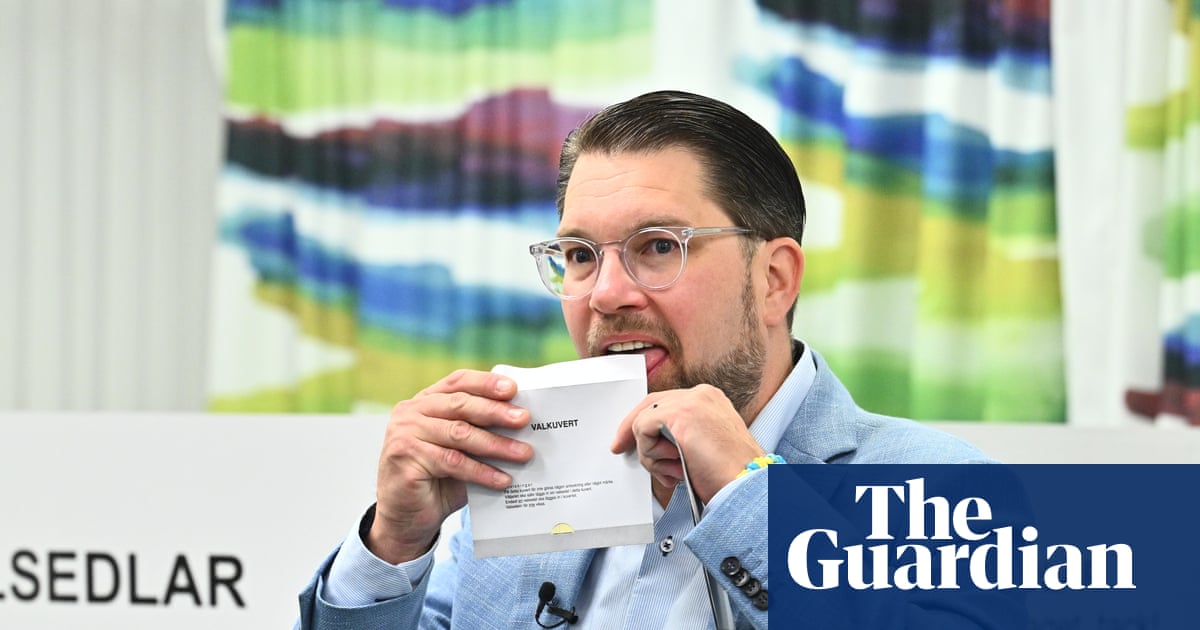
Sweden votes today in a general election that could place a party born from neo-Nazi movements into government for the first time. The Sweden Democrats, who captured 20.5 per cent of the vote in 2022 to become the largest party on the Swedish right, are positioned to claim cabinet posts if the centre-right bloc retains its parliamentary majority.
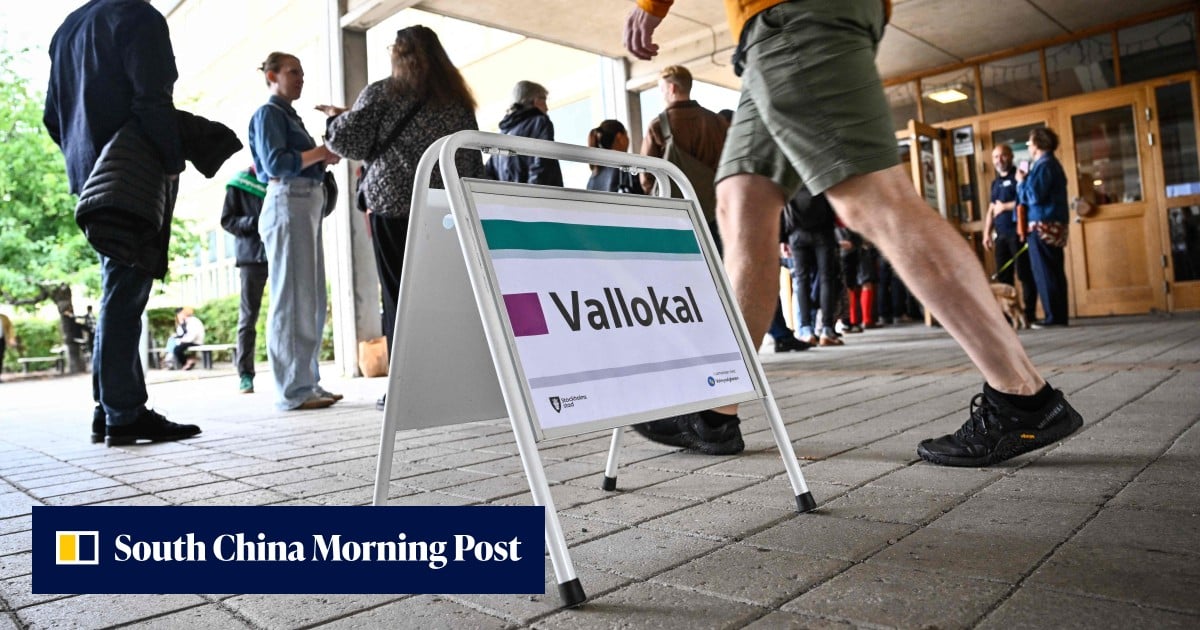
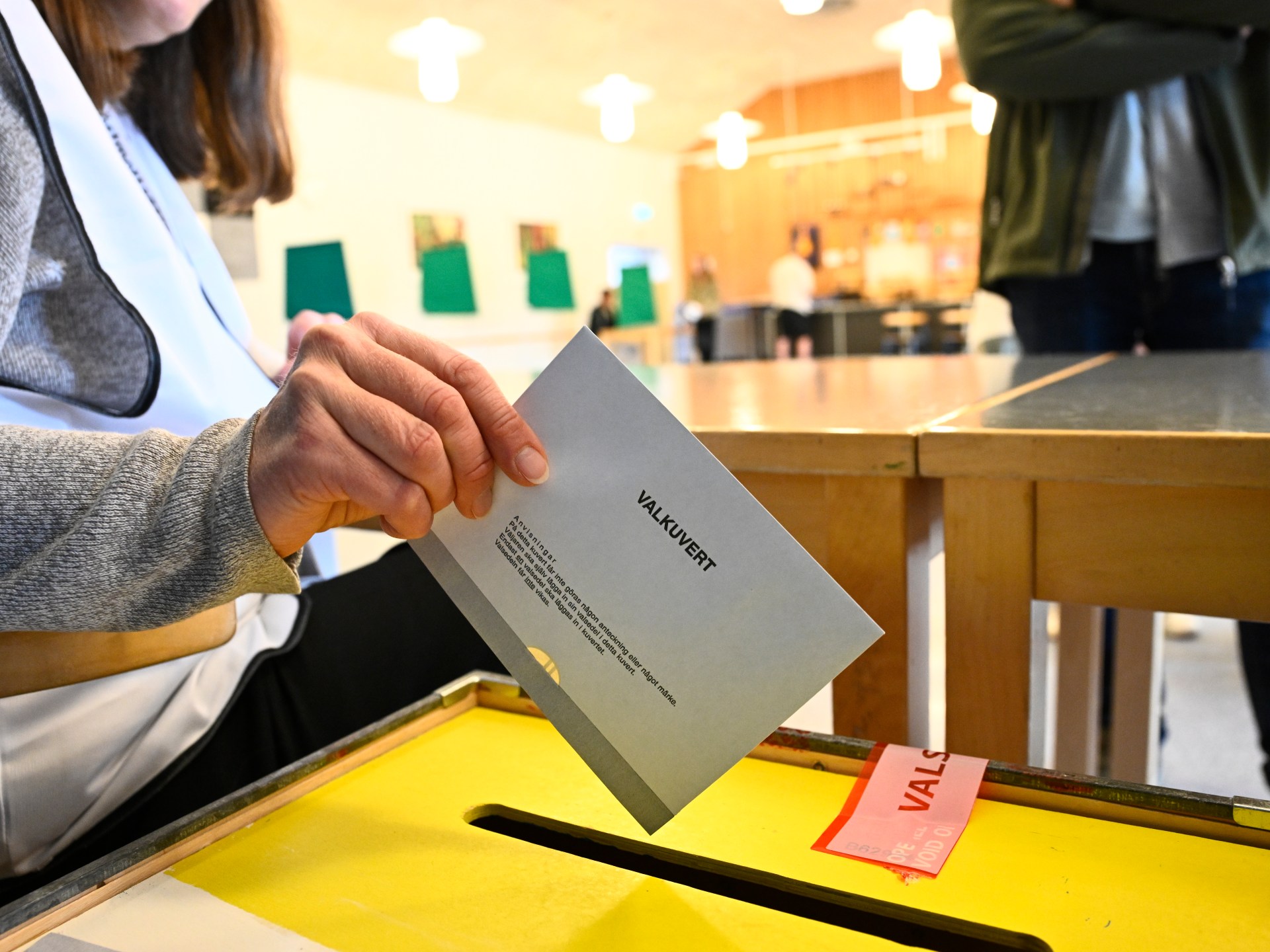
Polling stations opened at 8am local time and close at 8pm, when exit polls will offer the first indication of the result. Approximately eight million people are eligible to vote in the country of 10.6 million, where turnout regularly exceeds 80 per cent. Around half of voters have already cast advance ballots.
A race that tightened late
For months, opinion polls credited the four-party left-wing bloc led by Magdalena Andersson's Social Democrats with a comfortable lead. That advantage narrowed significantly in the final days of the campaign, leaving the outcome genuinely uncertain.
Andersson, who became Sweden's first female prime minister in 2021, framed the choice in direct terms after voting at a school in Nacka, south of Stockholm. "It is now up to the Swedish people to decide which direction our country should take. Should we have a government entirely dominated by the Sweden Democrats? Something that has never happened in Sweden before? Or should we have a government led by me, which will steer Sweden in a new spirit of cooperation?" she told reporters.
Her party has pledged to expand the welfare state and assist households struggling with the rising cost of living, a message aimed at voters who feel that Sweden's celebrated social model has been eroded under the current administration.
From pariah to potential governing party
The Sweden Democrats were founded in 1988 with origins in Swedish neo-Nazi movements. For more than two decades, every other parliamentary party refused to cooperate with them. That cordon sanitaire began to crack after the 2018 election, when the party secured 17.5 per cent of the vote, and it collapsed entirely after 2022, when their 20.5 per cent share made them the indispensable partner for any right-wing majority.
Prime Minister Ulf Kristersson has governed since 2022 with a three-party centre-right coalition consisting of his Moderate Party, the Christian Democrats and the Liberals. The coalition has relied on outside support from the Sweden Democrats for its parliamentary majority. In April 2026, Kristersson announced that the Moderates would allow the Sweden Democrats into government if the right bloc wins a majority, even if the Sweden Democrats end up as the larger of the two parties.
The arrangement represents a remarkable transformation. A party that was treated as politically toxic just a decade ago now stands on the threshold of executive power, not as a junior partner forced into compromise but as the dominant force on its side of the aisle.
Kristersson's calculation
Kristersson is seeking a second four-year term. His campaign has focused on his government's record of clamping down on organised crime and tightening immigration rules, both areas where Sweden Democrats' influence on policy has been clear. He told AFP before the vote: "We want to use our new and far better preconditions to improve the lives of ordinary people … to make Sweden great again."
The phrasing borrows deliberately from the rhetoric that has reshaped political language across the Atlantic and across Europe. Kristersson's bet is that voters will reward the tangible results of the past four years rather than recoil from the Sweden Democrats' presence in government.
For Andersson, the calculation runs the other way. She served as prime minister for just seven months in 2021 and 2022 before losing power when her budget was defeated in parliament. Her campaign has tried to make the election a referendum on the Sweden Democrats' growing influence, arguing that a vote for Kristersson is effectively a vote for far-right governance. Whether that argument persuades voters who have already lived under a government dependent on Sweden Democrat support is the question the result will answer.
What cabinet posts for the Sweden Democrats would mean
If the right bloc wins, the Sweden Democrats can expect ministerial positions for the first time. The party has moved towards the political mainstream on economic policy while maintaining its hard line on immigration. Its policy priorities include further restrictions on asylum, stricter assimilation requirements for immigrants, and increased spending on policing, areas where Frontex's migration data shows Sweden has been under pressure.
The party's entry into government would also carry implications for Sweden's position in the European Union. The Sweden Democrats are Eurosceptic, favouring a looser relationship with Brussels and opposing deeper integration. A Sweden Democrat minister would give Sweden a different voice in EU council negotiations, where the country has traditionally aligned with the liberal Nordic bloc alongside Denmark and Finland.
Across Europe, far-right parties have entered governments in Finland and Italy in recent years. Sweden's election is being watched as another test of whether parties with radical roots can be absorbed into mainstream governance without pulling policy in their direction, or whether their presence inevitably shifts the centre of gravity.
How the night will unfold
Polling stations close at 8pm Swedish time, with exit polls expected immediately. The first reliable results are expected several hours later. Sweden's election authority typically releases preliminary results the following morning, though close races can take longer to call. Given how tightly the polls have converged, a drawn-out count is a real possibility.
People mentioned
Organisations
Sweden Democrats · Moderate Party · Swedish Social Democratic Party