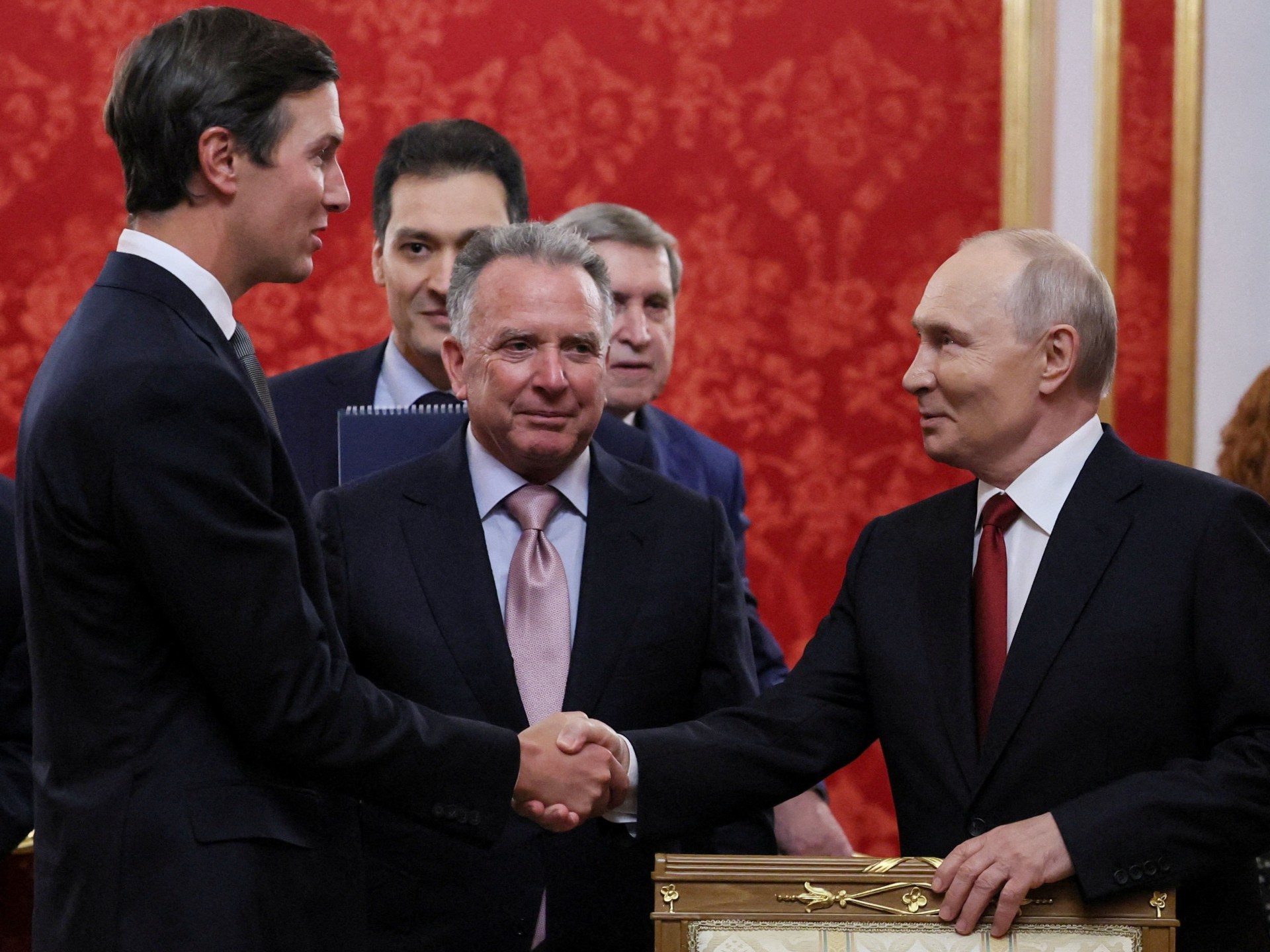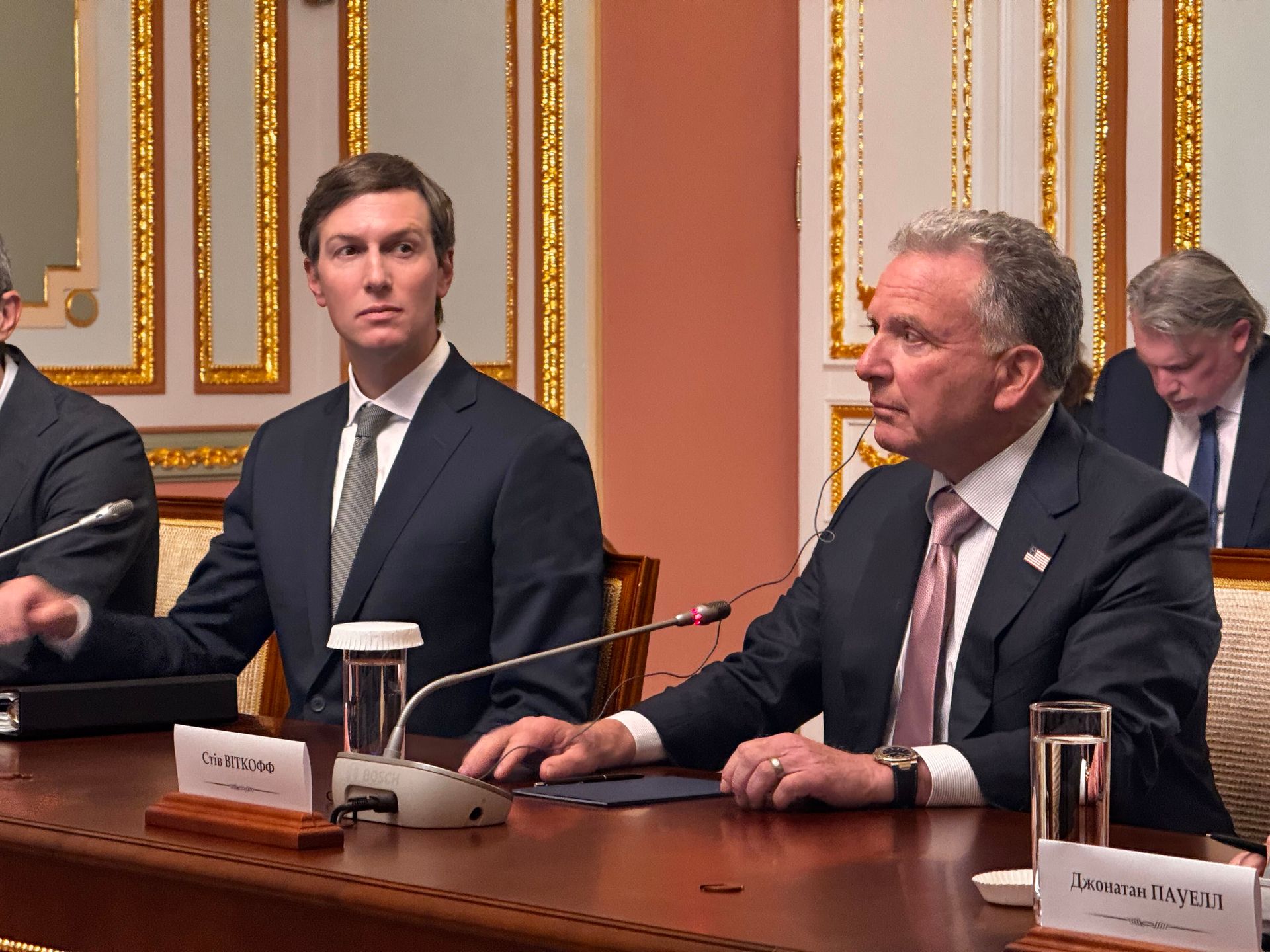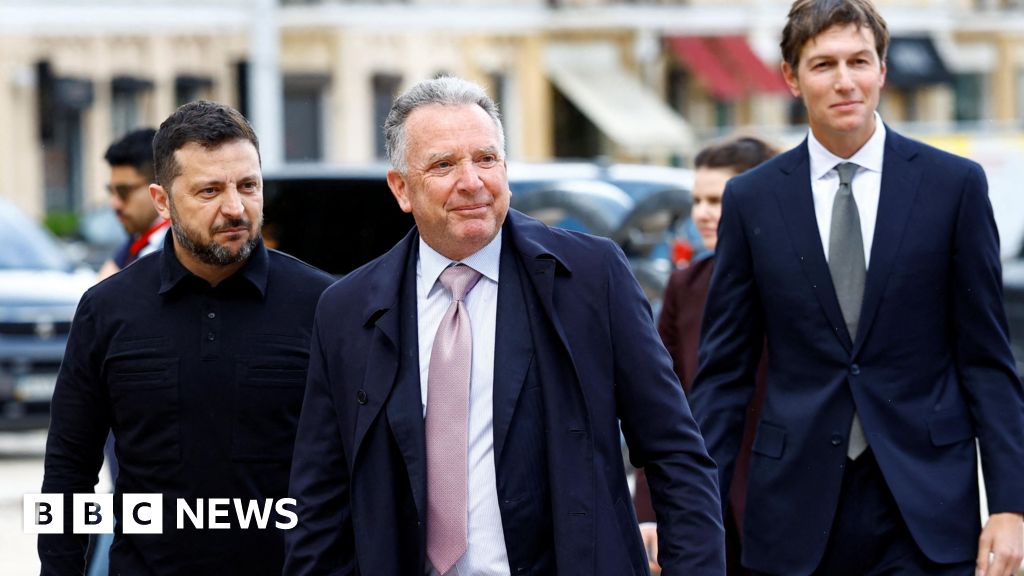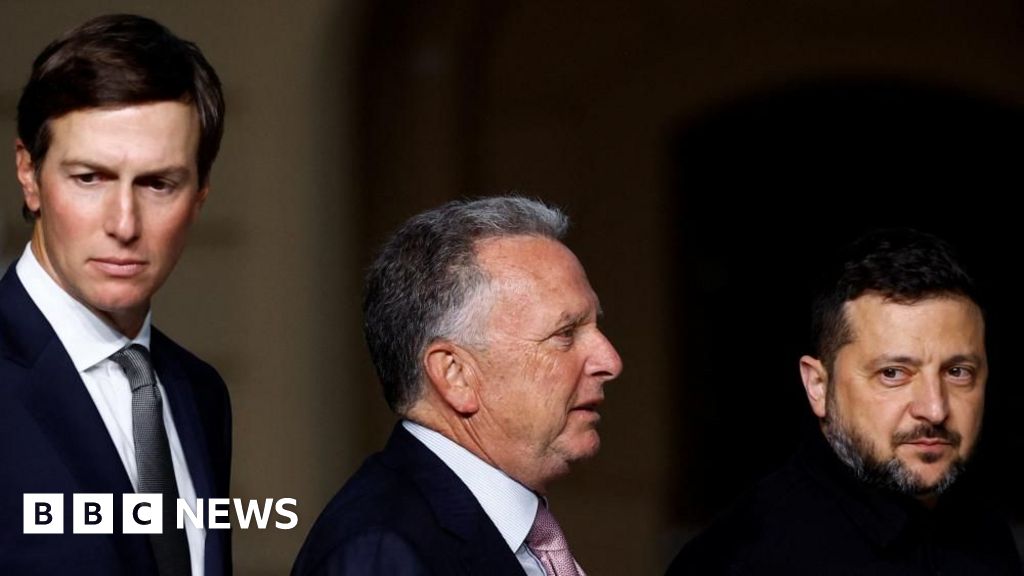
The symbolism was impossible to miss. Steve Witkoff and Jared Kushner, US President Donald Trump's envoys, arrived in Kyiv by overnight train because Russian drones, launched on the orders of the man they had just left in Moscow, made flying too dangerous. They were greeted by Volodymyr Zelensky at Saint Sophia Cathedral, an 11th-century monument to Kyiv's ancient statehood, a few hundred metres from where Russian drones had struck the headquarters of Ukraine's security services the previous day.
Two narratives, one battlefield
The envoys had come hot from the Kremlin, where Vladimir Putin told them Russia was making "tangible advances" on the battlefield. In Kyiv they heard the opposite. Ukrainian officials presented figures claiming that in August their forces had gained more territory than they lost and that Russia had suffered 42,000 casualties, dead or wounded. The discrepancy is not merely rhetorical; it defines the negotiating space. If Moscow believes it is winning, it has little incentive to concede. If Kyiv believes it is holding the line, it will not surrender territory.
Putin's conditions, relayed through the US envoys, remain the same strategic demands he has articulated since before the full-scale invasion: Ukraine must cede territory, abandon NATO aspirations and accept limits on its armed forces. Zelensky, standing in the shadow of the cathedral, was equally categorical. He insisted Ukraine would require "strong and clear" security guarantees, including a strong army, and described the question of Donbas territory as "difficult", diplomatic code for non-negotiable.
Security guarantees versus strategic surrender
The core disagreement is structural. Russia wants a neutral, demilitarised Ukraine that recognises Russian sovereignty over Crimea and the occupied parts of Donetsk, Luhansk, Zaporizhzhia and Kherson oblasts. Ukraine wants binding security commitments, ideally NATO membership, failing that bilateral guarantees backed by credible military force, and the eventual return of all occupied territory. The US envoys spoke of reviving "trilateral talks" involving Washington, Europe and Kyiv, a format that existed in the early months of the war but collapsed as positions hardened.
Jonathan Powell, the UK's national security adviser, was among the European officials who joined the Kyiv session. His presence signals that London, at least, wants a seat at any future table. But European unity on the shape of a settlement is fragile. France and Germany have historically favoured a negotiated ceasefire; Poland and the Baltic states insist that any deal must restore Ukraine's 1991 borders. The US envoys' talk of "ingredients for a settlement" papers over these fractures.
The fragile pause
The only concrete outcome so far is a short-term pause in air strikes, agreed by both sides, which gave Kyiv residents a few nights of uninterrupted sleep. Zelensky thanked the envoys for that respite. Few in the capital believe it will last. Russian drone and missile production has scaled up through 2026, and Ukrainian air defences, while effective, are stretched thin across a 1,000-kilometre front line. The pause serves both sides as a humanitarian gesture and a confidence-building measure, but it does not address the targeting infrastructure that makes sustained bombardment possible.
Winter calculus
The expectation in Kyiv is that the fighting will continue through a hard winter. Energy infrastructure, repaired painstakingly after the 2024-25 campaign, remains vulnerable. Ukrainian officials privately acknowledge that mobilisation and ammunition supplies are tighter than they were a year ago. Russia, for its part, has absorbed massive losses but shows no sign of exhausting its manpower pool or its willingness to trade casualties for incremental ground. The Kremlin's calculation appears to be that time works in its favour: Western attention drifts, Ukrainian society tires, and the front line slowly shifts.
A spring window?
Some diplomats in Kyiv and European capitals speak of a possible window for a settlement next spring. The logic is that both sides will have fought themselves to a standstill by then, and a new US administration, or a re-elected Trump, may impose a framework. Others are less optimistic. They point out that Putin has shown no willingness to abandon his maximalist goals, and that any Ukrainian leadership accepting territorial loss would face domestic collapse. The "trilateral" format the envoys touted has no agreed agenda, no mediator and no deadline.
What the train journey revealed
The decision to travel by train from Poland, a 12-hour journey each way, was a security necessity, but it also underscored the asymmetry. The US envoys moved under the protection of the very air defence systems Ukraine is begging to strengthen. The drones they avoided are the same weapons Russia uses to degrade those defences. Witkoff admitted after the talks that both sides would have to make compromises to narrow the differences. Right now, it is hard to see either side doing that. The ingredients for a settlement may exist on paper; the political will to combine them does not.
People mentioned
Organisations
Office of the President of Ukraine · US State Department · Kremlin · UK Government · NATO