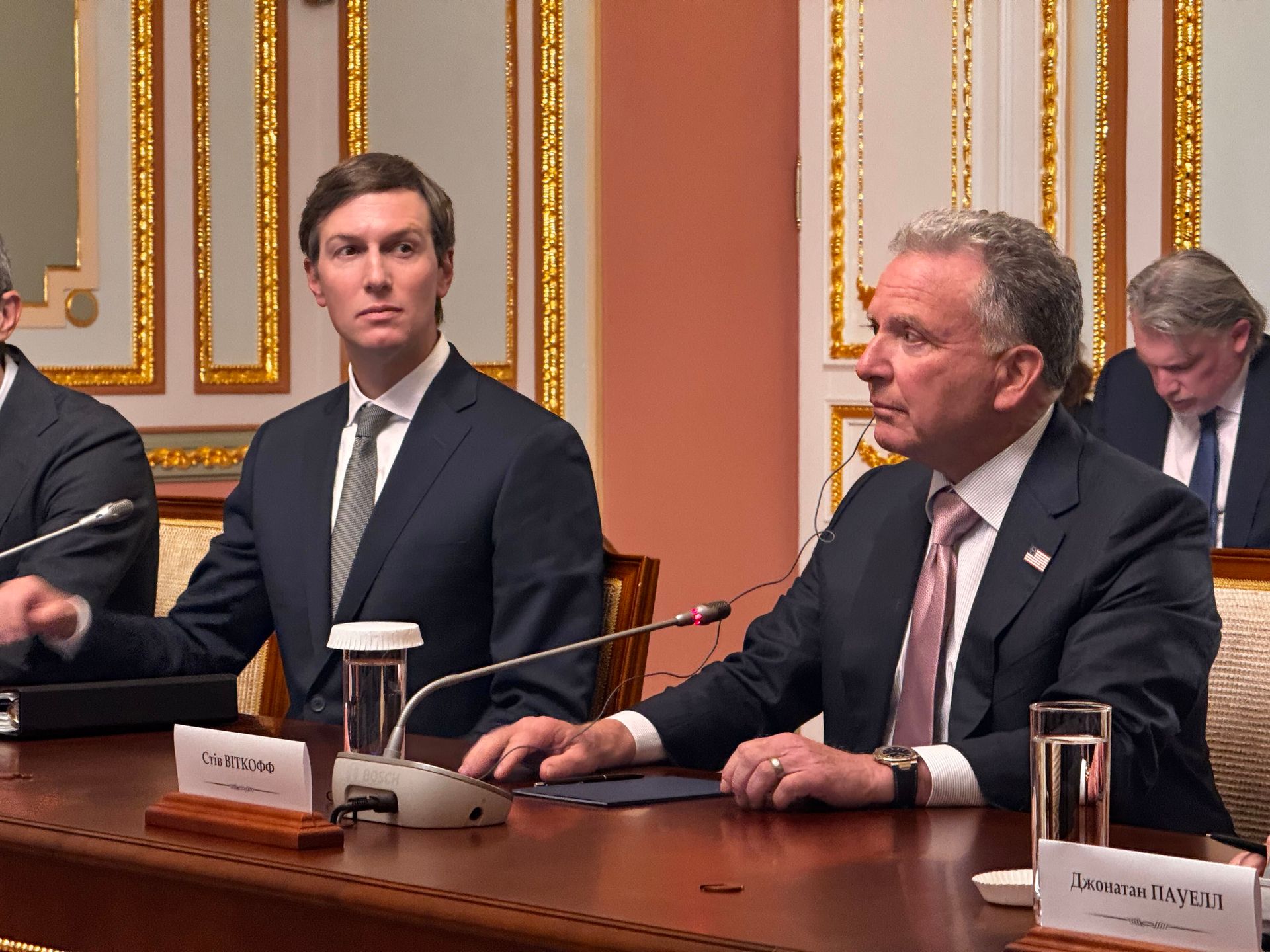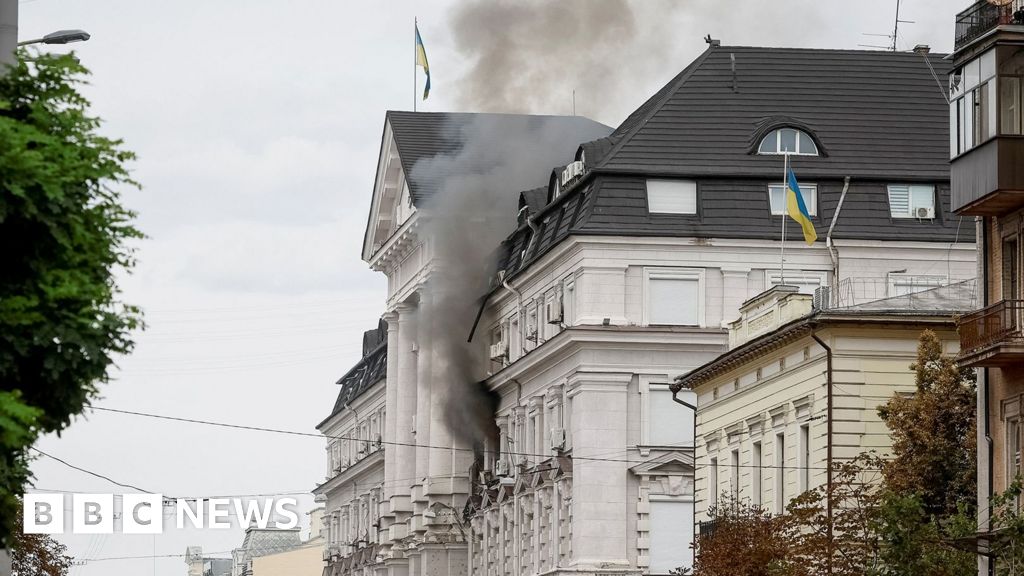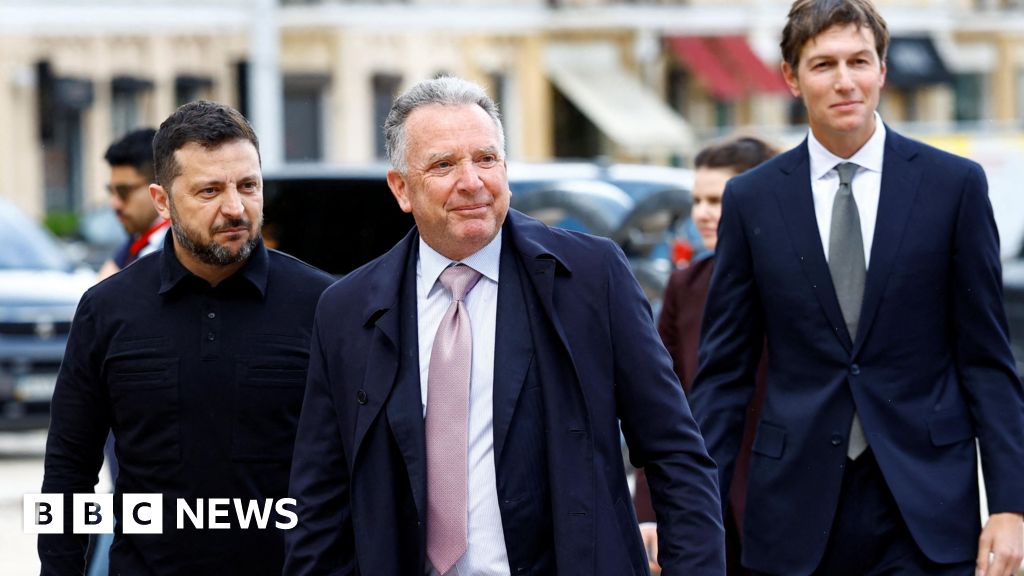
Two American envoys completed a high-stakes shuttle between Moscow and Kyiv over the weekend, the most visible diplomatic effort to halt the war since the Trump administration returned to office. Steve Witkoff and Jared Kushner spent three hours with Vladimir Putin in the Kremlin on Saturday, then travelled overnight by train from Poland to meet Volodymyr Zelensky at St Sophia Cathedral on Sunday, close to where a Russian drone had struck the Ukrainian security service headquarters a day earlier.
What the Moscow talks actually covered
The Kremlin described the Saturday meeting as "frank" and "constructive". Yuri Ushakov, Putin's foreign policy adviser, offered the most detailed public account so far: the discussion went beyond the battlefield to "economic issues and potential major, mutually beneficial Russian-American projects" discussed "in considerable detail". Ushakov also said "note was made of the Russian army's tangible advances in the combat zone" and that both sides acknowledged the need to address "the root causes of the conflict", phrasing that aligns with Moscow's long-standing demand that any settlement recognise its territorial gains and address NATO expansion.
No joint statement was issued. The White House has not released its own readout, leaving the substance of any concessions or frameworks opaque. What is clear is that the envoys left Moscow with an agreement, however narrow: a three-day pause on strikes against each other's capitals. That pause began Saturday evening and is due to expire Tuesday.
Zelensky's conditions in Kyiv
In Kyiv, Zelensky struck a measured tone. He greeted the envoys at St Sophia Cathedral, a UNESCO World Heritage site in the historic centre, underscoring what is at stake culturally as well as militarily. On social media before and after the meeting, he repeated three non-negotiables: security guarantees, a "dignified character of the postwar peace", and an end to the war brought closer. "Our proposals are ready," he wrote. The Ukrainian side has consistently insisted that any ceasefire must be accompanied by verifiable security commitments, ideally NATO membership or bilateral guarantees from major Western powers, and that territorial integrity cannot be traded away.
The envoys' arrival by train, rather than direct flight, was itself revealing. Zelensky told journalists that landing their aircraft in Kyiv had been prepared but proved impossible, a reminder that Ukrainian airspace remains closed to civilian traffic and that even high-level diplomatic movement is constrained by the war.
A pause that does not stop the fighting
The three-day halt on capital strikes is narrowly drawn. It does not extend to the front lines, to energy infrastructure, or to the rear areas where both sides have concentrated their long-range strike campaigns. Overnight into Sunday, Russia launched 108 long-range drones and small cruise missiles across Ukraine. Ukrainian air defences reported shooting down 82 drones and six missiles, an interception rate of roughly 81 percent, but debris and impacts hit 11 locations, with falling debris at seven more. The scale of the barrage suggests Russian strike capacity remains substantial despite months of Ukrainian targeting of launch sites and logistics.
Ukraine, meanwhile, continued its systematic campaign against Russian economic infrastructure. The defence ministry confirmed strikes on the Ryazan oil refinery, which it says supplies the Russian army, an airfield at Rostov-on-Don, and two air defence systems. Kyiv has increasingly focused on oil installations, aiming to degrade the revenue that funds the war effort and the fuel that sustains front-line operations.
The military reality behind the diplomacy
For all the diplomatic activity, the territorial picture has barely shifted. Russia still controls about one-fifth of Ukrainian territory, almost all of it seized in the first months of the full-scale invasion in 2022. Russian ground advances have been grinding and costly, measured in metres per day across a 1,000-kilometre front, with casualty rates that Western intelligence agencies describe as unsustainable over the long term. Ukraine, for its part, has struggled to maintain air defence coverage against ballistic missiles, a shortage of interceptors that the latest US aid packages have only partially alleviated.
This asymmetry, Russia's willingness to absorb enormous losses for incremental gains, Ukraine's dependence on external supply for air defence, shapes the negotiating space. Any deal that freezes current lines would leave Russia in possession of the land bridge to Crimea and much of the Donbas industrial basin. Any deal that requires Russian withdrawal faces the reality that Moscow has shown no willingness to reverse its 2022 gains voluntarily.
What the envoys represent
Witkoff and Kushner are not career diplomats. Both are long-time associates of Donald Trump, operating outside the traditional State Department structure. Their mandate is unclear: whether they are empowered to offer specific US security commitments, to pressure Kyiv into territorial concessions, or to explore a broader US-Russia commercial reset that Ushakov's remarks hinted at. European capitals are watching closely. A settlement imposed without European input, or one that weakens the transatlantic security architecture, would be seen in Berlin, Paris and Warsaw as a strategic defeat regardless of the ceasefire terms.
What happens next
The three-day pause on capital strikes expires Tuesday. The next test is whether either side extends it, widens it to energy infrastructure, or lets it lapse. Zelensky has said Ukrainian proposals are ready; the Kremlin has not publicly detailed its own. The envoys are expected to report back to Washington this week. A key marker will be whether the US presents a written framework before the UN General Assembly in late September, where both leaders are scheduled to speak. Until then, the drones and missiles will keep flying everywhere except Kyiv and Moscow.
People mentioned
-
Yuri Ushakov
Organisations
Kremlin · Office of the President of Ukraine · US Government · Russian Ministry of Defence · Ukrainian Ministry of Defence