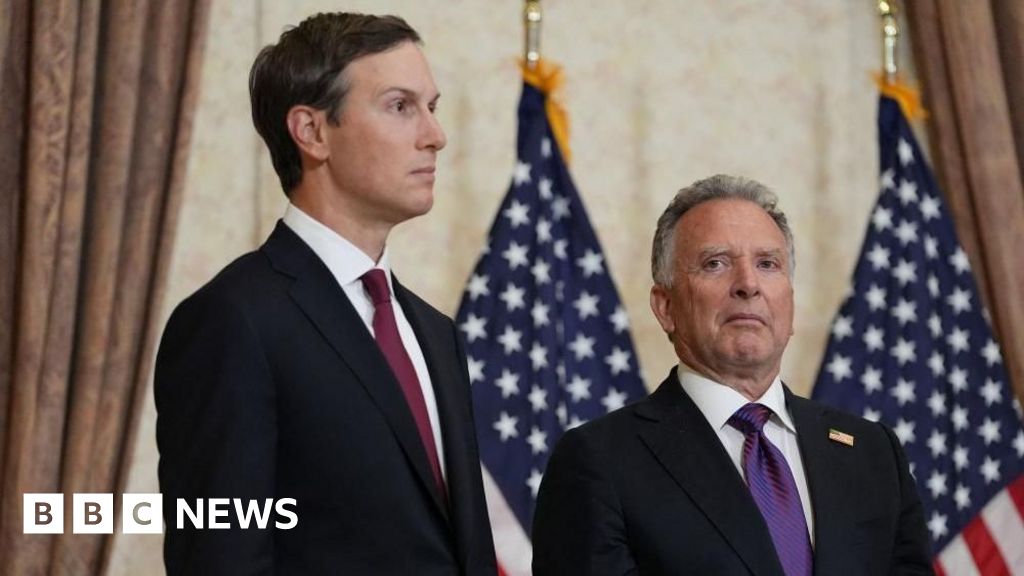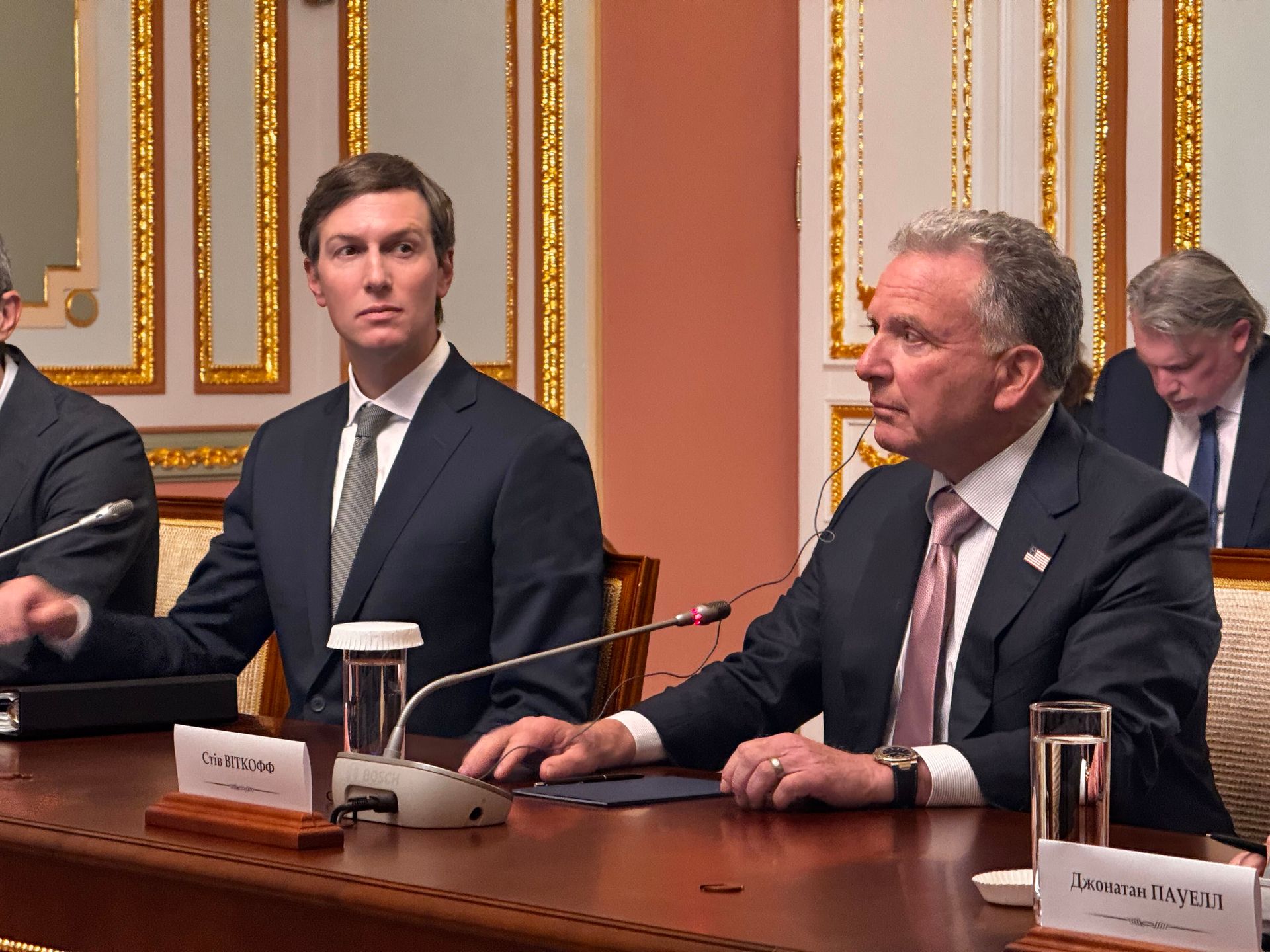
Volodymyr Zelensky offered no illusion of a quick peace after hosting Donald Trump's envoys in Kyiv for the first time. "If the war continues, and we expect the war will continue, we are counting heavily on the winter aid package," the Ukrainian president told reporters on 6 September, hours after Steve Witkoff and Jared Kushner concluded a visit that began with a three-hour meeting with Vladimir Putin in Moscow the previous day.
A shuttle diplomacy that changed little
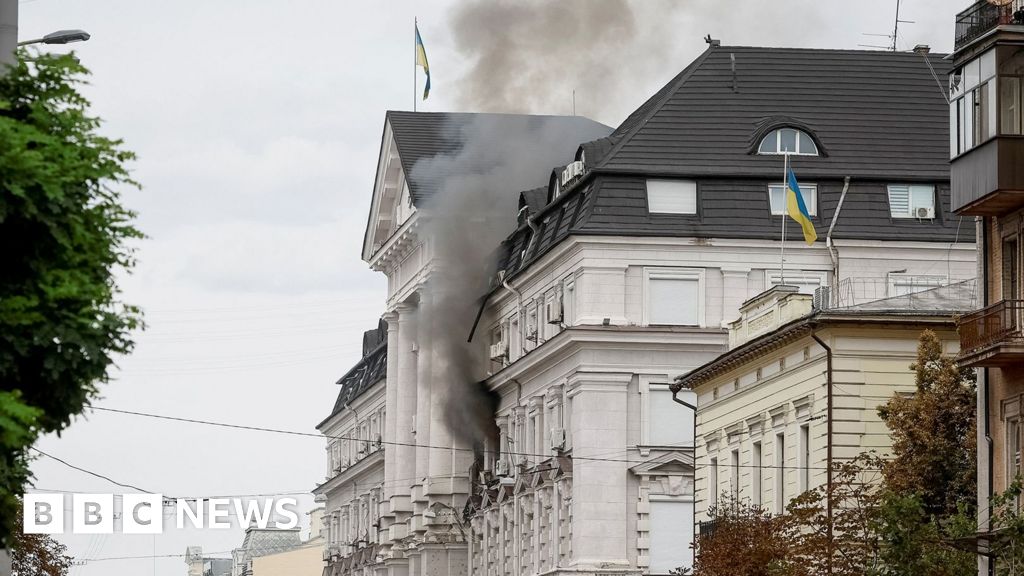
The envoys arrived by train from the Polish border city of Rzeszow after Russian strikes near Kyiv's airport ruled out a direct flight. Their presence secured a brief, unilateral pause in Russian attacks on the capital, a concession the Kremlin refused to extend to the rest of the country. Overnight strikes still hit Kyiv Oblast, sparking a fire, while the front lines remained active. For all the diplomatic theatre, the positions that have deadlocked negotiations for months did not shift.
Moscow continues to reject a ceasefire along current lines and insists Ukraine cede the partially occupied Donbas region and drop its NATO aspiration. Putin told reporters after the Moscow talks that Russia intends to meet its "goals" and resolve the "root causes" of the war, language the Kremlin has consistently used to justify territorial annexation. The White House offered only that "substantive plans for next steps" would be announced in coming weeks.
Winter survival dominates Kyiv's agenda
Zelensky's negotiating team, led by presidential chief of staff Kyrylo Budanov, his deputy Serhii Kyslytsia, parliamentary leader David Arakhamia and foreign intelligence head Rustem Umerov, focused the talks on immediate survival needs. The country lost 9 GW of generation capacity during last winter's aerial campaign, roughly a third of pre-war output. With another wave of missile and drone strikes expected, the president pressed for Patriot air defence batteries and interceptors.
The response was not encouraging. Zelensky said the American side would increase production of Patriot anti-ballistic missiles "next year", leaving a capability gap through the coming winter. He joked that the envoys' presence provided "even better protection than the Patriot systems" for Kyiv residents, a grim humour that underscored the shortage. Economic guarantees for post-war recovery and security assurances that prevent future Russian aggression rounded out the Ukrainian wish list.
European advisers bring a trilateral dimension
After the bilateral US-Ukraine session, national security advisers from the United Kingdom, France and Germany joined a second round. The format signals an attempt to lock European capitals into any eventual settlement, addressing a long-standing Ukrainian fear that Washington might cut a bilateral deal with Moscow over European heads. Zelensky confirmed that a US-Ukraine-Europe meeting would follow "in the near future", though the venue, Europe, the United States or Ukraine again, remains undecided.
Kushner pushes a return to three-way talks
Jared Kushner made no secret of his preferred structure. "One thing Steve and I really thought would be productive is to go back to the trilateral format, which we were able to do about six months ago," he told Ukrainian reporters. He described the previous trilateral discussions as conducted "in a very extra-friendly manner, all in Russian" and said both parties had agreed to resume that format "very soon". The remark drew sharp pushback from the Ukrainian press; one journalist asked Witkoff whether he was "ashamed to sit at the same table with an international war criminal". The envoy replied that "relationships are critical in terms of solving conflicts like this" and that he and Kushner had "always been treated respectfully by President Putin and his team".
A tactical pause, not a strategic shift
The Kremlin's agreement to halt strikes on Kyiv for the duration of the visit was a narrow, transactional gesture. It did not extend to a broader cessation of hostilities, and Russian forces continued operations elsewhere. Ukrainian officials made clear they view the diplomatic re-engagement as preferable to total stasis, "worse when there are none at all," in Zelensky's words, but they harbour no illusions that Putin's calculus has changed. Budanov told the New York Times that US-mediated talks could resume in late September, after Russian State Duma elections and weeks before US midterms, a timeline that suggests both sides are eyeing domestic political calendars.
The air defence arithmetic
The most concrete number to emerge from the day was the 9 GW deficit Ukraine carries into winter. Each GW lost means hundreds of thousands of households and businesses facing rolling blackouts, degraded water pumping, and strained heating systems. Patriot batteries are the only system proven to intercept the Kinzhal and Iskander missiles Russia uses against high-value infrastructure. With new interceptors not arriving until 2027, Ukraine must ration existing stocks across a front line stretching more than 1,000 kilometres and a rear area that includes every major city. European partners have supplied IRIS-T, NASAMS and SAMP/T batteries, but quantities remain insufficient for layered defence.
People mentioned
-
Kyrylo Budanov
Organisations
Presidential Office of Ukraine · White House · Kremlin · NATO