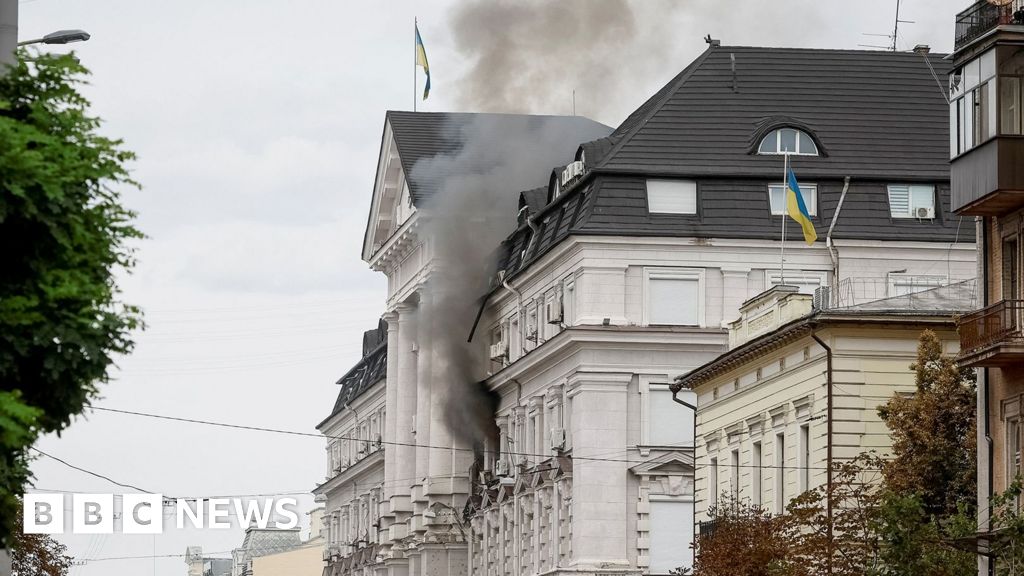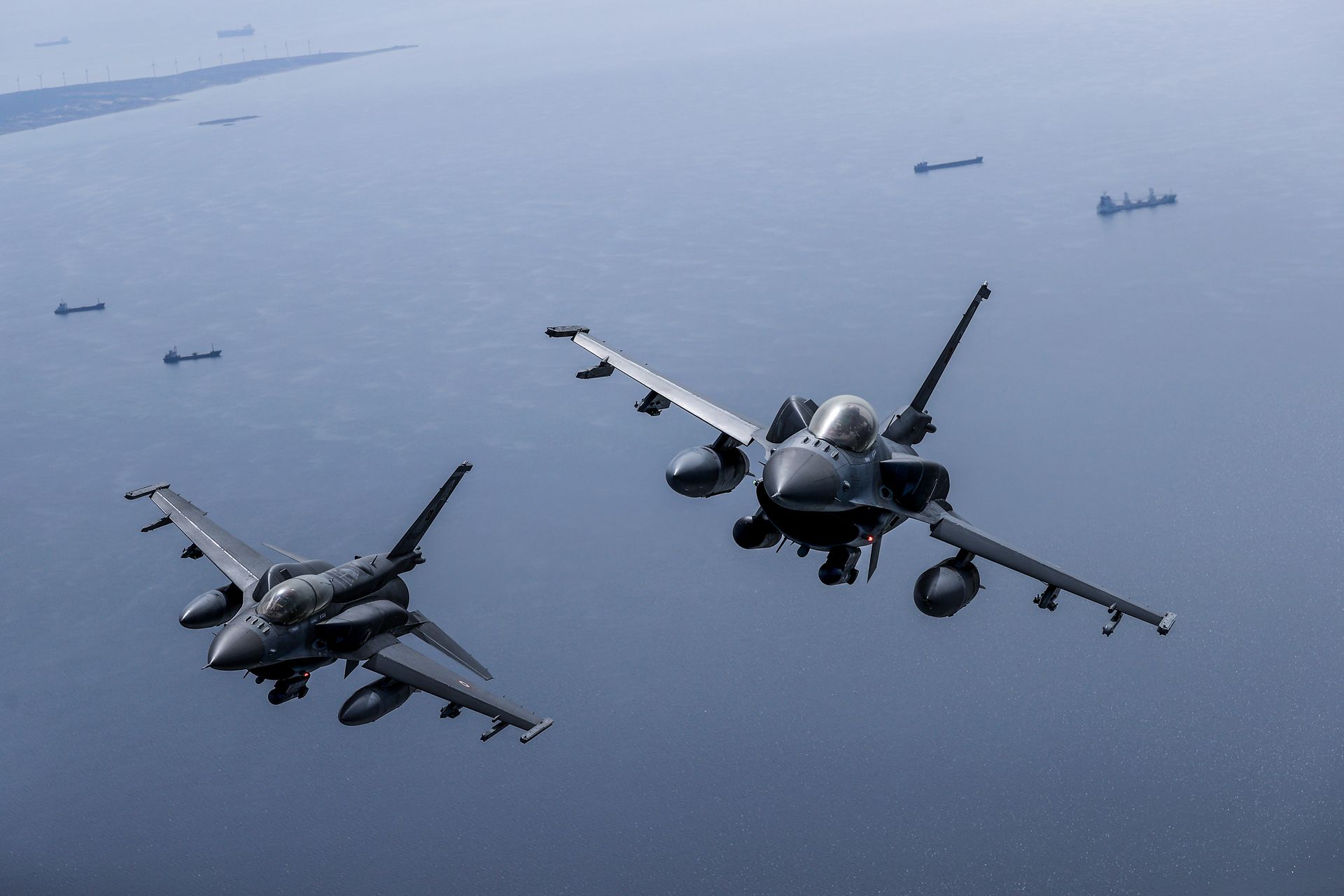
For years NATO members watched Russian drones violate their airspace and held fire, calculating that the escalation risk of shooting them down outweighed the damage of letting them pass. That calculation has shifted. Since September 2025 allied fighters have destroyed intruding drones over Poland, Turkey, Romania, Estonia and Latvia, responding to a pattern of incursions that has moved from occasional stray vehicles to weekly events.
The immediate trigger in Romania was a Shahed-type drone that struck a residential building in Galați on 29 May, injuring two civilians. Bucharest, which had recorded more than 40 incursions in the first six months of 2026, passed a law in May authorising its military to engage hostile aircraft in peacetime. An F-16 downed a drone on 24 July and three more in the following weeks. The most recent interception, on 20 August, targeted a suspected Russian naval drone near the Neptun Deep gas project in the Black Sea.
The cost asymmetry driving new defences
Every interception so far has been carried out by fighter jets firing air-to-air missiles. An AIM-9X Sidewinder costs roughly $400,000; the one-way Geran or Shahed drones it destroys are estimated at $35,000. That ratio does not include the operating cost of the aircraft or the pilot. Federico Borsari of the Center for European Policy Analysis argues the expense is justified: the price of a missile is small compared with the human and economic toll of a drone hitting a power plant or a populated area. But the arithmetic forces a search for cheaper alternatives.
Ukraine has already demonstrated one answer: interceptor drones. The US-designed Merops system launches Surveyor interceptors costing about $15,000 each. Brigadier General Curtis King of the US Army said Merops accounted for roughly 40 per cent of Shahed interceptions on Ukrainian battlefields. Poland received its first Merops units in November 2025, Romania tested the system in April, and Lithuania is fast-tracking an order for 48 Surveyor drones.
National programmes racing ahead of collective ones
While NATO's Eastern Sentry mission reinforces the eastern flank with existing fighter squadrons, a layer of dedicated counter-drone systems is being built from the ground up. Romania signed a 5.7 billion euro contract with Rheinmetall for 24 Skyranger and seven Skynex systems, plus six Israeli Spyder missile batteries. Poland, working with Norway's Kongsberg, unveiled the SAN programme: 18 layered batteries combining 30 mm anti-aircraft guns, interceptor drones and guided APKWS rockets. The Baltic Drone Wall initiative links Latvia's Blaze interceptors with Estonia's Eirshield platform.
The EU's European Drone Defense Initiative, known as the Drone Wall, aims to knit national radars, jammers and advanced interceptors into a coherent shield. Yet the timelines reveal a gap: SAN is not expected to begin operations until late 2026, the Drone Wall should be functional in 2027, and Romania's heavy batteries will not arrive before the end of the decade. Until then, the burden falls on fast jets and the missiles they carry.
Fighter jets remain the backbone for now
Justin Bronk of the Royal United Services Institute points out that scrambling fighters is logistically simpler than deploying thousands of short-range systems along a border stretching from the Black Sea to the Arctic. The priority, he says, is equipping those jets with cheaper munitions such as APKWS II and Thales laser-guided rockets, which cost a fraction of a Sidewinder. NATO has recognised the need: the Ankara summit in 2026 pledged $40 billion for counter-drone capabilities over five years, and regular LCI-X Crucible exercises with Ukrainian participation began in spring 2026.
A patchwork of projects risks duplication
Ulrike Franke of the European Council on Foreign Relations describes the current landscape as a hotch-potch that may disperse focus and duplicate effort. She argues the EU should narrow the Drone Wall's ambitions and double down on the most successful national programmes in Poland and the Baltic states, while pressing other frontier countries to increase their contributions. Interoperability between allies and between defence contractors remains a central obstacle, alongside insufficient training and, in some capitals, funding shortfalls.
Political and legal hurdles to pulling the trigger
Even when the hardware exists, the decision to fire is not automatic. Romania's May 2026 law followed years of hesitation; Lithuania passed similar legislation in September 2025, weeks after the Polish incursion. Iulian Chifu, a Romanian analyst, identifies two fears: that a shoot-down attempt could cause more collateral damage than a drone crashing in an empty field, and that opening fire would let Moscow portray the allies as co-belligerents, a narrative he says the Kremlin succeeded in planting in European leaders' minds.
The political cost of inaction is also rising. The fall of the Latvian government in May, after stray Ukrainian drones hit an oil facility, demonstrated that voters punish perceived helplessness. In Romania, the Galați strike was the breaking point. The risk calculus is changing: the price of letting drones slip through may now exceed the price of shooting them down.
Funding streams are opening but absorption takes time
The EU's 150 billion euro SAFE loan facility is already financing air defence purchases in Poland and Romania. NATO's $40 billion pledge adds further weight. Yet Borsari cautions that turning money into operational capability requires training, experimentation and integration, processes that cannot be compressed to match the political timetable. The alliance's counter-drone posture will improve significantly in the near term, he predicts, but full operational readiness across the spectrum will take longer.
People mentioned
-
Federico Borsari
-
Justin Bronk
-
Ulrike Franke
Organisations
NATO · European Union · Romanian Air Force · Polish Armed Forces · Rheinmetall · Kongsberg