Volodymyr Zelenskyy has said he is prepared to travel to Miami for the G20 summit in December and meet Vladimir Putin face to face, if the Russian president decides to attend. The offer, made in an interview with Deutsche Welle on 12 September, is the most direct signal from Kyiv in months that a leadership-level encounter remains conceivable.
A meeting conditioned on results
Zelenskyy was blunt about what he would demand from any encounter. "It is not about words. What I will tell him or what he wants to tell me, it does not matter. Results matter," he said. The formulation is consistent with Kyiv's long-standing position that negotiations must produce tangible outcomes, not merely photo opportunities or diplomatic theatre.
Whether Putin shares that interpretation is another matter entirely. Moscow has repeatedly said it is open to talks, but on terms that amount to Ukrainian capitulation on the occupied territories. The gap between what Kyiv calls results and what Moscow would concede at a summit remains vast.
Will Putin even go to Miami?
The Kremlin has not confirmed whether Putin plans to attend the G20 gathering. His participation is far from certain. Since the International Criminal Court issued an arrest warrant for him in March 2023 over the unlawful deportation of Ukrainian children, Putin's travel outside Russia and a handful of allied states has been severely constrained. The United States is not a party to the Rome Statute and would not be obliged to execute the warrant, but the diplomatic optics of hosting a wanted leader on American soil would be fraught.
Russia was readmitted to the G20's predecessor format after its expulsion from what was then the G8 following the 2014 annexation of Crimea, and Western leaders have regularly faced the question of whether to share a table with Putin. A Miami summit would force the issue again, particularly for European governments that have spent nearly five years insisting there can be no business as usual with Moscow.
Zelenskyy's calculation on negotiating strength
Zelenskyy told Deutsche Welle that Ukraine is now in a stronger position for possible negotiations than it was a year ago. He pointed to Russian casualties, claiming Russia loses more than 30,000 military personnel every month and pays what he called a high price for minor advances on the front. The figure aligns with some Western intelligence estimates of Russian losses, though precise numbers are difficult to verify independently.
The assertion of strength is as much a message to domestic and Western audiences as it is to Moscow. Kyiv needs to sustain the argument that military and economic support from partners is producing results, even as the front lines have moved only incrementally in 2026. Ukrainian officials have grown concerned that war fatigue among European and American publics could erode the coalition that has sustained the country since 2022.
The narrower track: energy and grain
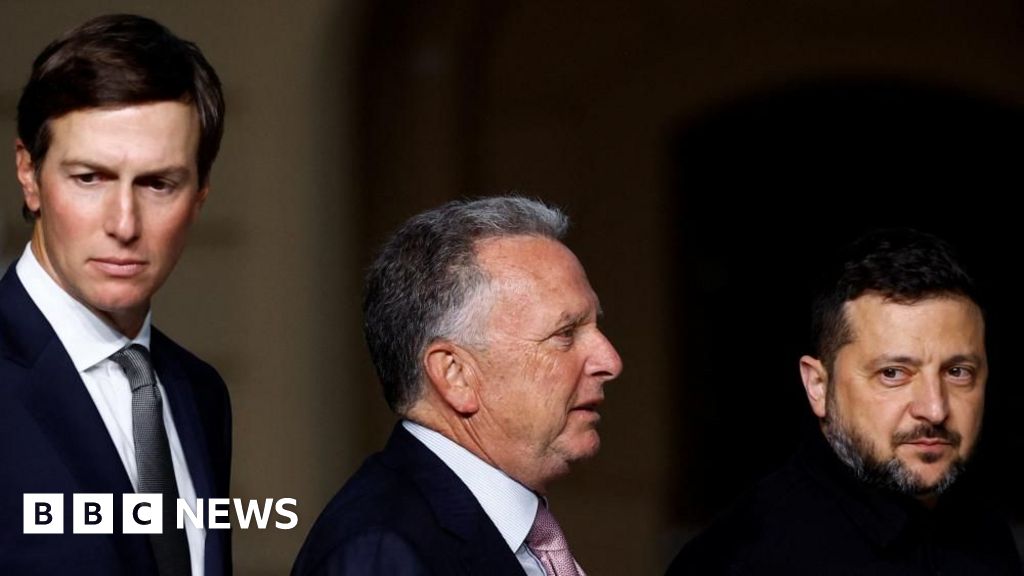
Alongside the prospect of a leaders' meeting, Zelenskyy disclosed that he had discussed a more limited ceasefire with American special envoys Steve Witkoff and Jared Kushner. The two areas under discussion are a halt to attacks on energy infrastructure and the safe transportation of grain through the Black Sea. "Energy and grain. This is step number one. What we can achieve," he said.
A partial ceasefire along these lines would not be unprecedented. The Black Sea Grain Initiative, brokered by the United Nations and Turkey in 2022, allowed Ukrainian agricultural exports to leave three southern ports for nearly a year before Russia withdrew in July 2023. Any successor arrangement would need to address the security guarantees that the original deal lacked. Energy infrastructure, meanwhile, has been a recurring target of Russian missile strikes, particularly during winter, and a freeze on such attacks would offer immediate relief to Ukrainian civilians.
The Patriot missile gap
Zelenskyy also laid out a specific numerical request: Ukraine needs approximately 100 to 120 Patriot missiles per month during the cold season to counter Russian ballistic missile attacks. He estimated that Russia produces roughly 140 ballistic missiles every month. The disparity matters because Patriot interceptors are expensive, production is limited, and Western allies have been slow to transfer stocks that their own armed forces regard as essential. Germany, the Netherlands and the United States have all sent Patriot systems to Ukraine, but keeping the launchers fed with missiles through a winter campaign is a different order of challenge.
The request puts European governments in an awkward position. Several NATO members operate Patriot batteries and have already drawn down their inventories. Increasing deliveries to Ukraine would require either new production, which takes time, or further depletion of national reserves, which defence ministries are reluctant to authorise.
People mentioned
Organisations
G20 · Deutsche Welle