A political party's right to parody a famous brand has limits. That is the practical consequence of a ruling from the Court of Justice of the European Union (CJEU) on Tuesday, which found that the Flemish far-right party Vlaams Belang went too far when it built an anti-immigration campaign around Ikea's distinctive visual identity.
What Vlaams Belang did
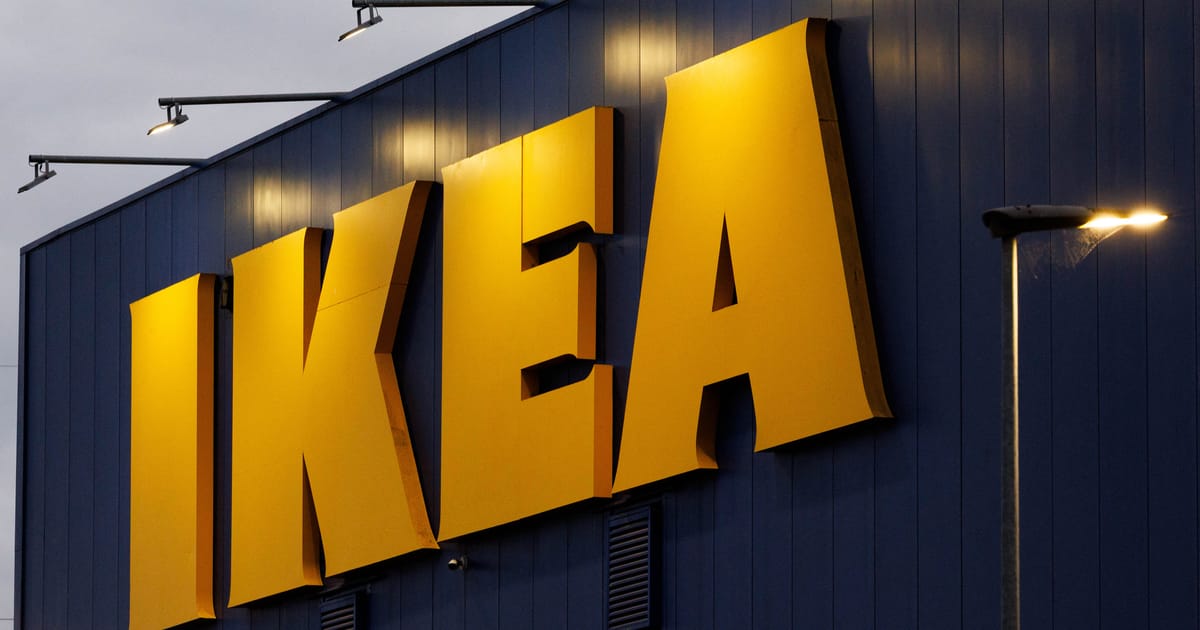
In 2022, Vlaams Belang unveiled what it called the "IKEA-Plan". The acronym stood for "Immigratie Kan Echt Anders", or "Immigration can really be different". The campaign laid out the party's proposals for tightening Belgium's immigration rules, presented in the style of Ikea's famously minimalist assembly instructions. It used the Swedish company's blue-and-yellow colour scheme and the smiley-face figures that appear on Ikea instruction sheets.
The effect was immediately recognisable. Anyone familiar with Ikea's branding would have seen the resemblance at once. That was precisely the point: Vlaams Belang wanted the association. But Ikea did not.
"We do not wish our brand to be used to suggest that we support certain positions when we do not," an Ikea spokesperson said at the time. The company sued in a Belgian business court in November 2022, alleging trademark infringement.
The question the Belgian court could not answer alone
The case raised a conflict that EU trademark law had not fully resolved: what happens when a political party uses a commercial trademark not to sell rival products, but to make a political point? The Belgian court referred the question to the CJEU in Luxembourg, asking how to balance freedom of expression against a trademark holder's right to protect its brand.
That referral was significant. National courts across the EU have wrestled with similar disputes, and the absence of a clear ruling from the EU's highest court left a grey area around political parody and commercial identity. The Court of Justice of the European Union was effectively being asked to set the boundary.
What the CJEU decided
The court came down firmly on Ikea's side. Using Ikea's trademarks "for the sole purpose of taking advantage of their reputation to reinforce a political message" does not, the court said, take precedence over the rights and interests of the trademark owner.
Two factors weighed heavily. First, Vlaams Belang's campaign had nothing to do with Ikea's actual business. This was not a consumer criticising a product, or a competitor using a mark in a commercial context. It was a political party borrowing a brand's visual language to give its own message wider circulation.
Second, the court accepted that people might reasonably believe Ikea had endorsed the campaign. That risk of confusion, however unintentional, meant the campaign could cause "significant detriment" to Ikea's reputation, a standard recognised in EU trademark law.
Why this ruling reaches beyond Belgium
Elena Izyumenko, an assistant professor in intellectual property law at the University of Amsterdam's Institute for Information Law, said the judgment sets an uncomfortable precedent for political expression. "What the court suggests is that a private company can suppress controversial political expression if it can create any impression of a link between the company and the opinion expressed in the parody," she said.
That framing matters. Political satire and parody have long relied on borrowing recognisable imagery. Campaigns across Europe have mimicked fast-food menus, airline safety cards and soft-drink logos to make their points. Until now, the legal risk in doing so was unclear. The CJEU has effectively said that if a member of the public could mistake the parody for an endorsement, the trademark holder can demand it stop.
The ruling does not strip political parties of all room for parody. But it shifts the calculus. A campaign that borrows a brand's identity for political commentary now carries legal risk that did not formally exist before this judgment clarified the position.
The parties respond
Inter IKEA Systems B.V., the Netherlands-based company that manages Ikea's intellectual property, welcomed the ruling. "Inter IKEA fully believes in, and deeply respects, freedom of expression," the company said in a statement. "At the same time, it cannot accept the use of the IKEA trademarks in ways that damage their reputation or distinctive character."
Vlaams Belang, through its non-profit arm Vrijheidsfonds, was more cautious. A spokesperson said the party "takes note of the ruling" and would "thoroughly examine its scope in the context of further legal proceedings". That language suggests the party has not ruled out continuing to fight.
What happens next
The case returns to the Belgian business court, which will apply the CJEU's interpretation to the facts. Izyumenko said that, given the ruling, it is "almost obvious" the Belgian court will find against Vlaams Belang.
The broader question is whether Vlaams Belang or other parties will push the issue further. The CJEU's judgment is binding on EU member states, but it applies specifically to the facts of this case. A different set of circumstances, for instance a parody that more clearly signals its independence from the brand, might produce a different outcome. For now, any political party planning to borrow a corporate identity for its next campaign has a fresh reason to think again.
People mentioned
-
Elena Izyumenko
Organisations
Court of Justice of the European Union · Vlaams Belang · Inter IKEA Systems B.V.