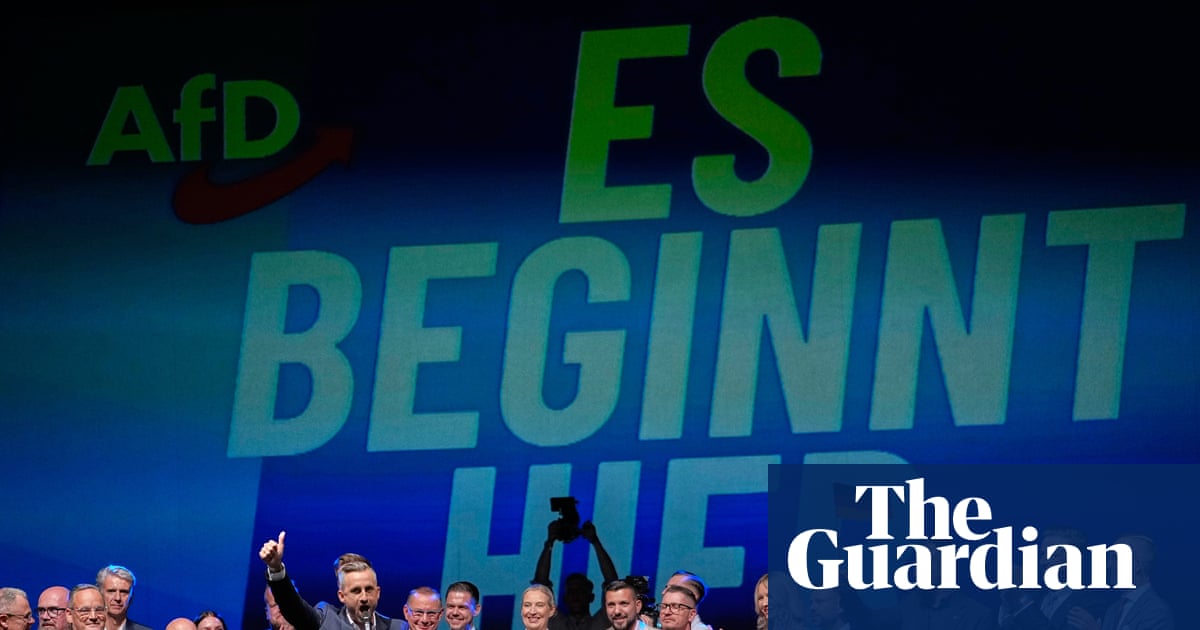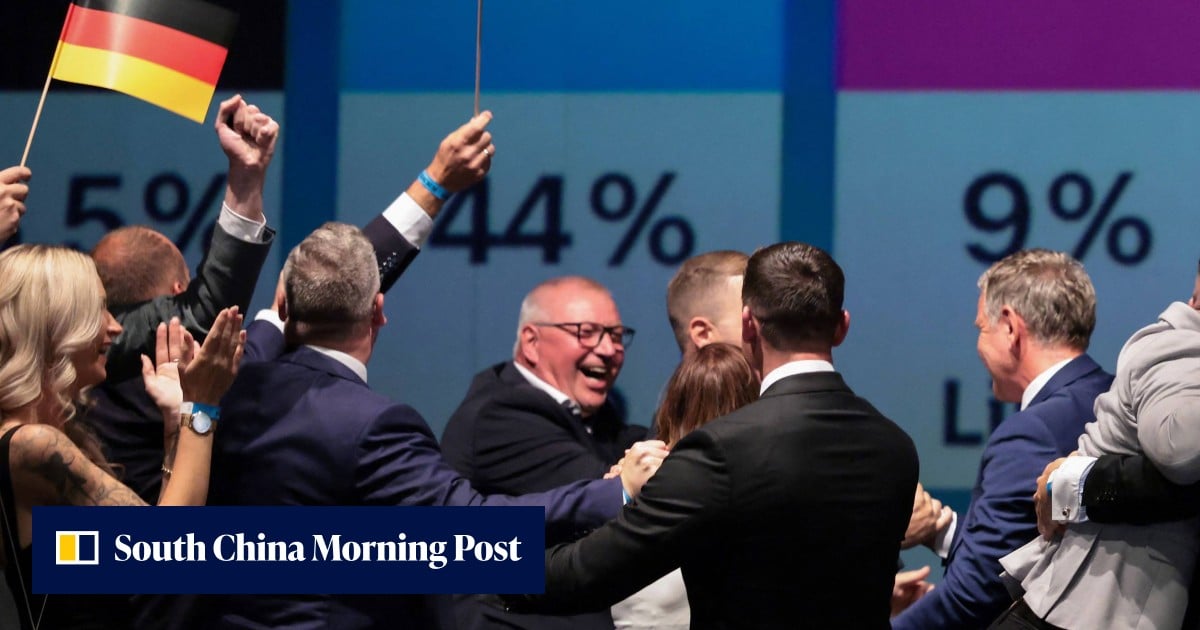
The Alternative for Germany (AfD) has taken 43.8 per cent of the vote in Saxony-Anhalt, its strongest state-level result by a considerable margin, leaving Chancellor Friedrich Merz's Christian Democrats (CDU) battered at 17.2 per cent and raising uncomfortable questions about Germany's ability to steer European Union trade policy towards Beijing at a critical moment.
A result that reshapes the domestic landscape
The preliminary figures from the eastern German state are striking. The AfD fell short of an absolute majority, but only just. The CDU, which had governed Saxony-Anhalt, saw its share more than halve. For Merz, who took the chancellorship promising to restore his party's authority in the east, this is a serious reverse. The result mirrors a broader pattern across eastern Germany, where the AfD has moved from a protest vote to the dominant political force in several states.
The domestic consequences are plain enough: a weakened chancellor, a fractured coalition conversation, and a political establishment forced to reckon with an opposition that now sets the pace on immigration, energy and, increasingly, foreign policy. Less obvious, but arguably more consequential for the rest of Europe, is what this means for Germany's role in shaping the EU's approach to China.
The paradox of the AfD's China posture
AfD co-leader Alice Weidel has been comparatively friendly towards Beijing. She has questioned the economic wisdom of decoupling from China and has framed Germany's trade dependency as a reality to be managed rather than severed. On the surface, a party with that posture gaining ground might suggest a softening of Germany's China policy. Analysts argue the opposite is more likely.
The reasoning is straightforward. Mainstream parties in Germany, the CDU included, have been moving towards a harder line on Chinese industrial competition for over a year. The AfD's surge creates a competitive incentive for those parties to demonstrate that they, too, take the concerns of German manufacturers seriously. No CDU or SPD politician wants to be outflanked on economic sovereignty by a party further to the right. The result is that Berlin's stance on trade with China is more likely to harden than soften, even if the AfD itself advocates engagement.
Distraction at the worst possible moment
There is a catch, and it matters. A chancellor occupied by domestic crisis is a chancellor with less bandwidth for European diplomacy. Germany has traditionally been the engine of EU-China policy: the largest member state, the biggest trading partner of China within the bloc, and the country whose industrial base has most at stake in whatever comes next. If Berlin is consumed by coalition management, regional election fallout and the steady erosion of its eastern vote, it cannot lead as effectively.
"The EU is entering the most consequential period in its relations with China in many years," said Noah Barkin, senior adviser at the Rhodium Group. The timing is awkward. The European Commission faces an October deadline to decide on trade rebalancing measures that could reshape tariffs, subsidies and market access for Chinese firms operating in Europe. Decisions made then will set the trajectory for years.
The October deadline and what it entails
The October deadline is not abstract. Brussels has been investigating whether Chinese industrial overcapacity, particularly in electric vehicles, solar panels and steel, is distorting the European market. The options range from new anti-subsidy duties to more structural changes in how the EU screens foreign investment and responds to state-backed competition. The Commission has already imposed provisional tariffs on Chinese electric vehicles; making those permanent, or extending the principle to other sectors, requires political consensus among member states.
Germany's position in that conversation matters disproportionately. Berlin has historically favoured a more cautious approach, reflecting the exposure of its automotive sector to Chinese retaliation. Over the past year, that caution has shifted, with Merz's government signing off on earlier tariff proposals. But a chancellor who has just lost half his party's vote share in a state election is in a weaker position to persuade sceptical member states, or to absorb the domestic backlash from German industry if trade tensions escalate.
What the rest of Europe watches for
France and the Netherlands have been more hawkish on China than Germany. Southern European states, particularly those receiving Chinese infrastructure investment, have been more reluctant. The EU's China policy is a patchwork of these interests, and it holds together only when the largest economy is pushing in a clear direction. A distracted Berlin means a slower, less coherent European response.
The Saxony-Anhalt result also feeds into a wider debate about European political stability. If far-right parties are gaining ground in the EU's largest member state, Beijing will notice. Chinese officials have previously calculated that European fragmentation works in their favour: a divided Europe is easier to negotiate with bilaterally. The AfD's rise, and the domestic chaos it creates for mainstream German politics, is unlikely to change that assessment.
People mentioned
Organisations
Alternative for Germany · Christian Democratic Union · Rhodium Group · European Commission