Two Lithuanian parliamentarians travelled to Brussels this week for a two-hour meeting with China's ambassador, seeking to probe the state of a diplomatic relationship that has been effectively frozen since 2021. They paid for the trip themselves after Lithuania's parliament refused to fund it, and the president's office moved swiftly to say they spoke for nobody but themselves.
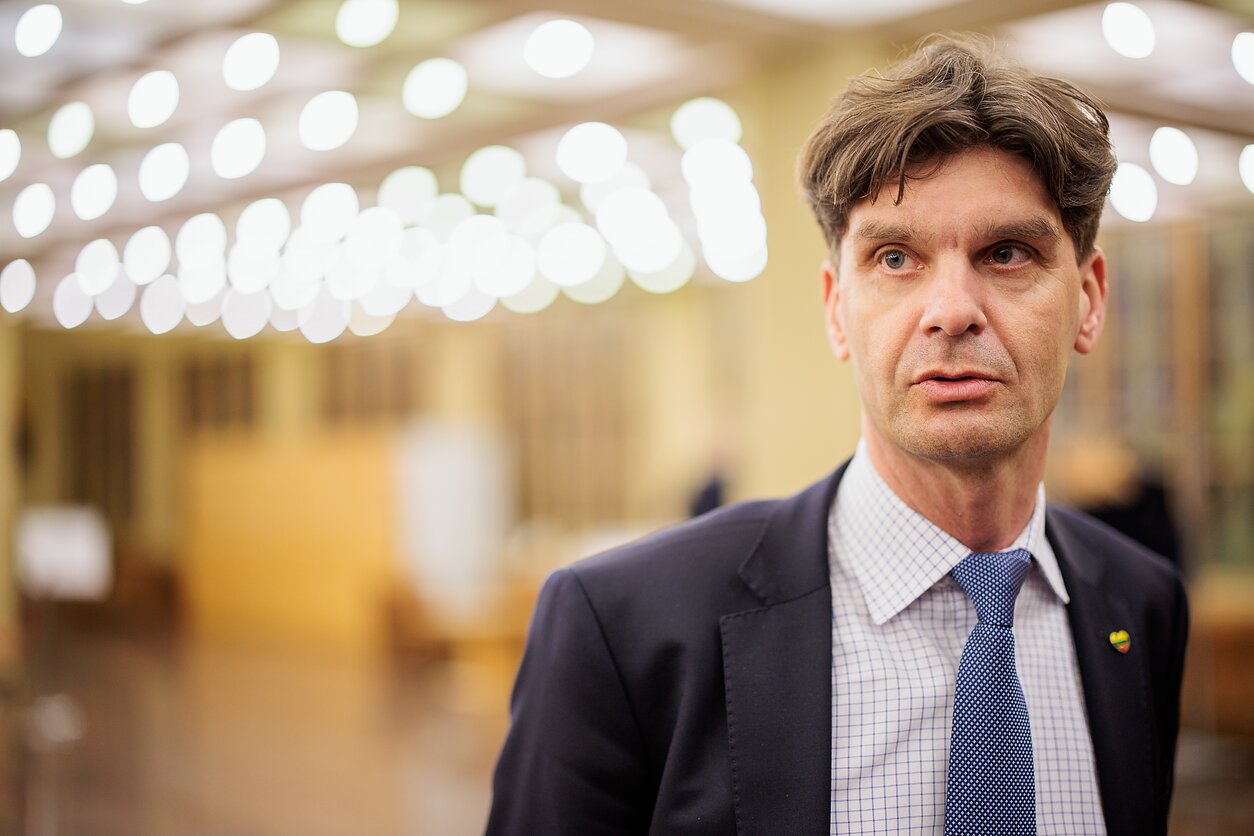
Ignas Vėgėlė and Rimas Jonas Jankūnas, both members of the Seimas mixed parliamentary group, described the talks on Tuesday as warm and substantive. Vėgėlė said the purpose was straightforward: "The main goal is to find out what the situation really is. To listen more than to speak."
A trip the Seimas would not back
The lawmakers had requested official travel funding from the Seimas board, the parliamentary body that approves delegation travel. The board rejected the request. Rather than drop the visit, Vėgėlė and Jankūnas covered the costs themselves.
That rejection was not an administrative oversight. It reflected a political calculation in Vilnius that no official parliamentary delegation should be seen engaging with Chinese diplomats while bilateral relations remain at their current low point. Self-funding allowed the lawmakers to proceed while technically insulating the Seimas from the visit, but it also meant the meeting carried no formal mandate from any Lithuanian institution.
Jankūnas was unapologetic. He argued that the lawmakers represented a substantial share of Lithuanian voters and a parliamentary group committed to normalising relations with China. "Without representing the government, we represent the government's program," he said, pointing to the coalition's own stated ambition to work toward restoring ties with Beijing.
Vilnius draws a firm line
Asta Skaisgirytė, chief foreign policy adviser to President Gitanas Nausėda, stated plainly that the lawmakers represented nobody but themselves: not Lithuania, not its parliament, not its government.
The distinction is not merely procedural. In diplomacy, who speaks for a country determines whether a conversation constitutes a negotiation, a signal, or simply an exchange of views. By insisting the visit was unofficial, the president's office prevented China from claiming a bilateral breakthrough and prevented domestic critics from accusing the government of a quiet softening toward Beijing.
A divided political response
The reaction among Lithuanian politicians in Brussels laid the domestic fault line bare. Petras Auštrevičius, a liberal member of the European Parliament, urged caution and suggested the visit had been orchestrated from Beijing. "We need to know how to wait and wait wisely," he said. "In relations with China, sensible patience is no less important than quick, difficult-to-explain actions." He offered no evidence for his suggestion that China arranged the meeting, but the suspicion itself reflects how sensitive the issue has become.
Vytenis Andriukaitis, a social democrat in the European Parliament, took a different view. He said Seimas members were free to engage in politics but that the visit would not shift government policy. "As for how much this can change the government's or the parliament's program," he said, "clearly, it cannot."
From the right, Petras Gražulis of the People and Justice Union group welcomed the initiative, saying it "certainly won't make things worse," though he added that official talks involving the president, the foreign minister or the full parliament would be preferable.
Beijing's interest in back channels
For Beijing, the meeting serves a purpose regardless of its unofficial status. China has a track record of cultivating sympathetic legislators, business figures and former officials in countries where official relations are strained. A two-hour session with ambassador-level diplomats, described by the lawmakers as warm and substantive, allows Beijing to signal openness to dialogue while making no concessions.
Vėgėlė declined to say what "homework" China had given the Lithuanian side, explaining that such matters are handled quietly in diplomacy. The phrasing suggests specific requests or conditions were discussed, even if no formal agreement was reached. He said he would share information from the meeting with senior officials in Vilnius. Whether those officials welcome the briefing is another matter.
The wider European context
Lithuania's bilateral freeze with China sits within a broader European reassessment. The European Council has spent years trying to define a posture toward Beijing that acknowledges both economic interdependence and the risks of dependency on a strategic rival. The Commission has pushed for de-risking rather than full decoupling, but member states interpret that guidance differently. Germany's approach differs from Lithuania's, and both differ from France's.
For a small country like Lithuania, the cost of a principled stand against China has been disproportionate. Lithuanian exporters found themselves shut out of Chinese markets, and multinational companies with Lithuanian operations faced pressure from Beijing to reroute supply chains. The EU's trade case offered institutional solidarity, but solidarity does not compensate for lost contracts.
What the meeting changed, and what it did not
The meeting produced no joint statement, no announced agreement, no change in diplomatic status. Whether another will follow remains unclear. Vėgėlė and Jankūnas gathered information and established a personal channel, but the government in Vilnius has made clear that channel carries no official weight.
The visit does, however, reveal something about the current state of Lithuania's China debate. The parliamentary group seeking normalisation has enough confidence to travel to Brussels and meet Chinese diplomats openly. The president's office has enough concern about the optics to disavow the visit within hours. And China has enough interest in Lithuania to host the meeting at ambassadorial level and engage substantively for two hours.
People mentioned
-
Ignas Vėgėlė
-
Rimas Jonas Jankūnas
-
Asta Skaisgirytė
-
Petras Auštrevičius
-
Vytenis Andriukaitis
-
Petras Gražulis
Organisations
Seimas of the Republic of Lithuania · European Parliament