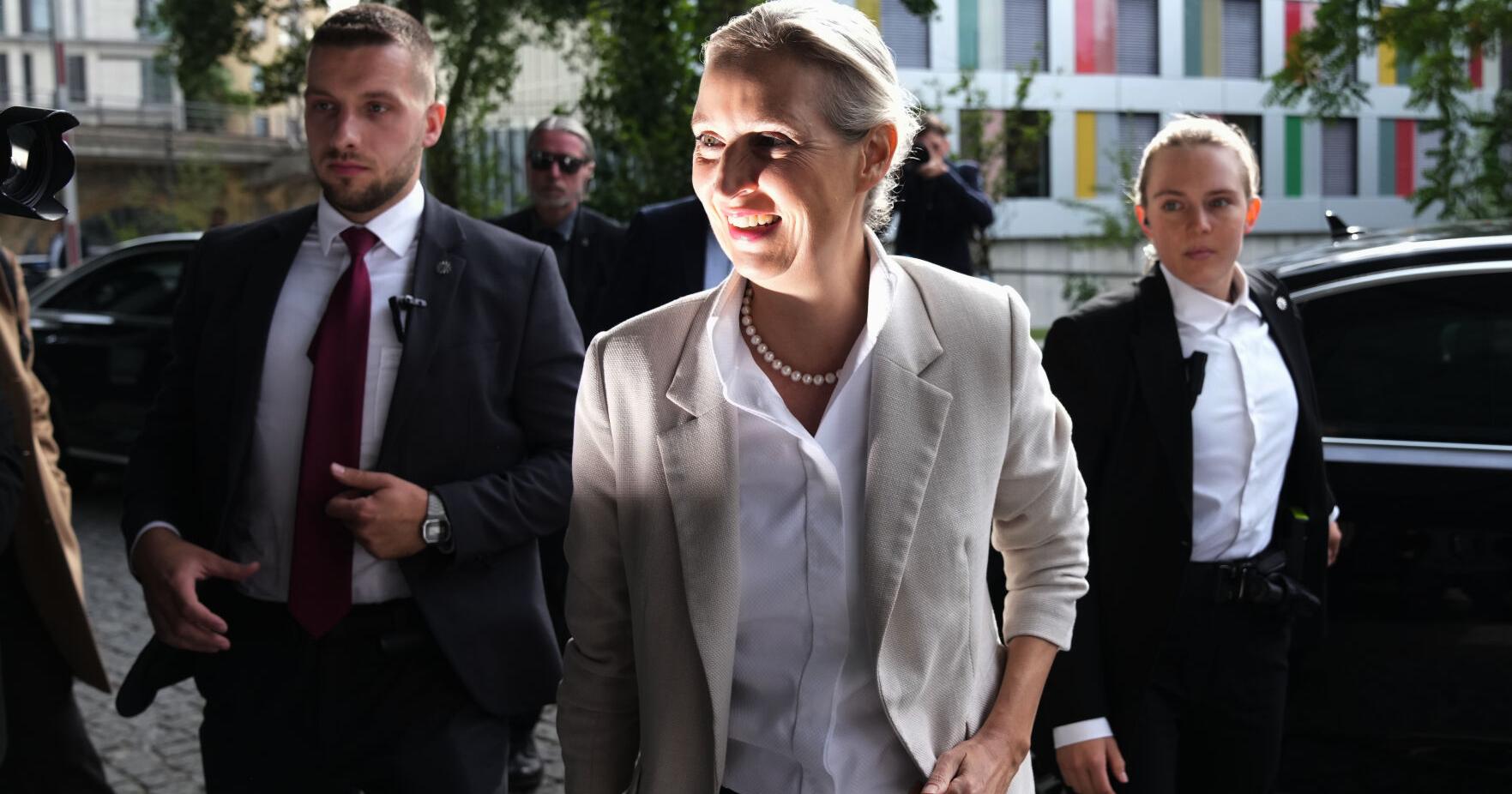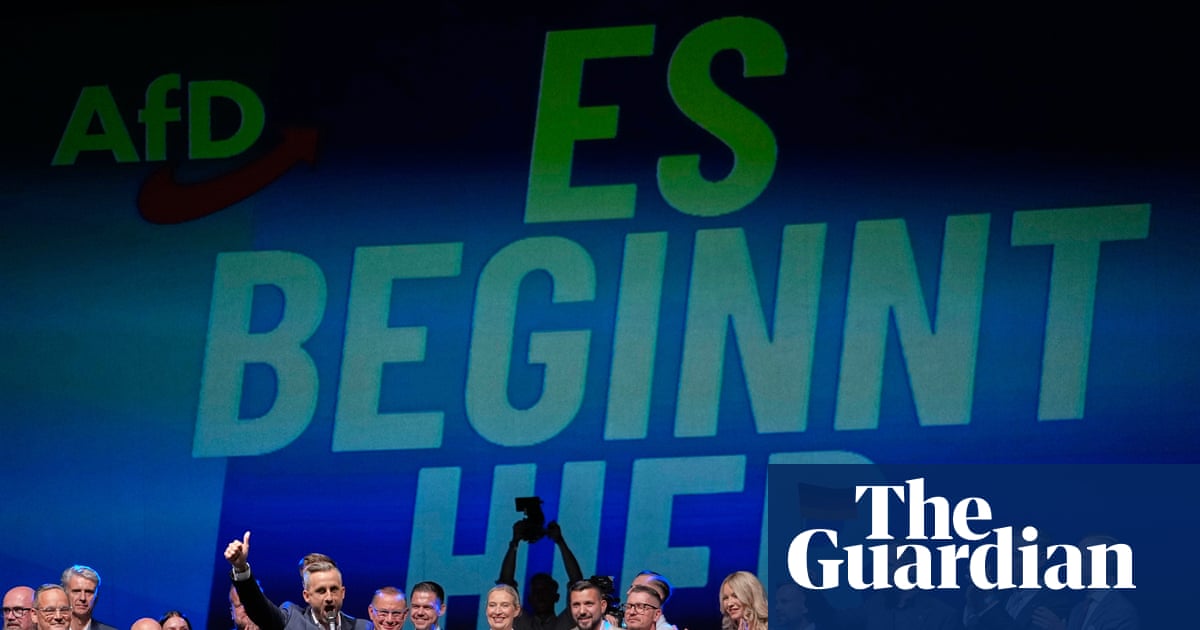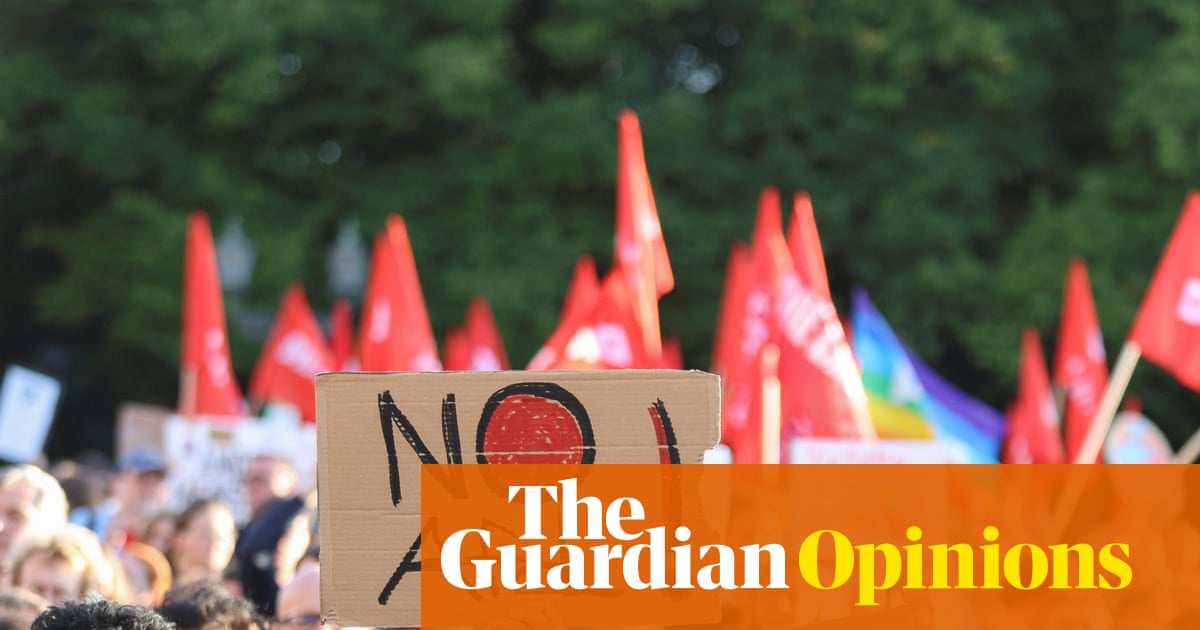
The Alternative für Deutschland won 39 seats in the Saxony-Anhalt state parliament on Sunday, nearly doubling its representation from 23. The Christian Democratic Union, which has dominated the state for decades, lost more than half its seats. The result is not simply a local upset. It confirms that Germany's mainstream conservative party cannot contain the far right by moving rightward, and it raises immediate questions about whether Chancellor Friedrich Merz can survive the autumn.
A chancellor his own party would not campaign with
Merz campaigned for the chancellorship on an explicit promise: good government under his leadership would cut the AfD in half. The opposite has happened. Alice Weidel, the AfD's co-leader, told supporters the CDU would "never win an election again". Swagger aside, the numbers tell their own story.
The chancellor's unpopularity is now a measurable political fact. His own party kept him away from the Saxony-Anhalt campaign. His face appeared on no posters. When he visited the state capital, Magdeburg, the public was excluded. A chancellor who cannot be seen in his own party's campaign materials is a liability, and his colleagues know it.
Two more state elections follow on 20 September, in Berlin and Mecklenburg-Western Pomerania. On current polling, the CDU faces further debacles. Merz's position is protected for now only by the absence of an obvious successor and the constitutional barriers to sudden leadership changes in Germany. Those barriers will not hold indefinitely.
Radicalism that deepens as power nears
The AfD in Saxony-Anhalt is not a typical populist right party of the kind that has entered government in Italy or the Netherlands. Germany's domestic intelligence service classifies the state chapter as among the most radical in the country. Former members of banned neo-Nazi groups hold influential positions within it. Several of these figures may now take senior roles in the state administration, with authority over the police, the domestic intelligence service (Verfassungsschutz), the judiciary and schools.
This is the distinction that matters most when comparing the AfD to Marine Le Pen's Rassemblement National or Giorgia Meloni's Brothers of Italy. Those parties moderated as they approached power. The AfD is doing the reverse. Its leadership has coined a term for what it wants to avoid: "Melonisierung". Meloni, despite her neo-fascist origins, has supported Ukraine, Nato, the euro and free movement within the EU. The AfD explicitly rejects all of those positions. It wants Germany out of the EU and the eurozone. It wants Schengen dismantled. It is pro-Russian and opposes military support for Ukraine.
Remigration and the ethnostate ambition
Asylum applications in Germany fell by 48% in July 2026 compared with the same month a year earlier, partly as a result of restrictive measures introduced by Merz's government, according to German federal statistics. The policy shift did nothing to slow the AfD's advance, because the party's ambitions extend well beyond border control. Its central demand, "remigration", does not target only undocumented migrants. It targets immigrants and their descendants whose backgrounds are deemed undesirable. The goal, stated plainly, is a German ethnostate with as few foreigners as possible.
Charlotte Knobloch, a 93-year-old Holocaust survivor and former chair of the Central Council of Jews in Germany, described the result with the word "horror". "In my worst nightmares, I could not have imagined that rightwing extremists win elections again in this manner," she said. Knobloch's reaction is rooted in what the AfD's rhetoric explicitly attacks: the anti-fascist consensus that facing up to the Nazi past is fundamental to German democracy.
The Russian dimension
The election took place days after hybrid attacks on Leipzig airport and other infrastructure, which Merz attributed to Russia, vowing to "make the perpetrators pay". The AfD turned this against him. Its campaign presented abandoning Ukraine, pursuing rapprochement with Moscow and reopening the Nord Stream pipeline as a "policy of peace". This framing resonated in a state where fear of escalation with Russia is widespread. Whether intended or not, the result advances Vladimir Putin's interests in central Europe.
Donald Trump, for his part, posted the exit poll results on Truth Social within seconds of their release, apparently delighted by the CDU's collapse.
Governing in Magdeburg
The AfD did not win an absolute majority. To govern, it may need the cooperation of the Sahra Wagenknecht Alliance (BSW), a splinter from the hard-left Die Linke that combines leftwing economics with anti-immigration and pro-Russia positions. The ideological overlap with the AfD on nationalism and Russia is considerable. Forming a government will still be difficult. The distance from Magdeburg to national power remains long.
People mentioned
Organisations
Alternative für Deutschland · Christian Democratic Union · Sahra Wagenknecht Alliance · Verfassungsschutz