Almost one in four European voters now cast their ballot for a far-right party. That is the headline finding of a pan-European research project led by Matthijs Rooduijn at the University of Amsterdam, which tracked voting patterns across 31 countries and found the far-right share climbing to more than 23% in the most recent national elections, up from roughly 10% a decade ago and just 5% in the mid-1990s. The data, compiled by more than 150 political scientists, confirms a trend that has accelerated sharply over the past three years.
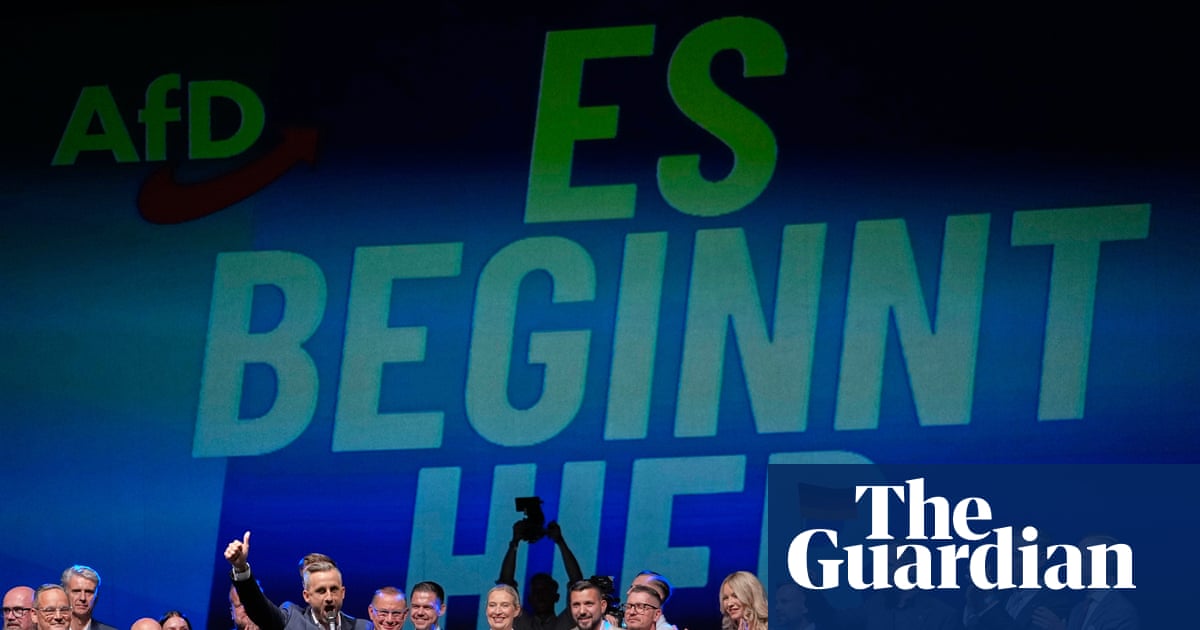
Sunday's state election in Saxony-Anhalt provided the latest illustration. The Alternative für Deutschland (AfD), a party whose local branch is officially classified as a confirmed right-wing extremist organisation by Germany's domestic intelligence service, won 43.8% of the vote, nearly doubling its score from five years ago. The centre-right CDU of Chancellor Friedrich Merz collapsed to 17.2%, less than half its previous total, while the SPD, Germany's other traditional party of government, scraped 9.3%. The AfD now holds 39 seats in the 83-member state parliament, just short of an outright majority.
A European pattern, not a German exception
Saxony-Anhalt, with its 1.8 million voters, has long been a far-right stronghold where AfD support consistently runs at double the national average. Tarik Abou-Chadi of Oxford University warns against extrapolating a continental shift from a single regional result in an atypical state. Yet the broader numbers are hard to dismiss. Far-right parties are in government as coalition partners in Croatia, Czechia, Italy and Finland, prop up a right-wing minority administration in Sweden, and lead opinion polls in Austria, Belgium, France and Germany. Until recently they also led in the United Kingdom.
The trend is not uniform. Geert Wilders's Freedom Party lost nearly a third of its seats in the Dutch election last year, and Viktor Orbán's Fidesz was comprehensively beaten by a centre-right rival in Hungary in April. Cas Mudde of the University of Georgia notes that far-right support fluctuates like any established political force: "The far right is here to stay, and many of its parties are as established as the (former) 'mainstream' parties."
The firewall debate misses the point
Mainstream parties in France and Germany have long refused to cooperate with the far right, a strategy known as the cordon sanitaire or firewall. Some commentators argue this isolation has failed or even backfired. Mujtaba Rahman of the Eurasia Group describes a self-reinforcing dynamic: weaker mainstream results lead to fragmented coalitions, fewer policy achievements, greater voter frustration, and a larger far-right vote share. However, a study of more than 1,300 governments in 57 countries found that far-right parties entering government actually increased their vote share by an average of six percentage points at the subsequent election, suggesting exclusion is not the primary driver of their rise.
Normalisation of ideas, not just votes
Research indicates that voter attitudes on core far-right themes such as immigration have not shifted dramatically over time. What has changed is the salience of those issues in voting decisions. Gabriela Greilinger argues that the entire debate about whether the firewall works misses the point: "Far-right politics and policies already constantly take centre stage, whether or not the far right is in power. There is no cordon around their ideas." Mainstream parties and media outlets have increasingly adopted far-right framing on migration, identity and security, legitimising the agenda without the far right needing to hold office.
Cost of living and the credibility gap
Beyond cultural issues, the persistent inability of mainstream governments to deliver tangible relief from a spiralling cost-of-living crisis has eroded trust. When coalitions are fragmented and policy results are scarce, voters punish the incumbents. The AfD's surge in Saxony-Anhalt coincides with a national mood in Germany where the traffic-light coalition in Berlin has struggled to agree on energy prices, housing and migration policy. The same frustration is visible in France, where President Emmanuel Macron's centrist alliance has lost its parliamentary majority, and in Italy, where Giorgia Meloni's Brothers of Italy leads a right-wing coalition.
Upcoming electoral tests
The next few months will test whether the far-right momentum holds. Sweden holds legislative elections next weekend. France faces a presidential ballot next spring, followed by parliamentary races. Italy, Spain and Poland also have key elections scheduled later in the year. Far-right parties are polling strongly in all of them. The AfD itself faces another state election in Mecklenburg-Western Pomerania later this month, where it is running neck-and-neck with the SPD, and it is polling second even in Berlin.
People mentioned
-
Tarik Abou-Chadi
Organisations
Alternative für Deutschland · Christian Democratic Union · Social Democratic Party of Germany · European Parliament · Eurasia Group · University of Oxford