Sweden's transformation from the European nation that accepted the most asylum seekers per capita in 2015 to one that now pays foreign-born residents to leave is nearly complete. With the general election nine days away, the centre-right government has doubled the voluntary return grant to 350,000 kronor per adult, a sum it hopes will accelerate departures and signal resolve to voters who have made migration the defining issue of the campaign.
A decade of reversal
The numbers tell the story. In 2015, Sweden received 163,000 asylum applications, the second-highest per capita in Europe after Hungary. By 2025, according to Eurostat data, that figure had collapsed to roughly 6,500, a 96% decline. The drop reflects a succession of legislative changes: temporary border controls reintroduced in 2015 and never fully lifted, a 2016 law restricting family reunification and temporary residence permits, and a 2023 tightening that raised income thresholds for sponsors and limited asylum to the minimum required by international law.
The current government, a three-party coalition of Moderates, Christian Democrats and Liberals dependent on the Sweden Democrats for its parliamentary majority, has gone further. Since January 2025, the voluntary return grant, previously capped at 10,000 kronor for adults and 5,000 for children, has been raised to 350,000 and 175,000 kronor respectively. The Migration Agency administers the scheme, which requires recipients to surrender their residence permits and sign a declaration that they will not seek re-entry for at least five years.
The Sweden Democrats' leverage
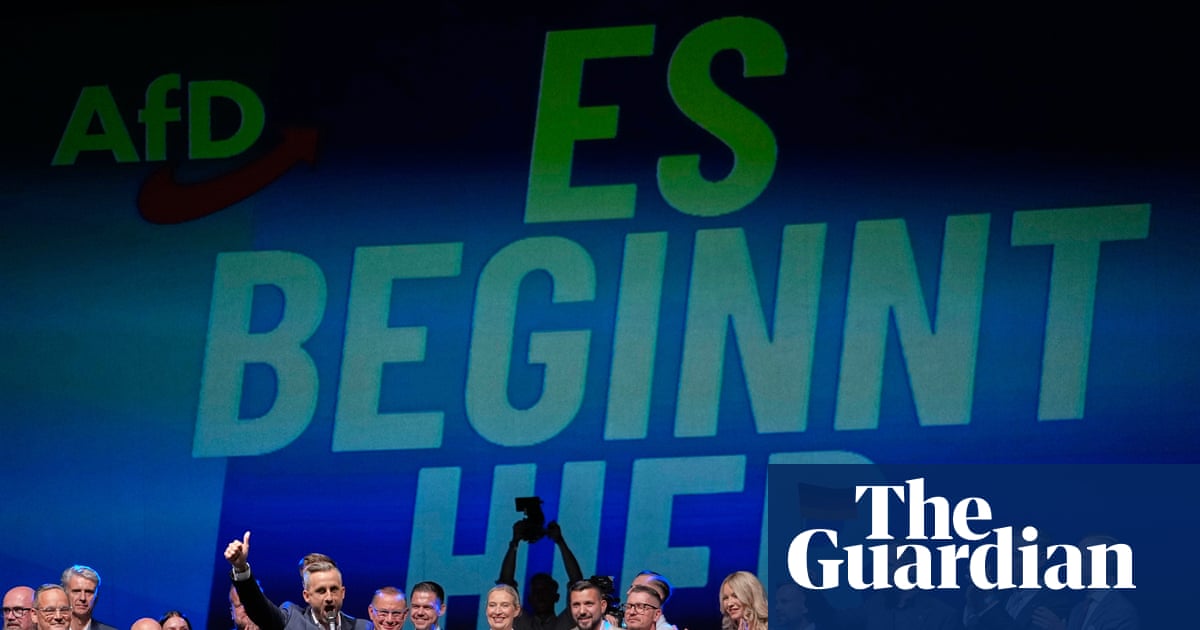
The policy bears the fingerprints of the Sweden Democrats (SD), a party with roots in the neo-Nazi fringe that has rebranded itself as a mainstream nationalist force. Since 2022, SD has provided confidence-and-supply support to the government in exchange for migration concessions. The party's leader, Jimmie Åkesson, has called for a "paradigm shift" from integration to remigration, arguing that Sweden's generous welfare state cannot survive current levels of non-Western immigration. Polls consistently place SD as the second-largest party, hovering around 20% support.
The government denies that the enhanced grant is electioneering. Migration Minister Maria Malmer Stenergard has described it as a "long-overdue tool" to reduce the stock of residents with weak ties to the labour market. Critics counter that the timing, announced six months before the election, implemented as campaigning began, speaks for itself. The opposition Social Democrats and Greens have pledged to scrap the increased grant if they win, calling it "symbolic politics" that costs more than it saves.
Minimal uptake so far
For all the political noise, the scheme's practical impact remains negligible. Migration Agency figures released in August show that 487 people accepted the enhanced grant in the first eight months of 2026, compared with 1,200 in all of 2024 under the old rates. Most returnees went to Iraq, Somalia and Syria, countries where Sweden has deemed parts of the territory safe enough for return. The agency attributes low uptake to the difficulty of rebuilding a life in countries many left decades ago, and to the fact that the grant must cover travel, housing and startup costs in economies often shattered by conflict.
Elena Ibrahim, who fled Sudan in 2018 and was granted refugee status two years later, embodies the gap between policy and reality. She works as a care assistant in a Stockholm nursing home, pays taxes, and speaks fluent Swedish. "I have nothing to return to in Darfur," she said. "My home is here. The money would not last six months there." Her situation is common among the 300,000-odd refugees granted protection since 2015: they are not the target of the grant, which applies mainly to those with rejected asylum claims or temporary permits, but they feel the political climate shifting around them.
The economic argument
Proponents cite fiscal calculations. The Migration Agency estimates the average cost of maintaining an asylum seeker in the reception system at 350,000 kronor per year. A one-off grant of the same amount, the argument goes, breaks even if the person would otherwise have stayed in the system for twelve months. But the calculation assumes the alternative is continued state support. Many rejected asylum seekers go underground rather than return, becoming part of an irregular economy that costs the state in lost tax revenue and social cohesion.
The Fiscal Policy Council, an independent watchdog, noted in its 2025 review that the grant's budgetary effect is "highly uncertain" because it depends on behavioural responses that are impossible to model. The council also flagged that the scheme does not distinguish between those who would have left anyway and those induced by the money, a classic deadweight problem. The government has not published an ex-post evaluation.
Integration outcomes diverge
The political debate rarely engages with the data on those who stayed. Employment among refugees who arrived in 2015 reached 58% after eight years, according to Statistics Sweden, lower than the native-born rate of 82% but higher than the European average for comparable cohorts. Second-generation immigrants from non-European backgrounds now outperform the national average in university enrolment. These figures complicate the narrative that migration has been a net fiscal drain. The government's own long-term projections, published in 2024, show that the 2015 cohort will contribute a net positive to public finances over their lifetimes, assuming current employment trajectories hold.
Yet the political salience of migration owes less to aggregate economics than to localised pressures. In suburbs of Stockholm, Gothenburg and Malmö where foreign-born residents exceed 50%, schools struggle with teacher shortages, gang violence has risen, and trust in institutions has eroded. The Sweden Democrats have harvested these grievances effectively. The government's response, the grant, stricter citizenship tests, a proposed ban on begging, targets the symptoms voters see daily, even if the causal chain is disputed by criminologists and sociologists.
Election arithmetic
The September 13 vote is effectively a referendum on the Tidö Agreement, the 2022 pact that gave the Sweden Democrats policy influence without cabinet seats. Polls published in early September show the governing bloc and the left-leaning opposition within two percentage points of each other. The Sweden Democrats' own support has dipped slightly from its 2022 peak, suggesting some voters think the party has already achieved its main goals. The Liberals, the most pro-immigration party in the government, risk falling below the 4% parliamentary threshold, which would reshape the centre-right's arithmetic.
If the opposition wins, the grant will likely be reduced to its pre-2025 level, but the broader legislative framework, border controls, restricted family reunification, temporary permits, will remain. No major party advocates a return to 2015 policies. The Overton window has shifted permanently. The question is whether the next government, whatever its colour, can translate a restrictive framework into functioning integration for those who stay, or whether the politics of expulsion will consume the capacity to govern.
People mentioned
-
Elena Ibrahim
Organisations
Sweden Democrats · Swedish Government · Migration Agency