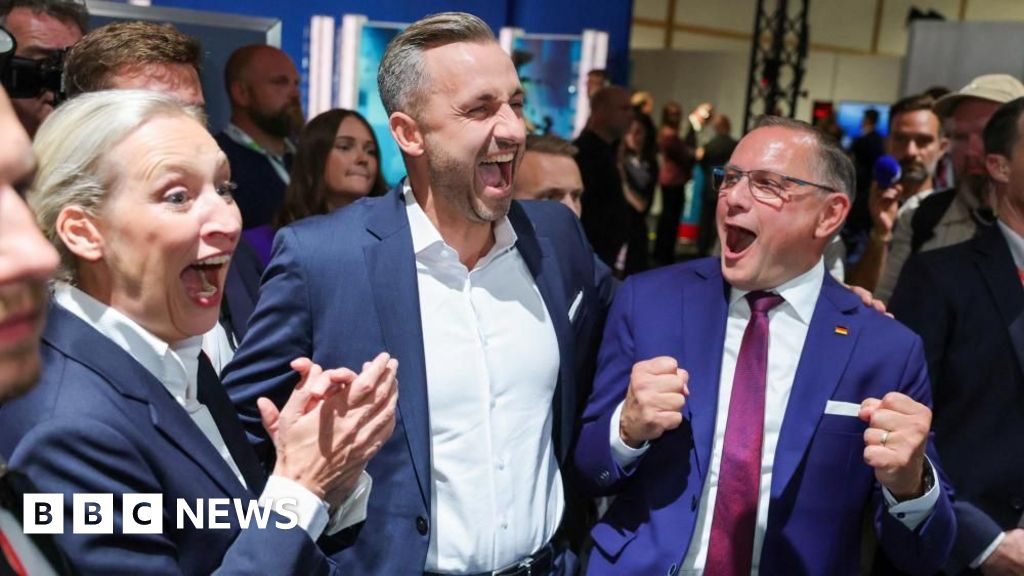
Germans vote on Sunday in a state election that could hand the far-right Alternative for Germany its first taste of governmental power since the Second World War. Polls put the AfD at 40 percent in Saxony-Anhalt, an eastern state of 2.1 million people, roughly double the share it won there five years ago. If the numbers hold, the party could secure an outright majority in the Magdeburg legislature, a result that would shatter the postwar consensus among mainstream parties to keep the hard right out of office.
The arithmetic that could deliver an AfD majority
The AfD's lead over the Christian Democrats (CDU) is stark: 40 percent versus 23 percent in the final surveys. The Social Democrats (SPD) trail at 8.5 percent, the Greens at 6 percent, and the Left Party at 11.5 percent. The small far-left Bündnis Sahra Wagenknecht (BSW) hovers near the five percent threshold. Under Germany's proportional system, an absolute majority requires roughly 47 percent of the second votes cast for parties that clear the threshold. If both the SPD and Greens scrape over the line, their combined votes with the CDU and Left could theoretically block the AfD. But the CDU has ruled out governing with the Left, and a CDU-SPD-Green combination may fall short of a majority.
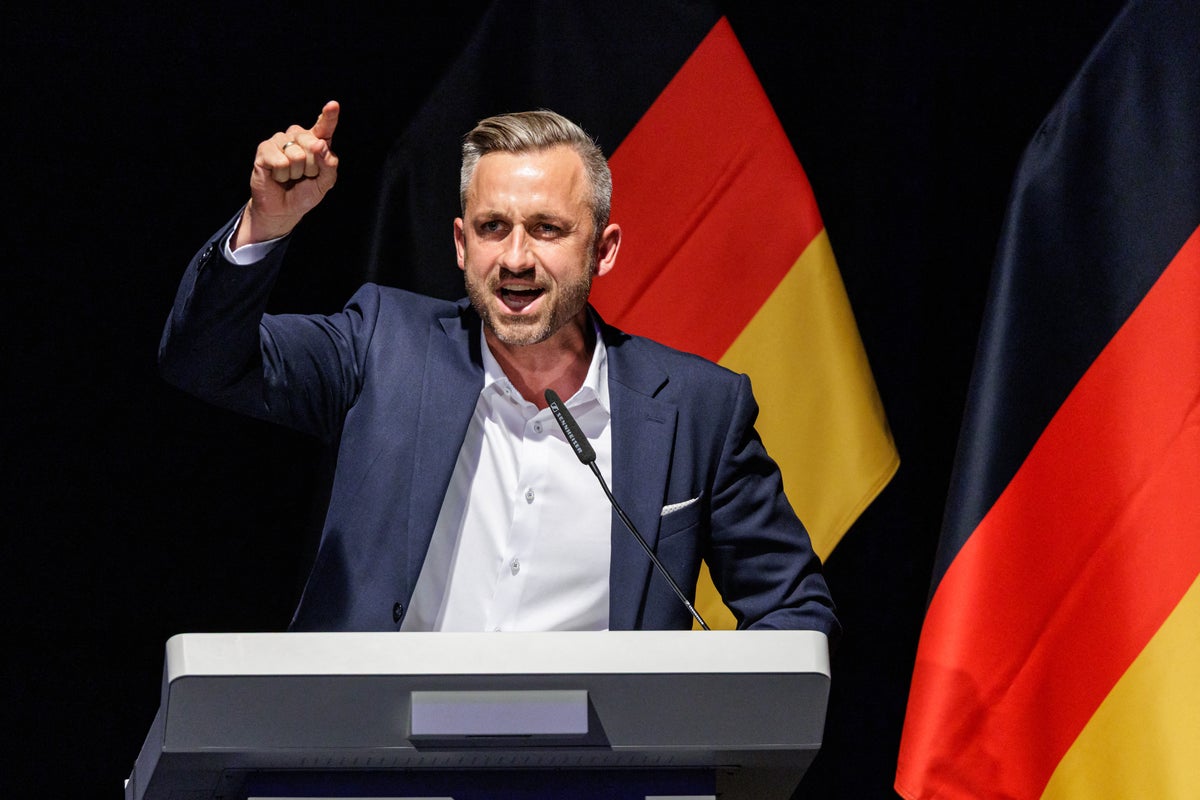
That arithmetic is why the Brookings Institution, a Washington-based think-tank, concluded this week that an absolute majority for AfD lead candidate Ulrich Siegmund "is within reach". The same assessment noted that Siegmund, a business psychology graduate who once co-founded a room-fragrance company, had run a "remarkably successful campaign" despite failing to disavow his party's links to extremist movements. Germany's domestic intelligence agency, the Federal Office for the Protection of the Constitution, has designated the AfD as "extremist right wing".
Merz's authority on the line
An AfD victory would be a personal blow to Chancellor Friedrich Merz, who has become the most unpopular head of government since the Federal Republic's founding in 1949. Eighty-five percent of voters express dissatisfaction with his leadership, according to national surveys. Nationwide, the AfD now polls at 29 percent, making it the single most popular party in the country. Merz told reporters last Sunday that his party would "assess the situation in light of the election results" and "do everything we can to prevent Saxony-Anhalt from falling into the hands of the radicals". The problem is that his CDU has spent years ruling out coalitions with both the AfD and the Left, leaving a narrowing path to a workable majority.
What an AfD government would change
The AfD's "Vision 2026" manifesto for Saxony-Anhalt sketches a radical departure in policy areas where German states hold primary authority: education, domestic security, culture and local administration. A task force would coordinate accelerated deportations. Children of refugees would be taught in separate classes to avoid what the party calls "stresses" from cultural mixing. Inclusive schooling for disabled children would end, replaced by special schools. Rainbow flags would be banned from schools. The government would pursue "all legal avenues" to limit Islamic expression. The curriculum would be reshaped around a "patriotic cultural policy", including daily flag-raising and mandatory singing of the national anthem at school events. The party also advocates stripping war refugee status from Ukrainians while fighting remains concentrated in eastern Ukraine, arguing they should seek shelter in western Ukraine instead. Public broadcasting would be restructured and funding cut for selected cultural institutions.
The coalition dilemma for mainstream parties
All parties except the BSW have ruled out a coalition with the AfD. The Left Party has signalled willingness to tolerate a CDU-led minority government to keep the AfD out. But the CDU faces internal resistance to any arrangement with a party it considers ideologically remote. The FDP, currently in the outgoing coalition with the CDU and SPD, polls below the threshold and may not return to the state parliament at all. If the FDP falls out, the arithmetic tightens further. A CDU-SPD-Green coalition would command perhaps 37-38 percent of seats, short of a majority. A CDU-Left arrangement would be mathematically stronger but politically toxic for Merz's party. The BSW, which splits the left-wing vote, complicates every calculation.
Eastern Germany's distinct political gravity
The AfD's strength in Saxony-Anhalt reflects a deeper pattern. Since 2017, the party has drawn its highest support from the formerly communist eastern states, where economic convergence with the west stalled after reunification and demographic decline accelerated. Voters there are older, poorer and more likely to feel abandoned by federal governments of every stripe. The AfD's platform, anti-immigration, anti-euro, pro-Russia, resonates in a region where the transition from planned to market economy is still within living memory. The party's rise has been steady: from 24 percent in the 2021 state election to 40 percent now. That trajectory mirrors its national climb from 10 percent in the 2021 federal election to 29 percent today.
Bundesrat implications and the federal dimension
German states sit in the Bundesrat, the upper house of parliament, where they vote on legislation affecting state competences. An AfD-led government in Magdeburg would hold Saxony-Anhalt's four votes in that chamber. While four votes alone cannot block legislation, they would give the AfD a formal platform in the federal legislative process for the first time. More consequential may be the signal to the 2029 federal election. If the AfD governs a state competently, or even chaotically, it normalises the party's presence in executive office. The firewall that has contained the far right at state level since the 1950s would be breached.
People mentioned
Organisations
Alternative for Germany · Christian Democratic Union · Social Democratic Party · Free Democratic Party · Alliance 90/The Greens · The Left