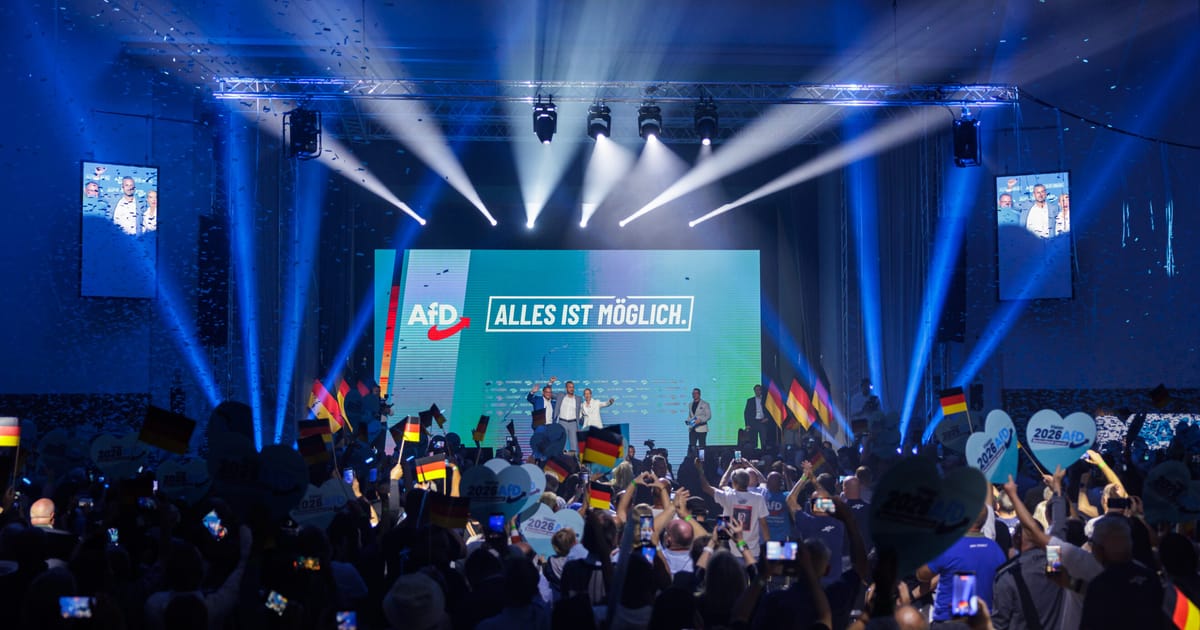
The far-right Alternative for Germany (AfD) has shattered its own records in Saxony-Anhalt, taking 43.8% of the vote in Sunday's state election and finishing as the strongest party in a Landtag for the first time. The result stops just short of an absolute majority, but it has already rewritten the political calculus in Berlin. Within 48 hours, Chancellor Friedrich Merz stood at the Bundestag dispatch box and delivered the sharpest rhetorical assault on the AfD by a sitting chancellor in recent memory, branding the party's signature remigration policy "nothing other than ethnic cleansing based on skin color and origin."
A state election that echoes in the capital
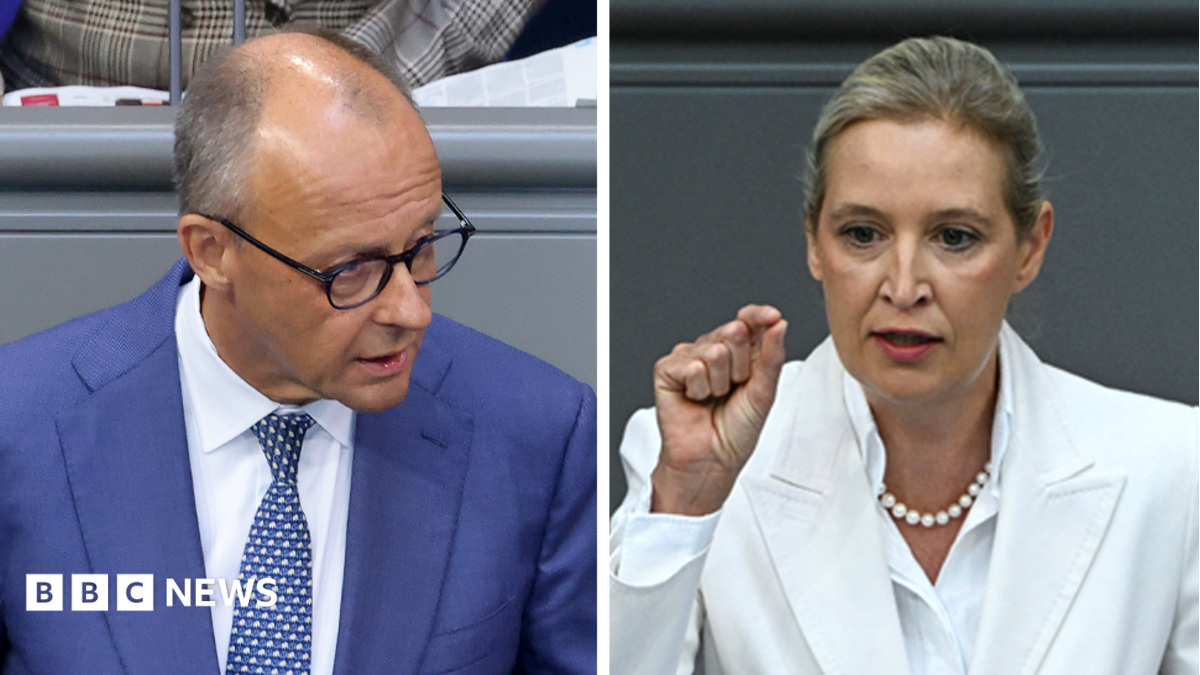
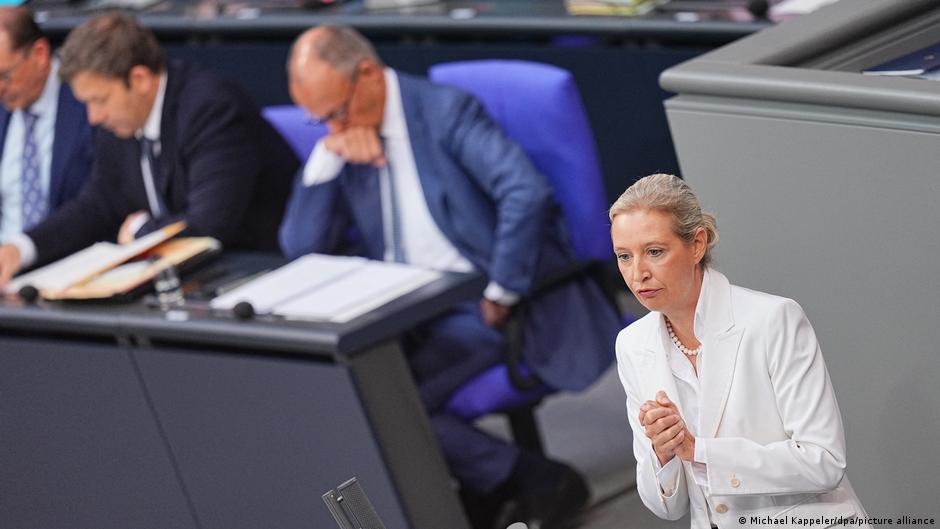
Saxony-Anhalt is a sparsely populated eastern state of roughly two million people, yet its election has dominated the general debate in the Bundestag on Wednesday. Merz acknowledged the "remarkable election result in every respect" and admitted voters had sent him and his coalition a "clear message." But he immediately pivoted to containment: "Ms Weidel, today you can barely contain yourself. But you do not have an absolute majority, and you will not achieve one in Germany. Nowhere in Germany will you win majorities with this politics. You are, and you remain a destructive force."
Weidel, opening for the AfD, had labelled the traffic-light coalition a "failure" and demanded a change of course on migration, energy and the war in Ukraine. Her party's platform calls for the mass deportation of people with migrant backgrounds, a policy Merz dismantled by listing the sectors that would collapse: skilled trades, care homes, hospitals, restaurants. The chancellor drew a deliberate line: his government would deport those without a right to stay, but would protect those who "work in Germany, who contribute to our prosperity, who are welcome in Germany."
Coalition arithmetic and the BSW variable
In Magdeburg, the arithmetic is brutal. The AfD holds 43.8% and 37 seats; the CDU 21.8%; the BSW just over 5% and five seats; the SPD and Greens round out the chamber. AfD state secretary-general Tobias Rausch invited every parliamentary party to exploratory talks. The Greens and SPD refused within hours. "It is absurd to assume that we would hold talks with the far-right AfD about the future of our state," said Greens lead candidate Susan Sziborra-Seidlitz. That leaves the BSW, whose leader Sahra Wagenknecht has spoken of overlapping voter concerns, controlled migration, opposition to uncontrolled migration, politics focused on ordinary lives, but has so far ruled out a formal coalition.
AfD deputy state leader Hans-Thomas Tillschneider hardened the demand: the party would only cooperate if its lead candidate Ulrich Siegmund is elected minister-president in the first round of voting. "That is the condition for cooperation, regardless of which party it is, and therefore of course also with the BSW," he told The Pioneer. He added that a CDU willing to drop its firewall could also be a partner, but argued the CDU was moving in the opposite direction.
Intelligence chiefs confront the access problem
While politicians debate coalitions, the heads of Germany's federal domestic intelligence agency (BfV) and its 16 state counterparts are meeting in Stuttgart for a scheduled three-day session. Security sources insist the meeting was not convened specially for the Saxony-Anhalt result, but the AfD's classification as a confirmed right-wing extremist organisation in several states, including Saxony-Anhalt itself, has forced a practical question onto the agenda: how to handle intelligence sharing if the AfD leads a state government.
Officials do not intend to cut off a potential AfD-led government entirely. Warnings of planned attacks or threat intelligence originating in the state would still flow. But sharing of information on right-wing extremist networks could be restricted, and allied intelligence services may become reluctant to pass sensitive material to Germany if AfD officials have access. North Rhine-Westphalia Minister-President Hendrik Wüst, a CDU heavyweight, called for a joint federal-state working group involving domestic intelligence officials, constitutional lawyers and other specialists. "Banning a political party should be the last resort for protecting the constitution," he said, urging an open-ended review that considers other legal measures.
The Russian shadow over Leipzig
Merz used the same Bundestag appearance to accuse Russia of planning a drone attack on Leipzig/Halle Airport over several months. "This attack was planned in Russia for months and was specifically targeted at Germany, and only by pure chance was major material damage and harm to people prevented," he said. The chancellor linked the alleged operation to a broader pattern of Russian hybrid threats against critical infrastructure. Moscow denied involvement; Foreign Minister Sergei Lavrov described the accusations as "the start of a real war." The AfD's consistent calls for closer relations with Moscow have amplified domestic concerns about the party's reliability with classified information.
A defence industrial footnote with strategic weight
Amid the political turbulence, a US defence startup announced a concrete step in Europe's push for sovereign long-range strike capacity. Covenant will begin mass-producing its ground-launched Anthem cruise missile at a facility in Saxony in early 2027, targeting a run rate of 5,000 units per year by 2028. Chief executive Michael Kaufman told Reuters the company has secured one European contract and is in talks with others. "The supply chain has no reliance on the US," he said, adding that less than 5% of components currently come from outside Europe. Germany and Britain are separately developing a missile with a range exceeding 2,000 kilometres, part of the same effort to reduce dependence on American systems.
People mentioned
-
Michael Kaufman
Organisations
Alternative for Germany · Christian Democratic Union · Social Democratic Party · Alliance 90/The Greens · Sahra Wagenknecht Alliance · Covenant