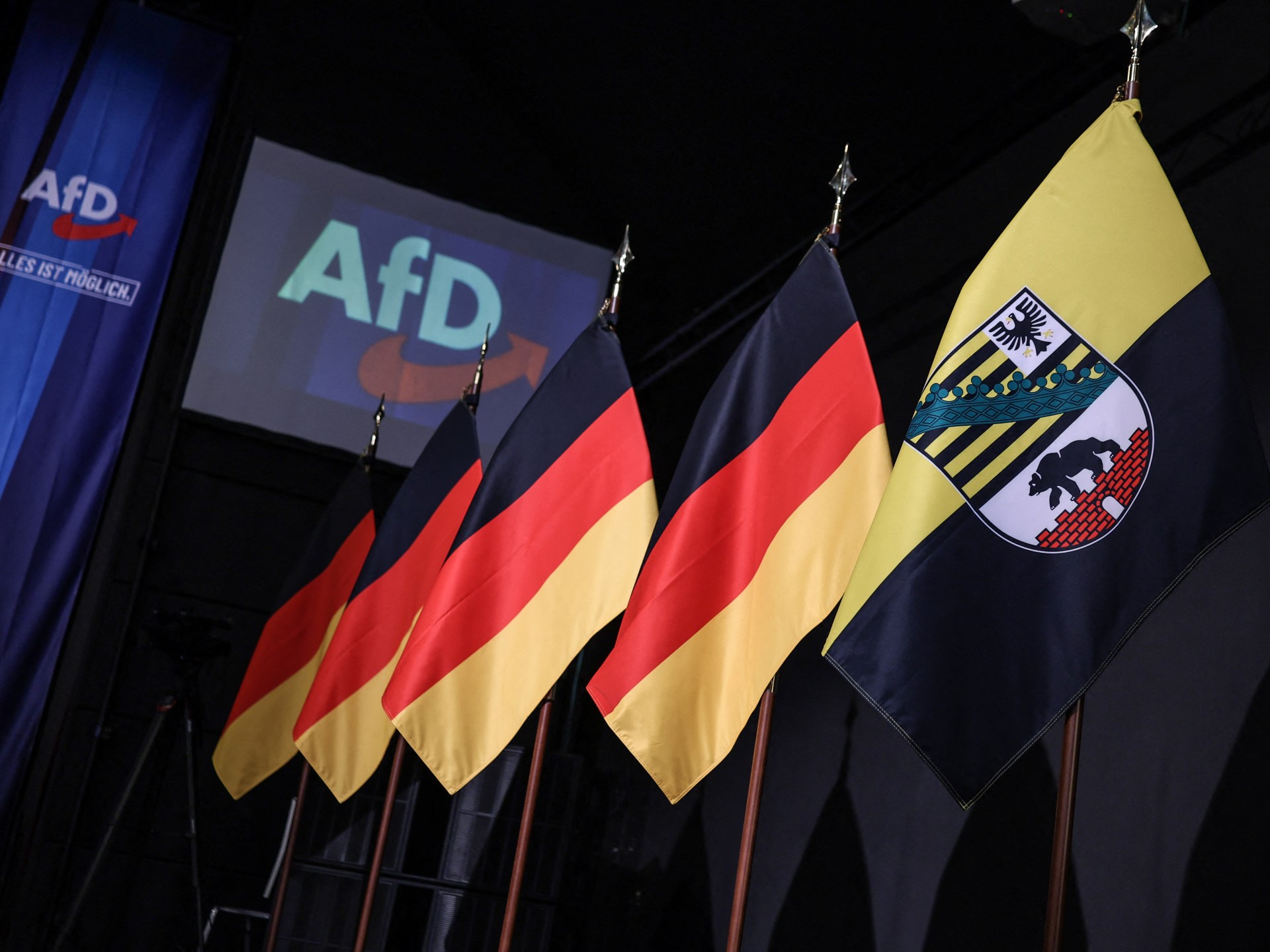
The Alternative for Germany (AfD) has won 43.8% of the vote in the eastern state of Saxony-Anhalt, more than doubling the share of the centre-right Christian Democratic Union (CDU) and delivering the strongest state-level result in the party's history. Preliminary official results released on 6 September confirm a dramatic shift in a state of just 2.1 million people that was long considered manageable territory for the CDU.
Yet the result leaves the AfD in an awkward position. Projections give it 39 of the 83 seats in the Magdeburg state parliament, three short of the 42 required for an absolute majority. Without a coalition partner, the party cannot form a government. And every other party represented in the parliament has spent years refusing to work with it.
The arithmetic that blocks power
Germany's political establishment maintains what it calls a Brandmauer, or firewall, against the AfD: a collective refusal by mainstream parties to enter coalition agreements with it at any level. The policy has held since the AfD entered the Bundestag in 2017, and no AfD politician has ever sat in a governing coalition in any of Germany's 16 states.
In Saxony-Anhalt, that firewall now meets its most serious test. The CDU, which governed the state under premier Sven Schulze, collapsed to 17.2%. Schulze initially avoided giving a clear answer on whether the firewall would hold, but later stated he did not intend to cooperate with the AfD. The Left party (Die Linke) is also ruled out as a CDU partner by longstanding party convention. That leaves Schulze attempting to stitch together an alliance from several smaller parties, an exercise that would produce an inherently fragile government commanding far less popular support than the opposition.
Ulrich Siegmund, the AfD's lead candidate, said he wanted to extend a hand to all parties willing to bring about fundamental political change in the state. He also insisted the AfD would not bend to other parties' conditions. The contradiction between those two positions was left unaddressed.
What the AfD promises for Saxony-Anhalt
Siegmund has cultivated a distinctive public image in the state, frequently appearing on an East German-produced Simson Schwalbe motorbike, including when he cast his ballot on Sunday in his hometown of Tangermünde. The imagery taps directly into local identity: pride in eastern German manufacturing, nostalgia for aspects of life before 1989, and a degree of resentment toward the wealthier western states that has persisted for more than three decades.
The friendly presentation sits alongside a radical programme. Siegmund's campaign promised a "remigration and deportation offensive" targeting undocumented migrants from the first day in office. The party wants to remove rainbow flags from state schools, replace them with the German national flag, and alter history teaching to reduce emphasis on the Third Reich. To address demographic decline in a shrinking state, the AfD proposes "baby bonuses" for families and an effort to attract German expatriates back home as substitutes for foreign-born workers.
The German Economic Institute has warned that this approach would be ruinous for Saxony-Anhalt, where foreign-born workers, particularly in healthcare, form a critical part of the labour force. Removing them without a ready replacement would strain hospitals and care homes that are already short-staffed.
A classified extremist organisation at the ballot box
One factor that makes the Saxony-Anhalt result unusual even by AfD standards is that the party's regional branch is formally classified as a confirmed right-wing extremist organisation by the state's domestic intelligence agency. The designation, which the party rejects as politically motivated, means the authorities are legally permitted to monitor its internal communications and activities more closely than those of mainstream parties.
That classification did not deter voters. If anything, the AfD's framing of itself as a victim of state persecution appears to have reinforced support in a region where distrust of federal institutions runs deep. The question now is what happens if a party under surveillance by the intelligence services gains control of the very state apparatus that monitors it.
Security concerns beyond Magdeburg
Georg Maier, interior minister of the neighbouring state of Thuringia, raised the stakes before polling day. In comments to the Handelsblatt newspaper, he argued that the Kremlin makes no secret of viewing the AfD as its most important instrument for destabilising Germany, and that an AfD-run state security apparatus could leak sensitive information to Russia. The claim is difficult to verify but points to a genuine anxiety in Berlin and in state capitals: that control of police and intelligence resources by a party under extremist surveillance would create unprecedented conflicts.
A bad night for Merz
For Chancellor Friedrich Merz, the result compounds an already difficult period. His coalition government in Berlin has struggled to revive growth in Europe's largest economy, and his personal poll ratings have declined. On Sunday evening, Merz left the CDU's headquarters, the Konrad-Adenauer-Haus, shortly after 10pm without making a statement. The silence was louder than any concession speech.
The CDU's 17.2% represents a collapse in a state the party once treated as reliable territory. Schulze's admission that his party would "have to live with this result" was about as candid as defeated politicians get in Germany, and it acknowledged what the numbers make plain: the centre-right has not arrested the flow of voters toward the AfD in the east, and the strategies it has tried so far have failed.
The firewall's durability in question
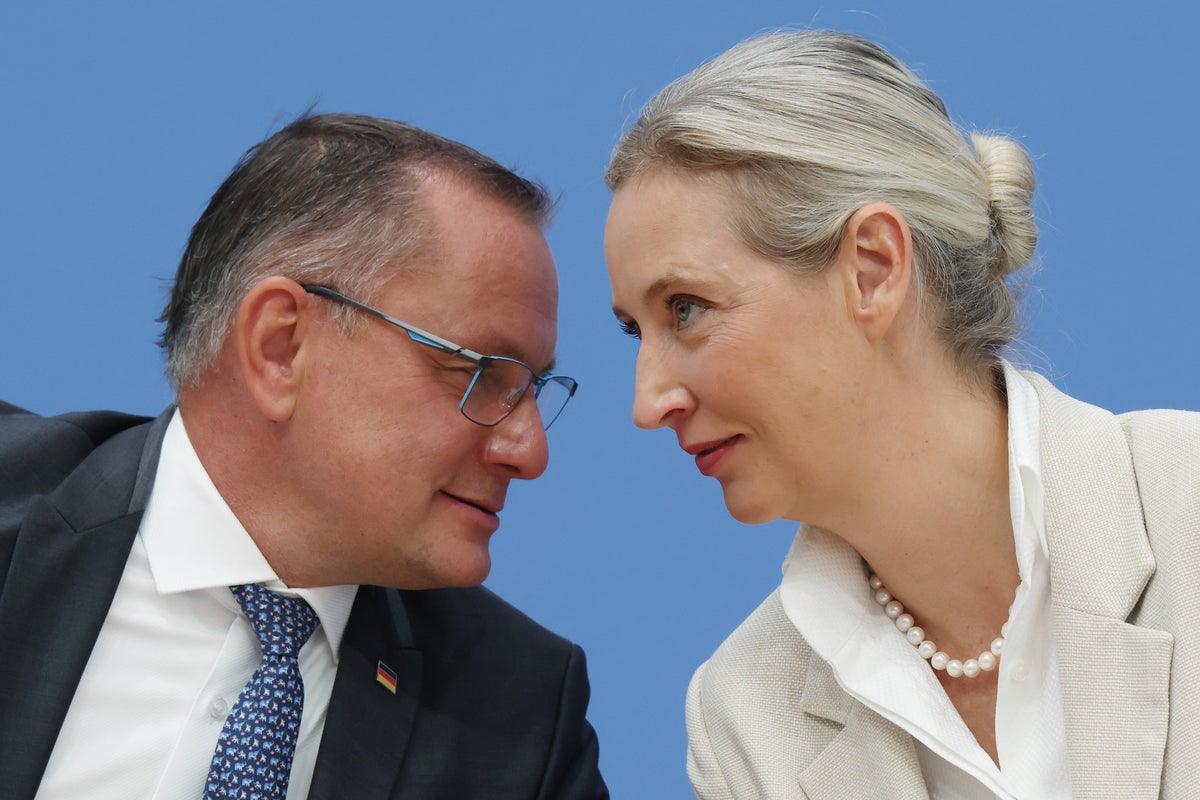
Tino Chrupalla, the AfD's national co-leader, told broadcaster ARD that voters had delivered a clear verdict and that the firewall had been definitively rejected. That is a claim, not a fact: the firewall is maintained by parties, not by voters, and no mainstream party has yet broken ranks.
But the pressure is building. A party that wins close to 44% of the vote in a state election and still cannot govern exposes the tension at the heart of Germany's democratic architecture. The firewall exists to keep extremists from power. At some point, if support continues to rise, the gap between what voters choose and what the system permits becomes difficult to sustain. Saxony-Anhalt has not reached that point yet. The AfD lacks a majority, and no party is willing to give it one. The immediate question is whether Schulze can assemble a workable coalition from the remaining fragments, and how long such a government could survive facing an opposition with more than double its mandate.
People mentioned
Organisations
Alternative for Germany (AfD) · Christian Democratic Union (CDU) · German Economic Institute