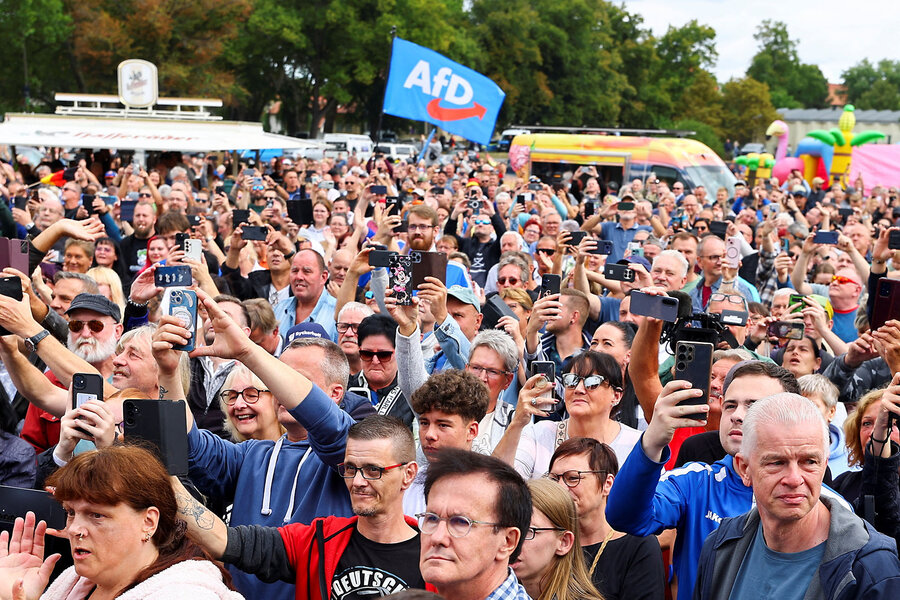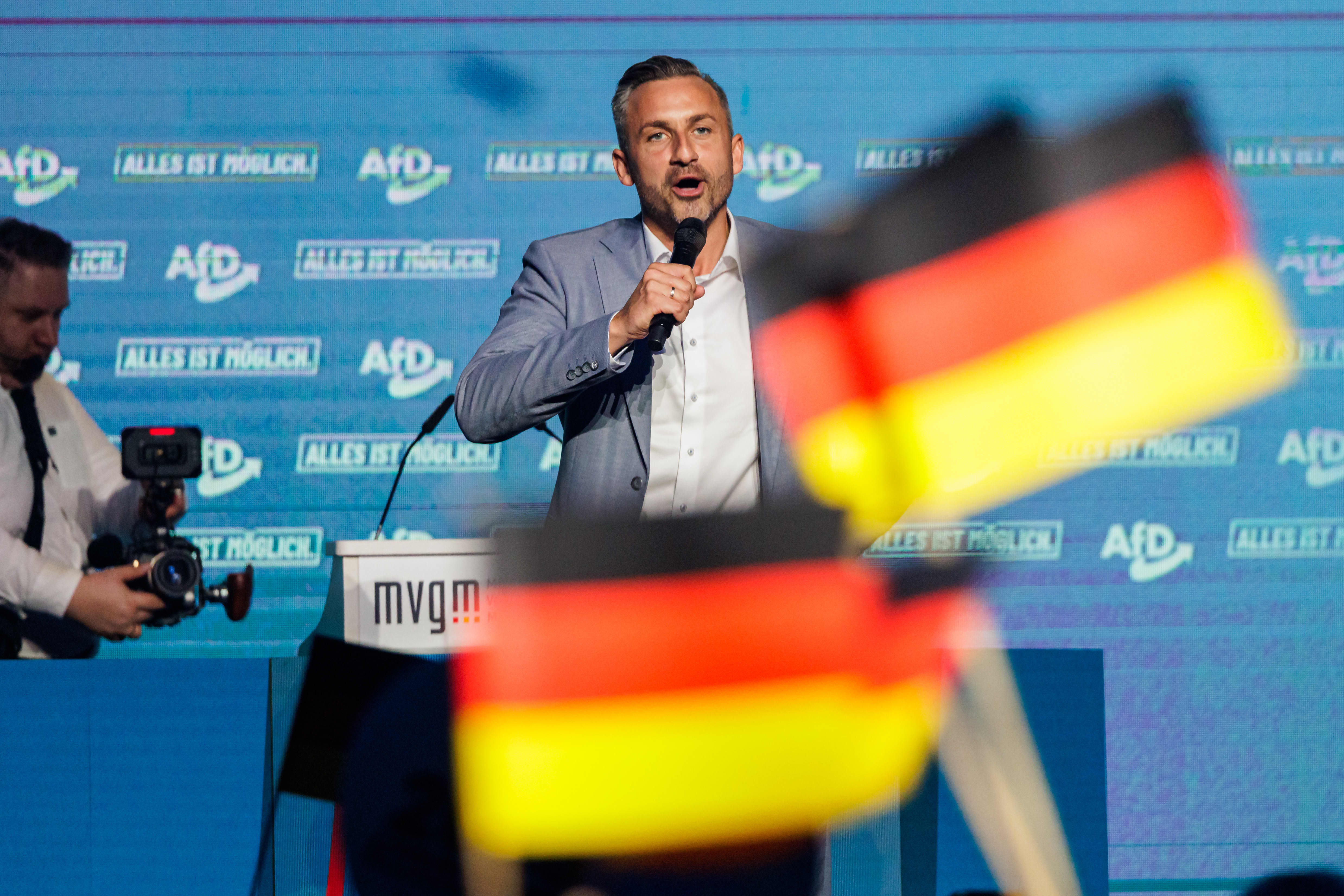
The Alternative for Germany (AfD) has won 43.8% of the vote in Saxony-Anhalt, putting the classified-extremist party within reach of leading a state government for the first time since the collapse of the Nazi regime. The centre-right Christian Democrats (CDU), which has governed the eastern state for 24 consecutive years, saw its support halved to 17.2%.
A result without precedent in post-war Germany
Germany's domestic intelligence agency classifies the AfD as an extremist organisation, a designation that carries legal weight and political stigma in a country whose constitutional order was designed to prevent any repeat of the 1930s. Until now, that stigma, combined with a cross-party agreement known as the firewall, has kept the AfD out of every state and national government. Sunday's vote in Saxony-Anhalt has blown a hole in that arrangement.
The AfD fell just short of an absolute majority. But with 43.8% against a fragmented field, the party now holds the strongest hand in coalition negotiations. Its candidate for governor, Ulrich Siegmund, told public broadcaster ZDF that voters must get what they voted for. "Very clearly, we want voters finally to get after the election what they voted for," Siegmund said. "Over 44% voted for political change ... and that must be implemented after the election."
The coalition arithmetic has no easy answer
Forming a government in Saxony-Anhalt will be difficult regardless of who leads it. The AfD has ruled out a minority administration, meaning it needs at least one partner. The most obvious candidate is the BSW, the Sahra Wagenknecht Alliance, which took 5.3% and five seats. The two parties share a Russia-friendly foreign policy stance and opposition to current immigration rules. They disagree on economic policy and welfare, but the overlap on the issues that drove this election, immigration and discontent with Berlin, is substantial.
The BSW has said it would not vote for either Siegmund or the incumbent CDU governor Sven Schulze as head of government, but has also criticised the firewall against the AfD. That ambiguity leaves room for negotiation. An AfD-BSW coalition would command a narrow majority.
The alternative, a so-called democratic alliance excluding the AfD entirely, would require all five remaining parties, the CDU, Social Democrats, Greens, Left Party and BSW, to govern together. Five-party coalitions are essentially untested in German politics and would be extraordinarily fragile. There is also the possibility that individual lawmakers from other parties could defect to the AfD; only three would need to switch for the AfD to govern alone.
Why a small state produced an outsided result
Saxony-Anhalt has just 2.1 million residents and is one of Germany's less economically dynamic states, part of the formerly communist east where wages and productivity lag behind the west. Federal statistics consistently show a persistent gap in living standards between eastern and western Länder. The AfD has exploited that gap systematically, arguing that Berlin and Brussels have neglected the region.
Turnout on Sunday reached 77.8%, remarkably high for a state election, and the AfD appears to have mobilised large numbers of people who did not vote at all five years ago. That pattern, converting disengagement into support, is one the party has replicated across eastern Germany and one that mainstream parties have struggled to counter.
Merz and the CDU face a reckoning
The result is a direct blow to Chancellor Friedrich Merz, who leads the CDU at the national level. His party did not merely lose ground; it lost half its vote share in a state it had run for a generation. The CDU's 17.2% is a historic low for the party in Saxony-Anhalt, and voters and party figures will hold Merz at least partly responsible for failing to arrest the slide.
Merz was expected to address the result after meetings with party and government leaders on Monday. The broader question for the CDU is whether its strategy of co-opting parts of the AfD's agenda on immigration and cultural issues, rather than offering a clear alternative, has simply legitimised the far-right without winning back voters. Early evidence from Saxony-Anhalt suggests it has not worked.
International reactions split along familiar lines
Elon Musk congratulated the AfD on X, writing "Well done!" Siegmund replied in English, saying he would welcome "strong and constructive cooperation" and that Germany would "once again be a place worth investing in." US President Donald Trump posted a screenshot of the election projection on Truth Social without comment.
Poland's prime minister, Donald Tusk, took a sharply different view. "In Poland, only idiots or traitors could rejoice the AfD triumph in Germany," he wrote on X. Tusk's reaction reflects genuine concern in Warsaw and other central European capitals that a Russia-friendly party entering German state government could weaken European resolve on Ukraine and security.
What the result means for Germany's wider politics
The AfD's performance in Saxony-Anhalt will energise the party ahead of further state elections in the east later this month. The CDU's collapse, meanwhile, will intensify an internal debate about whether Merz can deliver electorally. The national government, still in its early months, has yet to convince voters it can revive Germany's sluggish economy or resolve the immigration question that continues to drive AfD support.
For the broader European debate, a far-right party entering government in the EU's largest economy would carry weight well beyond Saxony-Anhalt's borders. It would embolden similar movements in France, Italy and the Netherlands, and test the European Commission's ability to maintain a common line on rule-of-law and migration when one member state's governing coalition includes a party it considers extremist.
People mentioned
Organisations
Alternative for Germany · Christian Democratic Union · Sahra Wagenknecht Alliance · Federal Office for the Protection of the Constitution